
8 Coffee Studies That Change Everything | Fat Loss & Longevity

☕ Caffeine Science: 8 Studies That Just Rewrote Everything You Thought You Knew
Wellness Wednesday
By Brett G Waddell ~ TheMorningMotivator.com
WAKE UP! Awareness Brings Answers!
Great Morning Creator!
When I come across science backing something I love — I'm ALL in.
Today we're talking coffee for peak performance!
For me, coffee is more than a drink. It's a time machine. It's similar to those special scents — like that Jovan Musk perfume my girlfriend wore in high school. It's music — that Def Leppard track I first heard on vinyl during summer vacation up north. It's TV shows and movies linking the past to the present.
One taste of coffee and I'm transported. Sometimes it takes me back to that old Country Kitchen on South Park Street... or that tiny espresso bar in Memphis.
Coffee has been woven into our culture forever. We hear the standard talking points: it aids fat loss, boosts cognition, enhances performance. And yes—those benefits are real.
But emerging research is uncovering nuanced layers to how caffeine interacts with your physiology. Recent literature reveals eight specific studies that put a completely different twist on conventional wisdom.
From the optimal timing for fat oxidation to the impact of coffee processing on heart health—the science suggests that how and when you consume coffee matters just as much as if you consume it.
This article breaks down the latest findings to help you optimize coffee consumption for health, performance, and longevity.
Let's dig in!
👇Quick Check-In: What's your coffee story? What memory does that first sip take you back to?
Drop it below. I read every comment — and your answer might spark someone else's breakthrough.

🏃🏼 The Moment That Changes the Conversation
Picture this.
You wake up. You reach for that cup of coffee the same way you have for years. Maybe decades. You drink it, you feel good, you move on.
But what if I told you that the time you drink that coffee could nearly triple your fat-burning results? What if the type of coffee you choose — ground vs. instant vs. decaf — could mean the difference between a 6% and a 20% reduction in cardiovascular disease risk?
What if the science on caffeine withdrawal, brain protection, gut health, liver function, and mental health told a story almost nobody is talking about?
That's what today is about.
This isn't your average "coffee is good for you" article. This is the science most people will never see — and once you do, you can't unsee it.
🔬Science Spotlight: A study in the Journal of the International Society of Sports Nutrition found that caffeine consumed at 5:00 PM increased maximal fat oxidation by 29%— nearly 3x the effect of the same dose at 8:00 AM.
Translation: timing isn't just a detail — it's a multiplier. (Source: JISSN)
"A combination of acute caffeine intake and exercise at moderate intensity in the afternoon provides the best scenario for individuals seeking to increase maximum fat oxidation."
— Researchers, Journal of the International Society of Sports Nutrition
Before we go deeper into the science, watch this — Thomas DeLauer breaks down 8 caffeine studies most people have never heard of. Fat oxidation timing, brain protection, gut health, liver stiffness, heart health — all backed by peer-reviewed research. This is the video that sparked today's deep dive.
Now that you've seen the studies, let's unpack the science, stack the practical takeaways, and wire this into your daily system. Below, I break down every finding — plus how to REAP the benefits using your 5-minute morning rewire.
⛏️ The Core Concept: Caffeine Is a Precision Tool — Not Just a Stimulant
Here's the paradigm shift.
Most people treat coffee like an on/off switch. You're tired? Flip it on. Need energy? Flip it on.
But the research is clear: caffeine is a precision tool. The timing, the type, the dose, and even the compounds alongside it — they all change the outcome.
Think of it this way: a hammer is a tool. But using a hammer to turn a screw doesn't work. Same tool, wrong application.
Coffee is the same. The right application of caffeine — when, how much, what kind — unlocks benefits most people leave on the table every single day.
Let's walk through all eight studies.
🟢 Study 1: Afternoon Caffeine Nearly Triples Fat Oxidation
Published in the Journal of the International Society of Sports Nutrition, this study had subjects consume 3 mg of caffeine per kilogram of body weight at either 8:00 AM or 5:00 PM, then measured VO2 max and maximal fatty acid oxidation.
Results:
Morning caffeine: ~10.7% increase in fat oxidation
Afternoon caffeine: ~29% increase in fat oxidation
That's not a marginal difference. That's nearly 3x the fat-burning effect.
Why? The leading theory involves cortisol rhythms. Morning cortisol is naturally elevated, which already promotes some fat oxidation. By afternoon, cortisol drops — so when caffeine hits, the relative spike (the delta change) is much larger. You're getting more metabolic "bang" from the same dose.
The practical tension: Afternoon caffeine burns more fat — but it can also wreck sleep. We'll address that next.
🟡 Study 2: Even 6 Hours Before Bed, Caffeine Impairs Sleep
Published in the Journal of Clinical Sleep Medicine, this study gave participants 400 mg of caffeine at 0, 3, and 6 hours before bedtime.
Results:
All conditions impaired sleep — difficulty falling asleep, reduced total sleep time, more wake events, and earlier waking.
The critical finding: Even caffeine consumed 6 hours before bed still had a measurable negative impact.
The bridge: So how do we capture the afternoon fat-oxidation benefit without sacrificing sleep? A few potential strategies:
Midday dosing— Caffeine around noon may offer double the morning benefit while reducing sleep disruption
Apigenin stacking— Apigenin can block some of caffeine's excitatory calcium influx, potentially preserving fat liberation while reducing the stimulatory sleep-disrupting effect
Strategic cycling— Use afternoon caffeine on training days only, with adequate spacing from bedtime
🌟Synchronicity Check: Did one of those strategies jump out at you while reading? That's not random. Your body is signaling what it needs. Honor that nudge. Try it TODAY.
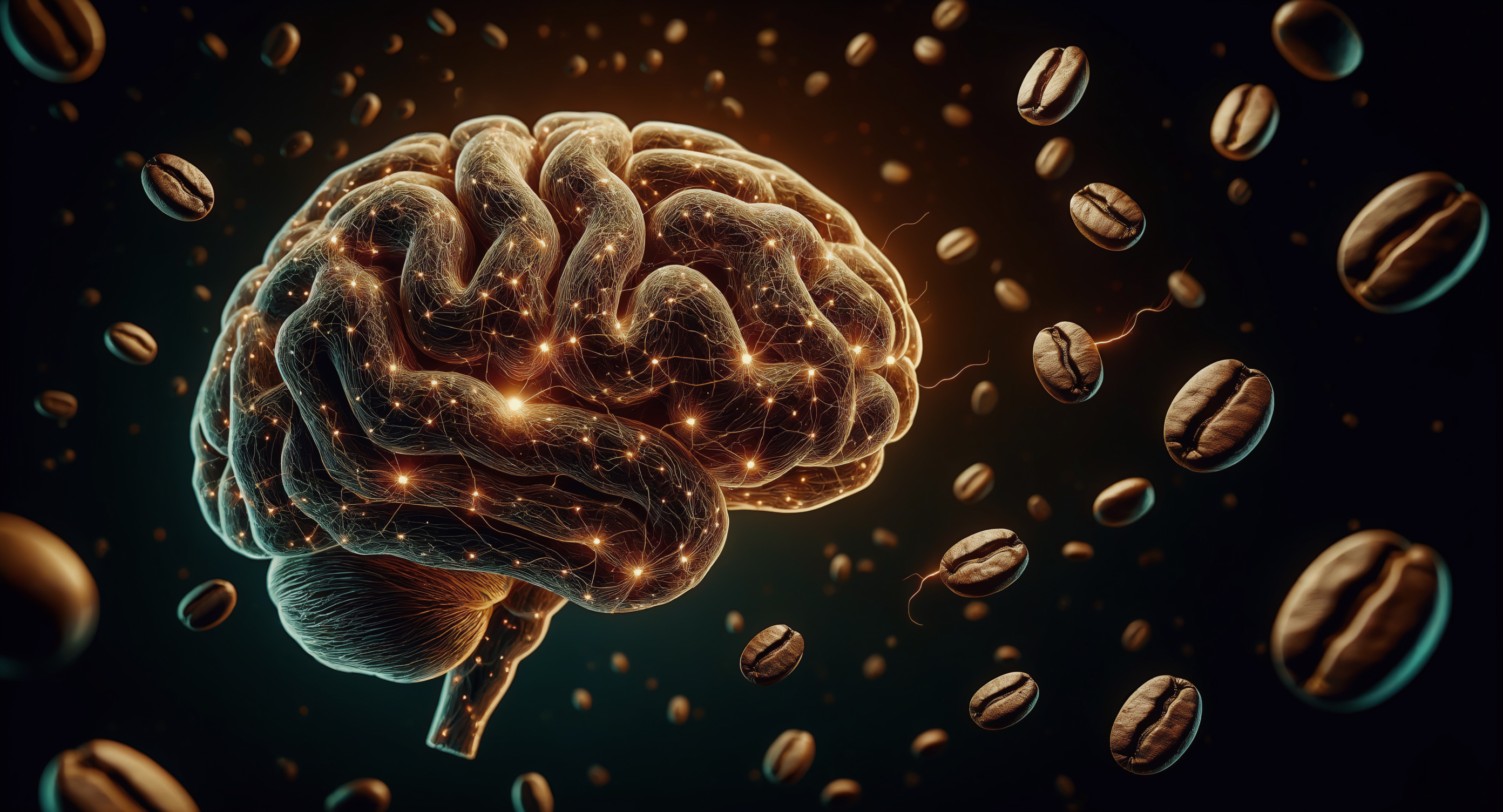
🟠 Study 3: Caffeine Has Neuroprotective Effects
Published in Clinical and Experimental Pathology, this rodent model study induced neurodegeneration using aluminum chloride (simulating Alzheimer's-like damage).
What caffeine did:
Protected brain structure from morphological changes
Increased BDNF expression (brain-derived neurotrophic factor — critical for brain plasticity, learning, and repair)
Reduced systemic inflammation via antioxidant compounds like chlorogenic acid
Translation: Caffeine isn't damaging your brain. The evidence suggests it may actually be protecting it.
🔵 Study 4: Caffeine Withdrawal Is Less Severe Than You Think
According to NIH-referenced data:
~50%of people experience withdrawal symptoms (headache, mostly)
Only ~13%experience impairment severe enough to affect daily function
Tolerance and dependence can begin after just 3 days of use
Dependence levels off around 13 days— so someone using caffeine for 2 weeks and someone using it for 3 months may have similar withdrawal profiles
Reset time: only 3–5 days off to significantly restore baseline sensitivity
Important distinction: Caffeine is not truly addictive in the way recreational drugs are. It doesn't hijack the dopaminergic system the same way. You can form a behavioral dependence, but the physical withdrawal is manageable and short-lived.
Pro tip: Take a weekend off every few weeks. Use decaf during those days — you still get antioxidants, polyphenols, and a little caffeine. You might even placebo yourself into feeling great.
👇Your Turn: Have you ever done a caffeine reset? How many days did it take you to feel normal again?
Share your experience below. Real stories fuel real change.
🟣 Study 5: Coffee Drinkers Have Healthier Gut Microbiomes
Published in Nutrients, this study examined fecal microbiota from approximately 147,000 people.
Key finding: Higher coffee consumption was associated with significantly greater levels of Bacteroides— the bacterial genus most strongly correlated with:
Better metabolic health
Healthier body composition
More favorable health outcomes overall
Meanwhile, microbial profiles associated with obesity appeared less favorable in coffee drinkers.
Why? Multiple factors likely contribute:
Coffee polyphenols feeding beneficial bacteria
Increased gut motility giving the digestive system more recovery time
Appetite suppression reducing constant digestive load
Caffeine-driven increases in physical activity and metabolic rate
🟢 Study 6: 4+ Cups Per Day Linked to Lowest Depression Risk
A large study of over 14,400 participants, published in Nutrients, found that people consuming 4 or more cups of coffee per day had the lowest risk of depression.
Multiple mechanisms at play:
Caffeine has a clear dopaminergic effect — it increases dopamine availability
Chlorogenic acids and other coffee compounds reduce systemic inflammation
Systemic inflammation is strongly correlated with depression
Real talk: Coffee has gotten me through some rough times. If a cup of coffee helps you get moving, helps you face the day — that's a net positive. Especially when the science supports it from multiple angles.
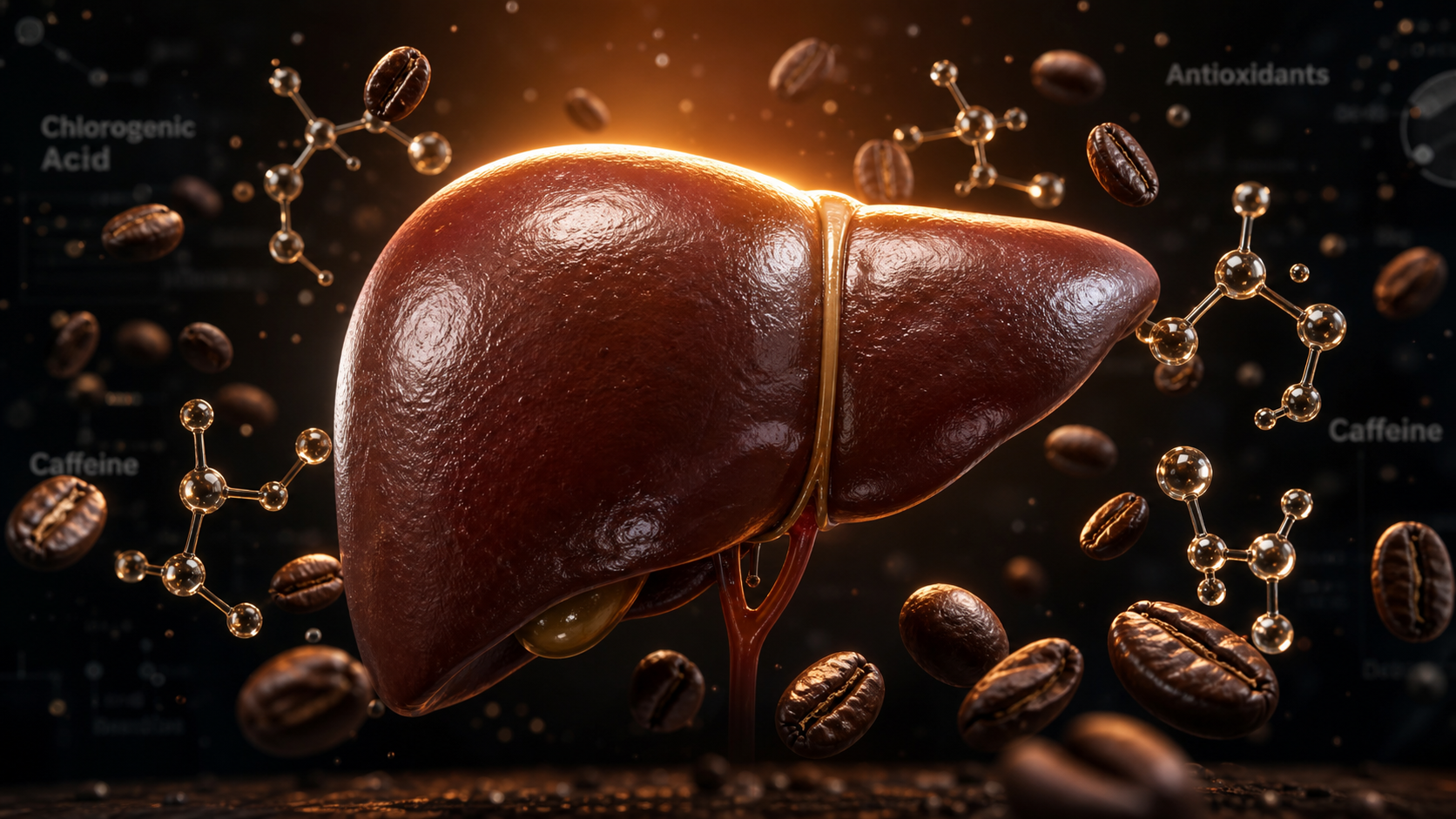
🟠 Study 7: 3+ Cups Reduces Liver Stiffness
A 2022 study in Clinical Gastroenterology found that consuming 3 or more cups of coffee per day was associated with reduced liver stiffness— a key marker of liver health.
Why this matters: As the liver stiffens (from fatty deposits, fibrosis, oxidative stress), it loses function. The liver is your first line of defense for glucose regulation, detoxification, and metabolic processing.
The likely mechanism: Caffeine-driven fatty acid oxidation may reduce fat accumulation in and around the liver — essentially helping the liver do its job better by keeping it cleaner.
🟡 Study 8: Ground Coffee Reduces Cardiovascular Disease Risk by 20%
This is the big one.
Published in the European Journal of Preventive Cardiology, this study examined over 449,000 people— comparing ground coffee, instant coffee, and decaf across varying daily amounts.
Results vs. non-coffee drinkers:
European Journal of Preventive Cardiology (449,000 participants):
→ Ground coffee: 20% lower CVD risk
→ Instant: 9% lower
→ Decaf: 6% lower
Key Insight: Antioxidants matter. Processing matters. Ground coffee wins—but any coffee is better than none.
What makes this remarkable:
Decaf still provides benefit — meaning it's not just about caffeine
Ground coffee outperforms instant, suggesting processing destroys beneficial antioxidants
The lowest cardiovascular risk appeared at 4–5 cups of ground coffee per day
There were even reductions in atrial fibrillation— improvements in heart function itself
The bottom line: Coffee — especially ground coffee — appears to be significantly protective for cardiovascular health, not damaging.
🔬Science Spotlight: Coffee is likely the most concentrated source of antioxidants in the average American diet. The polyphenols and chlorogenic acids in ground coffee appear to reduce oxidative stress — a hallmark of aging and cardiovascular disease. Processing (as in instant coffee) degrades these compounds.
Choose ground. (Source: European Journal of Preventive Cardiology)

✅ The Solution: Caffeine as a Conscious, Optimized Tool
Here's what the science is telling us when we stack all eight studies together:
Time it right— Afternoon caffeine may amplify fat oxidation, but respect sleep boundaries
Choose ground coffee— Processing matters; ground coffee preserves the most beneficial compounds
Don't fear withdrawal— It's manageable, short-lived, and resettable in 3–5 days
Cycle strategically— Take periodic breaks to maintain sensitivity
Use decaf on off days— You still get antioxidants, polyphenols, and gut benefits
Protect your brain, liver, heart, and gut— Coffee appears to support all four when used responsibly
Support mental health— The dopaminergic and anti-inflammatory effects are real
Caffeine isn't the enemy. Unconscious consumption is.
When you bring awareness to how, when, and what kind of coffee you consume — you turn a daily habit into a precision health tool.
And that's what we do here. Awareness brings answers.
✨ REAP PRACTICAL APPLICATION ✨
Your 4-Step Rewire for Optimizing Your Caffeine Strategy
R — Recognize & Run Out
Notice your current caffeine pattern. When do you drink it? How much? What kind?
No judgment. Just observation. Ask: "Is this habit intentional — or autopilot?"
E — Exchange & Envision
Replace unconscious consumption with a strategy:
"I choose my caffeine timing, type, and dose based on what my body and goals actually need today."
Envision yourself making that afternoon training session with a perfectly timed cup — alert, burning fat, performing at your peak.
A — Activate with Action
Right now: Choose ONE change from today's science.
Switch to ground coffee
Move your second cup to early afternoon before training
Schedule a 3-day caffeine reset this weekend
Add decaf on your off days
Pick one. Do it today.
P — Program & Prosper
Repeat your chosen caffeine strategy for 7 days. Track how you feel — energy, sleep, performance, mood.
After one week, you'll have real data. Your body will tell you what works.
👉 DOWNLOAD YOUR FREE REAP YOUR FUTURE: 5-MINUTE ON-DEMAND REWIRE PDF HERE
A done-for-you protocol that walks you through quick problem solving and decision making — for caffeine optimization and everything else.
🔬Science Spotlight: Research shows that habit formation relies on consistent contextual cues — the same time, same place, same sequence. By anchoring your caffeine strategy to your existing morning routine, you leverage your brain's natural pattern-recognition system to automate the upgrade.
Translation: Stack it on what you already do, and it sticks.(Source: European Journal of Social Psychology)
🚨 CRITICAL WINDOW: FIRST 5 MINUTES
Here's where this connects to everything.
The REAP reps work best before the world gets its vote.
When you wake up, your brain is in theta— highly programmable. During this window, your critical faculty is offline, cortisol is rising to wake the body, and your subconscious is wide open to suggestion.
What you think, say, and feel in those first 300 seconds sets the neurological tone for the entire day.
That is your window.
So imagine this: You wake up. You run your REAP rep. You set your intention for the day. Then you reach for that first cup of coffee —consciously— knowing exactly why you chose ground, why you chose this timing, why you chose this amount.
That's not just a cup of coffee. That's a deposit into your perfect day.
That's why I created:
☀️ The 5-Minute Theta Mornings Routine
No decisions. No willpower. Just open, read, rewire.
👉 DOWNLOAD YOUR FREE THETA MORNINGS PDF HERE
Stack the reps, baby!
📋 Today's Lesson
Coffee isn't just a beverage — it's one of the most studied compounds on the planet, and the science keeps getting more interesting.
But here's the real lesson: The difference between a habit and a strategy is awareness.
Most people drink coffee on autopilot. After today, you have the information to drink it with intention — optimizing for fat loss, brain health, gut health, liver function, heart protection, and mental resilience.
That's what happens when awareness meets action. That's REAP. That's The Morning Motivator.
One conscious choice at a time. One perfect day at a time.
🌟Synchronicity Check: What if the one caffeine change that jumped out at you while reading is exactly what your body has been asking for? That's not coincidence. That's your system signaling what it needs next. Trust that pull. Start there. Start today.
❓ FAQ (QUICK ANSWERS)
Q: Should I stop drinking coffee in the morning and switch to afternoon only?
A: No — the research doesn't say morning coffee is bad. It says afternoon caffeine produced a larger relative increase in fat oxidation. If you train in the afternoon, consider timing a dose before your workout. If you train in the morning, your morning coffee is still providing a 10%+ boost. The key is intentional timing, not elimination.
Q: Is decaf coffee actually worth drinking?
A: Absolutely. The cardiovascular study showed decaf still reduced disease risk by 6%. Decaf retains most of coffee's polyphenols, antioxidants, and chlorogenic acids. It's an excellent option during caffeine resets, evening hours, or for anyone sensitive to stimulants. You still get gut, liver, and anti-inflammatory benefits.
Q: How often should I do a caffeine reset, and will I lose my gains?
A: Evidence suggests 3–5 days off is enough to significantly restore caffeine sensitivity. Consider doing this every 2–3 weeks, or simply take a weekend off. Use decaf during those days. You won't lose fitness gains — and when you return to caffeine, the performance and fat-oxidation effects will be stronger because your receptors are fresh.

⚡ 5-MINUTE MICRO-ACTION (START NOW)
Audit: Write down your current caffeine pattern — timing, type, amount. (30 seconds)
Choose: Pick ONE optimization from today's eight studies. (30 seconds)
Schedule: Put it in your calendar or set a phone reminder for tomorrow. (30 seconds)
Breathe: 3 deep breaths. Exhale longer than inhale. Feel the intention settle. (30 seconds)
Commit: Say out loud: "I drink coffee with intention. My habits serve my goals. One conscious choice at a time."(30 seconds)
Done. One REAP rep. One upgrade. One step closer to your perfect day.
🏖️ The Bigger Vision: Your Perfect Day, Engineered by Awareness
Perfect days are not accidents.
They are engineered.
One awareness.
One repetition.
One nervous system upgrade at a time.
Today it's caffeine. Tomorrow it's something else. But the system is the same:
Awareness Brings Answers.
REAP gives you the 5-minute on-demand rewire.
Repetition wires identity.
Identity changes reality.
That's the physics of the impossible becoming practical.
💖Love in Action:
The best definition of love may be this:
"To choose the best interests of another person and act on their behalf."
That is what this mission is about.
This blog. The REAP system. The community. The teachings.
Scientific. Soulful. Actionable.
Helping people become healthier, calmer, stronger, and more conscious is an act of love.
And when you share this with someone else…
that becomes your act of love too.

🏃🏼➡️ YOUR NEXT STEP: Activate Your REAP & Join the Movement
✅Get your FREE REAP Your Future blueprint + daily masterclass link at 5:00 AM — start rewiring in 5 minutes
✅Join the Consciousness Community! If you felt a resonance reading this — you're invited.
✅Pay It Forward
Send this to one person who needs this reminder today.
Change starts with shared momentum — and your perfect day is built one post, one conversation, and one REAP at a time.
Five minutes. One REAP. One recognition. One move forward. 🚀
💖This post exists because I believe the best thing I can do for you is bring you the truth — Scientific, Soulful, and Actionable. That's the only reason I'm here.
Stay Focused. Keep Asking Better Questions!
P.S. — This is how we reach the perfect day.
Not all at once.
One deposit at a time.
One pillar at a time.
One morning at a time.
See you tomorrow at 4:44 AM.
Hey, I'm just your science-backed, soul-led, unapologetically human, mindset & motivation trainer. The content provided in this blog post is for educational and informational purposes only. I am not a licensed therapist, and this blog is NOT intended as a substitute for the advice of a physician, psychotherapist, or other qualified professional. Got it? Good. I'll catch you tomorrow.
Pay It Forward! 🚀
~Brett
TheMorningMotivator.com
You're Upgrading 1%+ Every Day! Keep Going! = +34% Monthly, +38% Better Annually!
🌱Continue Your Journey
🔸Your Genes Are the Blueprint, Your Beliefs Are the Builder: Rewiring Reality Through Epigenetics— "Give me a child until it's seven and I will show you the man." — Jesuit Proverb (Validated by Modern Neuroscience) (May 2, 2026) →
🔸What If the Answer Isn't Ahead of You… But Is the One Asking the Question? Where Consciousness Research Meets Direct Experience— The Illusion of Reality. (April 11, 2026) →
💬Your Turn: What's ONE caffeine change you're committing to this week — timing, type, or a reset? Drop it below. I read every comment — and your insight might be the nudge someone else needs today. 👇


