
Consciousness Gets Weirder: Michael Pollan on Your Mind
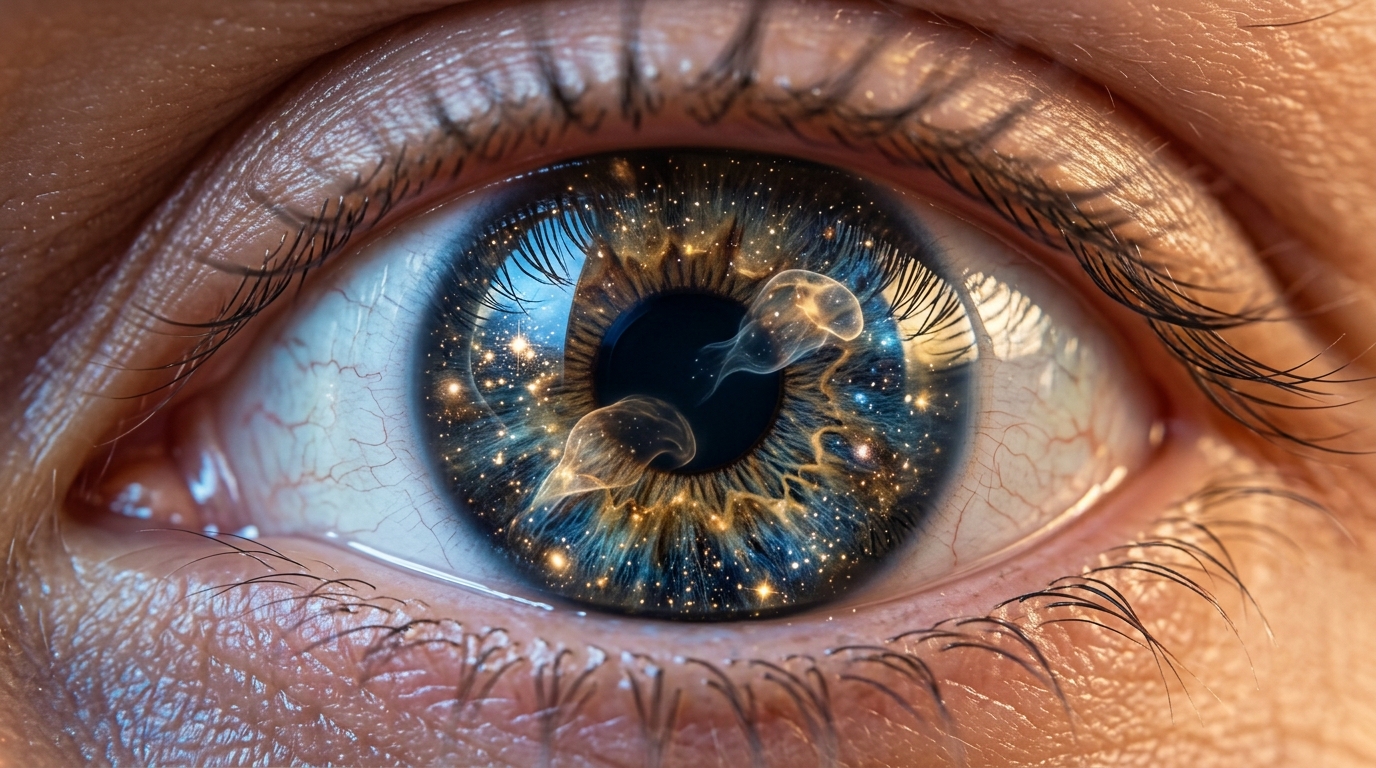
The More You Study Consciousness, the Weirder It Gets: Michael Pollan on the Thoughts You Never Chose
Consciousness is the only thing we directly know—yet the closer we look, the stranger it gets. Michael Pollan explores why.
Spotlight Saturday DEEP DIVE
By Brett G Waddell ~ TheMorningMotivator.com
Don't miss tomorrow's Strategic Sunday: 5 Scientist Panel: What Is Consciousness? The Answer Isn't In Your Brain. — free at 4:44 AM. Subscribe →
WAKE UP! Awareness Brings Answers!
You know that moment when you're driving and suddenly realize you don't remember the last ten minutes? Or when someone asks what you're thinking and you genuinely can't say?
I used to think that was a glitch—some failure of attention I needed to fix. But the more I tried to pin down my own thoughts, the more they slipped through my fingers like water.
I'd sit to meditate and watch my mind produce thoughts I never authored, images I never conjured, worries I never chose. It was unsettling. Almost embarrassing. Like discovering you've been living in a house you've never actually looked at.
Here's what I've come to believe: we are strangers to our own consciousness. And that's not a personal failing—it's the human condition. But what if that stranger holds the key to everything?
Today, I've brought in someone who has spent five years exploring this exact territory. Michael Pollan—the science writer who has guided millions through the landscapes of psychedelics, food, and now consciousness itself—sat down with Ezra Klein to discuss his new book, A World Appears.
And what he found is that the more you study consciousness, the weirder it gets.
🔸 Plants that can be anesthetized.
🔸Thoughts that arise four seconds before you're aware of them.
🔸Children who are more conscious than adults.
🔸The possibility that your brain isn't generating consciousness at all—but receiving it.
Everything is broken down piece by piece, so you can pull out exactly what you need. Quick read now. Quick reference later. Let's get into it.
🏆 Spotlight Saturday UPGRADE
Most people treat their attention like it's infinite—scrolling, reacting, consuming whatever the algorithm serves up.
Michael Pollan and the researchers he interviewed did the opposite: they recognized that consciousness is a precious, limited resource that needs protection. Here's the real problem: you can't think your own thoughts if you're always thinking someone else's.
🎖️ The Upgrade: For the next 24 hours, put a fence around one 10-minute window where you do nothing but sit with your own mind—no phone, no music, no podcast. Just you and your consciousness. Notice what arises.
(Full REAP breakdown and theta application below 👇)
That's not just a journal prompt. That's how you reclaim sovereignty over your own mind. Awareness, as always, brings answers. Here's the breakdown.
"It's in the nature of reductive science to simplify things in order to better understand them. But our mental life is just far more intricate, complex, and shadowy than we give it credit for."
— Michael Pollan
"The brain exists to keep the body alive, not the other way around. We're not just a support system for this amazing three pounds of tofu in our heads."
— Michael Pollan
Don't have time for the full podcast? I already pulled the exact moments that matter below. Hit play if you want to see it live, or keep scrolling for the breakdown.
Seeing it makes it real. Now, let's extract the exact mechanics so you can apply this to your life today. Keep reading for the core concepts, the 5-minute audit, and the REAP framework to wire this in for good.
🌞 The Core Concept: Consciousness Is Stranger Than You Think
Michael Pollan spent five years researching consciousness for his book A World Appears: A Journey Into Consciousness. What he discovered is that the closer you look at the thing we know most intimately—our own awareness—the more mysterious it becomes. Here are the key insights that can change how you relate to your own mind.
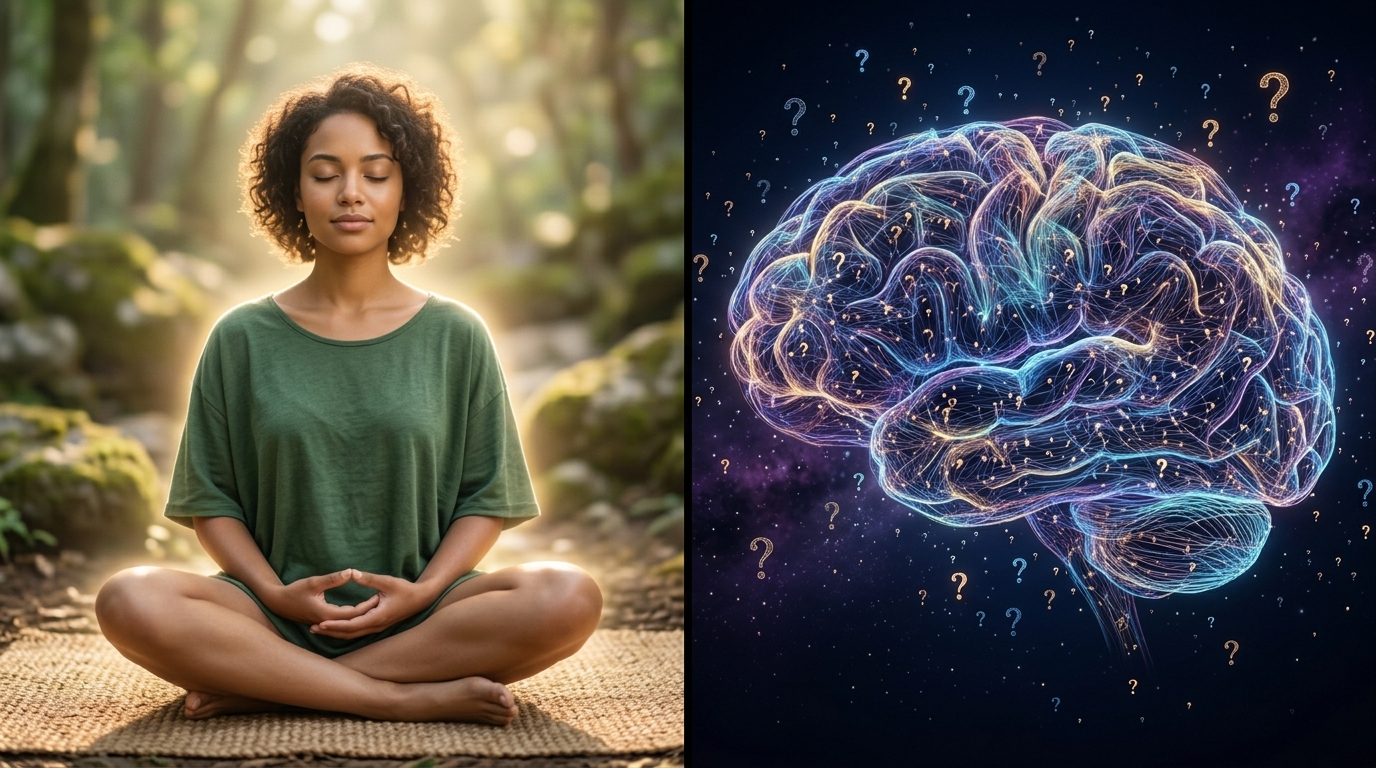
🟢 You Don't Know Your Own Mind (And That's Normal)
Psychologist Russell Hurlburt has been sampling inner experience for 50 years using a simple beeper experiment. Participants wear a device that beeps randomly, and when it goes off, they write down exactly what they were thinking at that moment.
Pollan participated—and was shocked by how banal his thoughts were. More importantly, he struggled to even describe what form his thoughts took. Were they words? Images? Something else entirely?
Hurlburt's finding: we think in vastly different ways, and most of us have no idea what's actually happening in our own heads.
Key Takeaways:
Most thoughts are "gossamer wisps of mentation"—not fully formed words or images
We often can't accurately describe what we were just thinking
Different people think in radically different ways (visual, verbal, imageless)
🟡 William James Was Right About the "Fringe"
William James, the father of American psychology, wrote about the "stream of consciousness" over a century ago—and his observations put modern scientists to shame.
He described thoughts as having "fringes": auras, halos, associations, "feelings of tendency," and "premonitions" that surround every thought. Pollan calls this "the fringe of unarticulated affinities." When we try to chop thoughts into discrete chunks for scientific study, we do violence to their true nature.
Key Takeaways:
Thoughts exist in a stream—you can't pull one out without disturbing the whole
James identified "fringes" of association that reductive science ignores
Poetry and literature may understand consciousness better than neuroscience
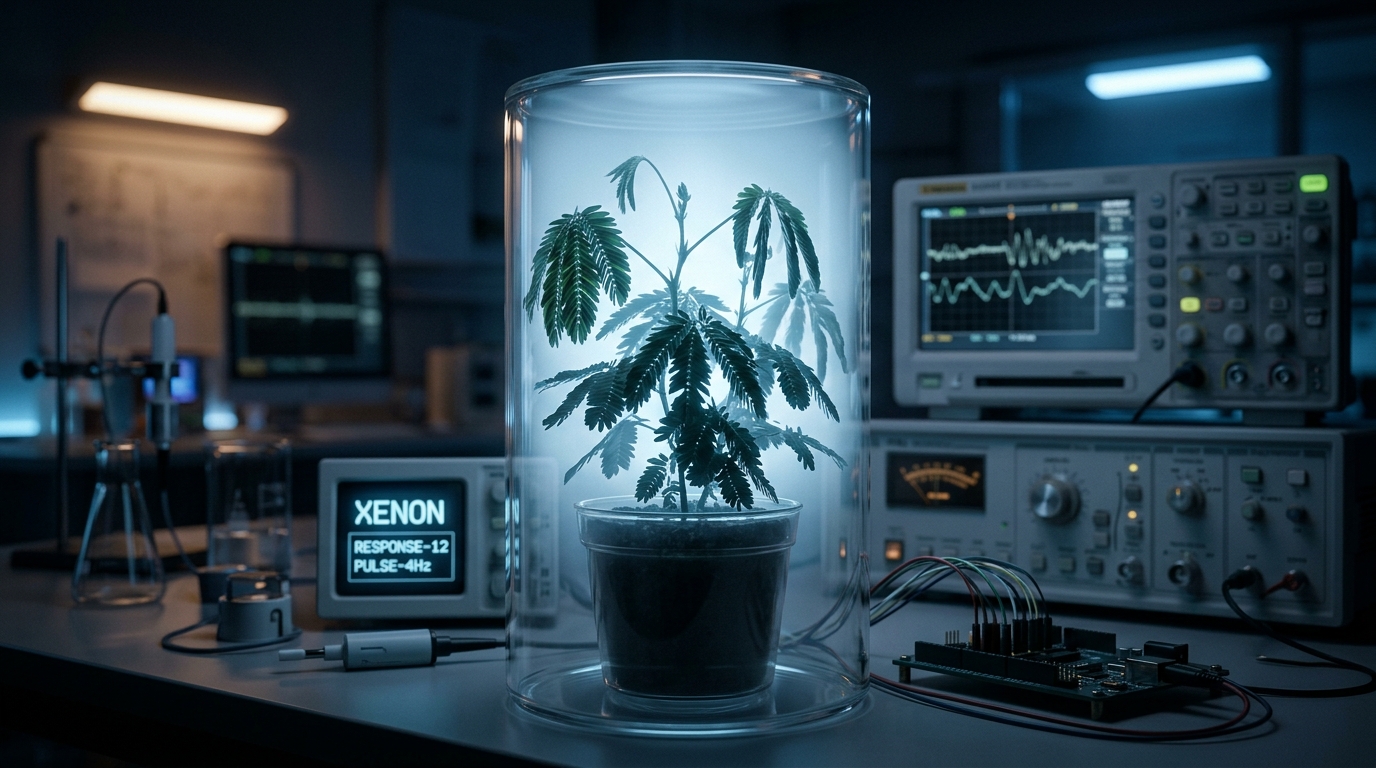
🟠 Plants Can Be Anesthetized (And That Changes Everything)
A group of botanists who call themselves "plant neurobiologists" have done something remarkable: they've anesthetized plants using the same gases that work on humans—including xenon gas, which is inert and yet somehow puts us (and plants) out.
The sensitive plant Mimosa pudica, when exposed to anesthetics, appears to "sleep" and then wake up. Plants also meet the criteria for sleep established by sleep researcher Giulio Tononi.
Does this mean plants are conscious? Pollan doesn't claim to know—but it reanimates our view of the natural world.
Key Takeaways:
Plants have at least two states of being: "on" and "off"
They meet scientific criteria for sleep
This raises the question: what is consciousness, if plants have something like it?
🔵 Consciousness Is Embodied (Feelings Come First)
One of Pollan's biggest discoveries: consciousness isn't just in your head. Feelings arise in the body first—hunger, itchiness, disgust—and only later get filtered through the cortex into complex thought.
A fascinating experiment showed that people who ate ginger before viewing morally distasteful images were less disgusted—because their stomachs were settled.
Moral disgust is felt in the gut. This has huge implications for AI: feelings require vulnerability, the ability to suffer, and mortality. A computer can process information, but can it feel?
Key Takeaways:
Feelings precede thoughts; the body talks to the brain
The brain exists to keep the body alive, not vice versa
AI can't replicate consciousness without a body, vulnerability, and mortality
🟣 Lantern vs. Spotlight Consciousness
Child psychologist Alison Gopnik introduced Pollan to a powerful distinction: children have "lantern consciousness"—they take in information from all 360 degrees, think divergently, and solve problems adults can't.
Adults develop "spotlight consciousness"—narrow focus, productivity, but with blinders. Psychedelics return us to lantern mode.
The trade-off: spotlight consciousness lets us get things done, but it narrows our experience of being alive.
Key Takeaways:
Children are arguably more conscious than adults—they're taking in more
Spotlight consciousness is efficient but limiting
Psychedelics and meditation can return us to broader awareness
🔴 Thoughts Arise Before You're Aware of Them
Neuroscientist Kalina Christoff put trained meditators in an fMRI and asked them to press a button as soon as a thought intruded.
What she found: there's a four-second gap between activity in the hippocampus (the source of a thought) and the person becoming aware of it.
Four seconds in brain time is an eternity. Thoughts compete for access to conscious awareness in what's called "global workspace theory"—and we don't control what wins.
Key Takeaways:
Thoughts arise unconsciously and take ~4 seconds to reach awareness
We don't choose most of what enters our minds
Meditation reveals how little control we actually have

🟢 Mind-Wandering Is Where Creativity Lives
We've been trained to think of daydreaming as unproductive. But Christoff argues that mind-wandering is essential for creativity.
🔸 Great composers, novelists, and thinkers worked only 4-5 hours per day and spent much time walking and wandering.
Our phones and algorithms are colonizing this space—and we're losing something vital. Pollan notes that some of his most creative moments come when reading on paper, walking without AirPods, or simply being bored.
Key Takeaways:
Mind-wandering is not wasted time—it's where insight happens
Great creators protected unstructured time
Phones and social media are shrinking this creative space
🟡 The "Brain as Radio Receiver" Hypothesis
What if your brain isn't generating consciousness but receiving it? This is the idealist philosophy: consciousness precedes matter.
Pollan explores this through the metaphor of a TV set—if you break it, the picture goes away, but that doesn't mean the broadcast waves are gone.
Neuroscientist Christof Koch had an ayahuasca experience that convinced him consciousness might be "mind at large"—a universal field.
Panpsychism takes this further: every particle has a quantum of consciousness. These ideas sound crazy until you realize materialism has hit a wall with the "hard problem."
Key Takeaways:
Idealism says consciousness is fundamental; matter comes second
The brain may channel consciousness rather than produce it
Panpsychism adds "psyche" to the stock of reality
⚪ Consciousness Sovereignty and Hygiene
Pollan introduces the idea of "consciousness hygiene"—protecting your interiority from algorithmic exploitation, others' thoughts, and constant distraction.
🔸 Attention is a collective resource being exhausted! A society with diminished attention is easier to manipulate, angrier, and less free.
Meditation, time in nature, and psychedelics (used intentionally) are ways to reclaim sovereignty. As Pollan says: "The less it's a space of freedom, the more you're thinking other people's thoughts and you're much more vulnerable to manipulation."
Key Takeaways:
Your consciousness is a precious space that needs protection
Algorithms are designed to colonize your attention
Reclaiming your mind is both personal and political
🟠 The Cave and the Power of Not Knowing
Pollan ends his book with a visit to Zen teacher Joan Halifax, who sent him to a "five-star cave" in the New Mexico desert—no electricity, no running water—for several days. She kept ducking his interviews, saying "I've divested meaning."
Alone with himself, meditating for hours, Pollan experienced the boundaries of self dissolving. One night, he saw the stars without light pollution and felt not separate from them but part of them.
He shifted from "solving the problem" of consciousness to "being within the fact" of it.
The lesson: not knowing has its own power. Wonder over explanation.
Key Takeaways:
Solitude and sensory deprivation can dissolve the ego
The "don't know mind" opens us rather than closes us
Get comfortable with mystery—it's our existential predicament

❓ Quick Reality Check (Before We Begin)
🔸 You might be thinking: "This is fascinating, but I don't have time to meditate or go sit in a cave. How does this apply to my actual life?"
The Truth: You don't need a cave. You need five minutes. The research is clear: even brief moments of undistracted awareness—no phone, no input—begin to restore your capacity for deep thought and creativity.
The point isn't to become a monk. It's to recognize that your attention is being harvested and to take back small pockets of it. Start with one 10-minute walk without your phone. That's it.
🔸 "Isn't this just philosophical navel-gazing? What's the practical benefit?"
The Truth: The practical benefit is sovereignty. If you don't know what's happening in your own mind, you can't think independently. You'll react instead of create. You'll scroll instead of build. You'll absorb others' agendas instead of setting your own.
Understanding consciousness—even just recognizing how little control you have—is the first step to reclaiming agency. And agency is the foundation of every upgrade you want to make in your life.
🚀 The REAP 5-Minute Accountability Reset
This is how we think. This is how we move. This is how we show up! Don't just read this—run one full round right now:
R — Recognize & Run Out (Minutes 1 & 2)
Name one area where you've been letting your attention be harvested—mindless scrolling, background TV, podcast after podcast with no silence in between. Fact-check it honestly: has all that input actually made you happier, smarter, or more creative? Or has it just filled the space where your own thoughts used to live? Pause the "I'm too busy to be bored" story.
E — Exchange + Envision + Emotion (Minutes 3 & 4)
Exchange the input. Visualize your next 24 hours with one 10-minute window of pure, undistracted awareness. No phone. No music. No podcast. Just you and your mind. Feel the shift from "consuming" to "being present." Imagine what might arise—a forgotten idea, a moment of clarity, a sense of calm you haven't felt in months.
A — Activate with Action (Minute 5)
Write down the exact time and place you will take your 10-minute awareness window tomorrow. Commit to it before the day ends. Put it in your calendar like it's a meeting with the most important person in your life—because it is.
P — Program & Prosper (The Theta Window)
Celebrate tiny wins and lock this in during your neurological goldmine: the first 5–10 minutes after waking, or the last 5–10 before sleep. Stack the reps. Presence becomes identity. Identity becomes reality!
(Note on the science: This is the foundation of Hebbian learning—often summarized as "neurons that fire together, wire together." Repeated mental patterns physically strengthen neural pathways, a principle first established by Donald Hebb in 1949 and continuously validated in modern neuroplasticity research.)

🧠 RECLAIM Your Mind Before Your Next Scroll
If this reset shifted something for you, don't let it fade by noon!
Get tomorrow's Strategic Sunday — 5 Scientist Panel: What Is Consciousness? The Answer Isn't In Your Brain. — dropping free at 4:44 AM.
Subscribe Free → and get instant access to the 2-Page REAP & Theta Mornings PDF
🎖️ Spotlight Saturday Upgrade: For the next 24 hours, put a fence around one 10-minute window where you do nothing but sit with your own mind—no phone, no music, no podcast. Just you and your consciousness. Notice what arises.
Five minutes. One shift. One upgrade. Stay focused. Keep building!
P.S. — This is how we reach the perfect day. Not all at once. One deposit at a time. One honest pattern at a time. One upgraded morning at a time. See you tomorrow at 4:44 AM.
🌱 Start Here: The Foundation
🔸 Your Genes Are the Blueprint, Your Beliefs Are the Builder: Rewiring Reality Through Epigenetics
The foundation of our biology teaching: how beliefs, environment, and repeated inputs shape the way we live. CLICK HERE →
🔸 The Illusion of Reality: Where Consciousness Research Meets Direct Experience
The beginning of our consciousness and awakening series—an invitation to question the reality you have been handed. CLICK HERE →
💖 This post exists because I believe the best thing I can do for you is bring you the truth — Scientific, Soulful, and Actionable. YOU are why I'm here—so my mistakes and research become your shortcuts!
Pay It Forward! 🚀
~Brett
TheMorningMotivator.com
We're Upgrading 1%+ Every Day! (+34% Monthly, +38% Annually!)
Medical & Training Disclaimer: Hey, I'm just your science-backed, soul-led, unapologetically human mindset & performance trainer. The content provided in this blog post is for educational and informational purposes only. I am not a licensed physician, physical therapist, or medical professional, and this blog is NOT intended as a substitute for qualified medical advice. Always consult your healthcare provider or certified coach before making major life decisions or life changes. Got it? Good. I'll catch you tomorrow. Peace out!


