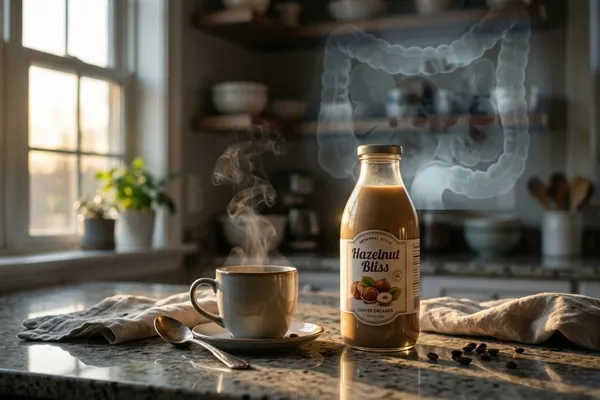
Emulsifiers: The 'Healthy' Habit Shredding Your Gut
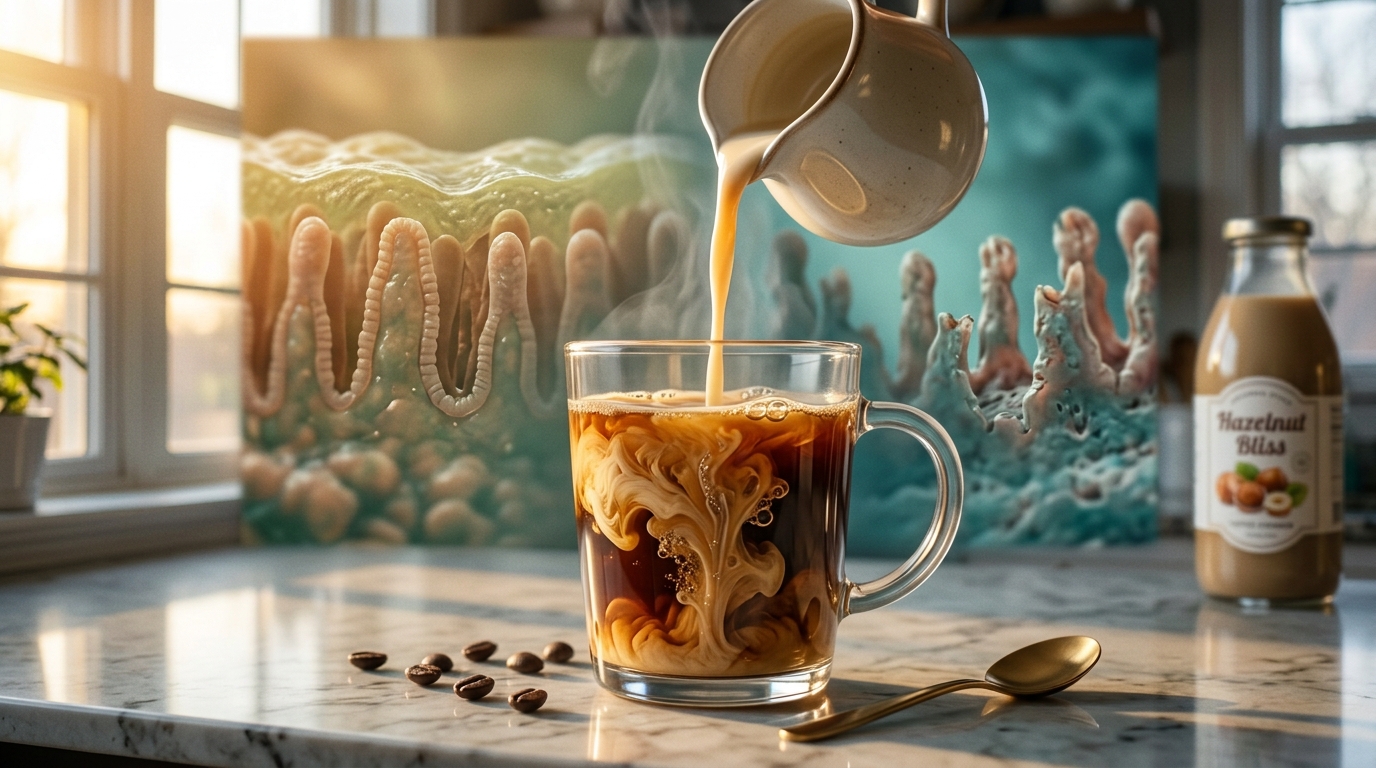
The 'Healthy' Breakfast Habit That's Shredding Your Gut Lining (A Kidney Scientist Explains)
A kidney scientist reveals how emulsifiers like polysorbates—literally lab detergents—strip your gut's mucus barrier, causing inflammation, food allergies, and brain fog. Remove them, then repair with tributyrin.
Wellness Wednesday
By Brett G Waddell ~ TheMorningMotivator.com
Don't miss tomorrow's Thirty Thursday Upgrade: Brainwash Yourself: The 5-Pillar Blueprint to Become Unrecognizable in 6 Months — free at 4:44 AM. Subscribe →
WAKE UP! Awareness Brings Answers!
You're standing in your kitchen at 0 dark 30. Coffee's brewing. You reach for the creamer—the one that promises "hazelnut bliss"—and you pour it in without thinking. You've done it a thousand times. But what if that little splash of creamy comfort is quietly shredding the lining of your gut?
I used to be that guy. Non-dairy creamer every morning. Ranch with hot sauce on everything. I thought I was being "good" because I wasn't eating fast food. Then I started digging into the research on emulsifiers—and I realized I'd been sandblasting my own intestinal lining for years. I had brain fog I blamed on lack of sleep. Joint pain I blamed on age.
It wasn't age. It was breakfast.
Here's what I've learned: this isn't a "you" problem or a "me" problem. It's an "us" problem. We've been sold convenience and creaminess, and the price is our gut barrier—the single most important gatekeeper between what we eat and what gets into our bloodstream.
When that barrier breaks down, you don't just get bloating.
🔸 You get food allergies you never had.
🔸 You get inflammation that shows up as joint pain, brain fog, fatigue.
🔸 You get a body that's slowly turning on itself—and you don't even know why.
🔸 The worst part? You keep eating the thing that's causing it because it's marketed as "healthy."
I brought in Dr. Jacob Torres—a kidney researcher who followed the damage upstream from your kidneys to your gut—to break down exactly what's happening. He's going to show you the literal worst food for your body, why it's probably in your fridge right now, and the one simple swap that can start repairing the damage today.
So ask yourself: if the "healthy" choice you're making every morning is actually the thing holding you back... what are you gonna do about it?
🏆 Wellness Wednesday UPGRADE
Most people read the label and check for calories, sugar, and fat. Dr. Torres looked at the same creamy foods through a microscope—and watched the gut's protective mucus layer literally disappear.
🚨 Here's the real problem: it's not the calories. It's the emulsifier. The same detergent we use in the lab to break open cells is in your coffee creamer.
🎖️ The Upgrade: Go to your fridge right now. Pick up your creamer, your ranch, your ice cream. Scan the ingredients for "polysorbate" (20, 60, 80). If you see it, that's your first swap. Find a refrigerated version made with real cream—or go black.
(Full REAP breakdown and theta application below 👇)
That's not just a label check. That's how you stop sandblasting your gut every morning. Awareness, as always, brings answers. Here's the breakdown.
"Polysorbate is a detergent. We use it in the lab to lyse cells. And you're eating it. Any amount of emulsification of that mucus layer is going to be bad because you need to keep the barrier separate from the bacteria living in your gut." — Dr. Jacob Torres
Don't have time for the full podcast? I already pulled the exact moments that matter below. Hit play if you want to see it live, or keep scrolling for the breakdown.
Seeing it makes it real. Now, let's extract the exact mechanics so you can apply this to your life today. Keep reading for the core concepts, the 5-minute audit, and the REAP framework to wire this in for good.
🌞 The Core Concept: The Emulsifier Effect — How "Creamy" Becomes "Leaky"
Dr. Jacob Torres started his research in polycystic kidney disease. He was looking for what injures the kidney. That search led him upstream—to the gut. What he found was that the same emulsifiers making our food creamy are stripping the protective mucus layer in our intestines, opening the door for bacteria, toxins, and undigested food particles to leak into the bloodstream.
This isn't a subtle effect. It's mechanical. It's dose-dependent. And it's happening in millions of kitchens every single morning.
🟢 What Polysorbates Actually Are (Spoiler: Lab Detergent)
Polysorbates—also known as Tween 20, 60, and 80—are emulsifiers. They're what keep oil and water mixed so your creamer doesn't separate on the shelf. In the lab, Dr. Torres uses them for one purpose: to break open cells. "It's just a detergent," he says.
Detergents have a hydrophobic tail and a hydrophilic head—the same basic structure as the phospholipids in your cell membranes. When you consume them, they don't care what membrane they interact with.
They'll emulsify anything fat-based. Including the mucus layer protecting your intestinal wall.
Key Takeaways:
Polysorbates (20, 60, 80) are emulsifiers found in ice cream, creamers, cheese spreads, tartar sauce, ranch, and even some chewing gums
They are chemically identical to lab detergents used to lyse (break open) cells
The structure—hydrophobic tail, hydrophilic head—means they interact with any fat-based membrane, including your gut's protective mucus
🟡 The Mucus Layer: Your Gut's First Line of Defense (And How It Gets Stripped)
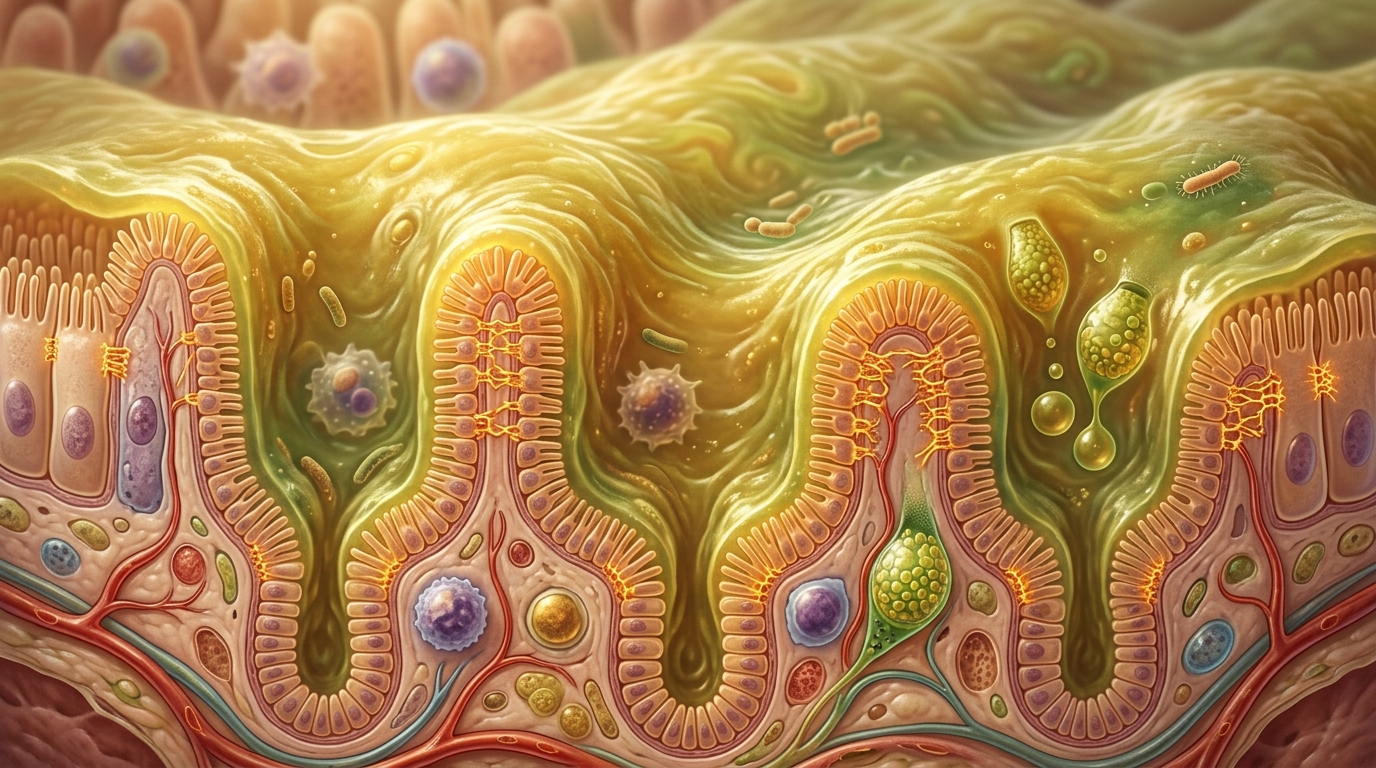
Your small intestine and colon are lined with a mucus layer about 5–10 microns thick. It's constantly being produced and pushed along as food passes through. This layer serves one critical purpose: it keeps the trillions of bacteria living in your gut separate from the cells that absorb nutrients.
When you consume polysorbates, that mucus layer gets emulsified—literally broken apart and washed away. Dr. Torres has seen it under the microscope.
The mucus is just gone.
Key Takeaways:
The mucus layer is 5–10 microns thick—a physical buffer between gut bacteria and your bloodstream
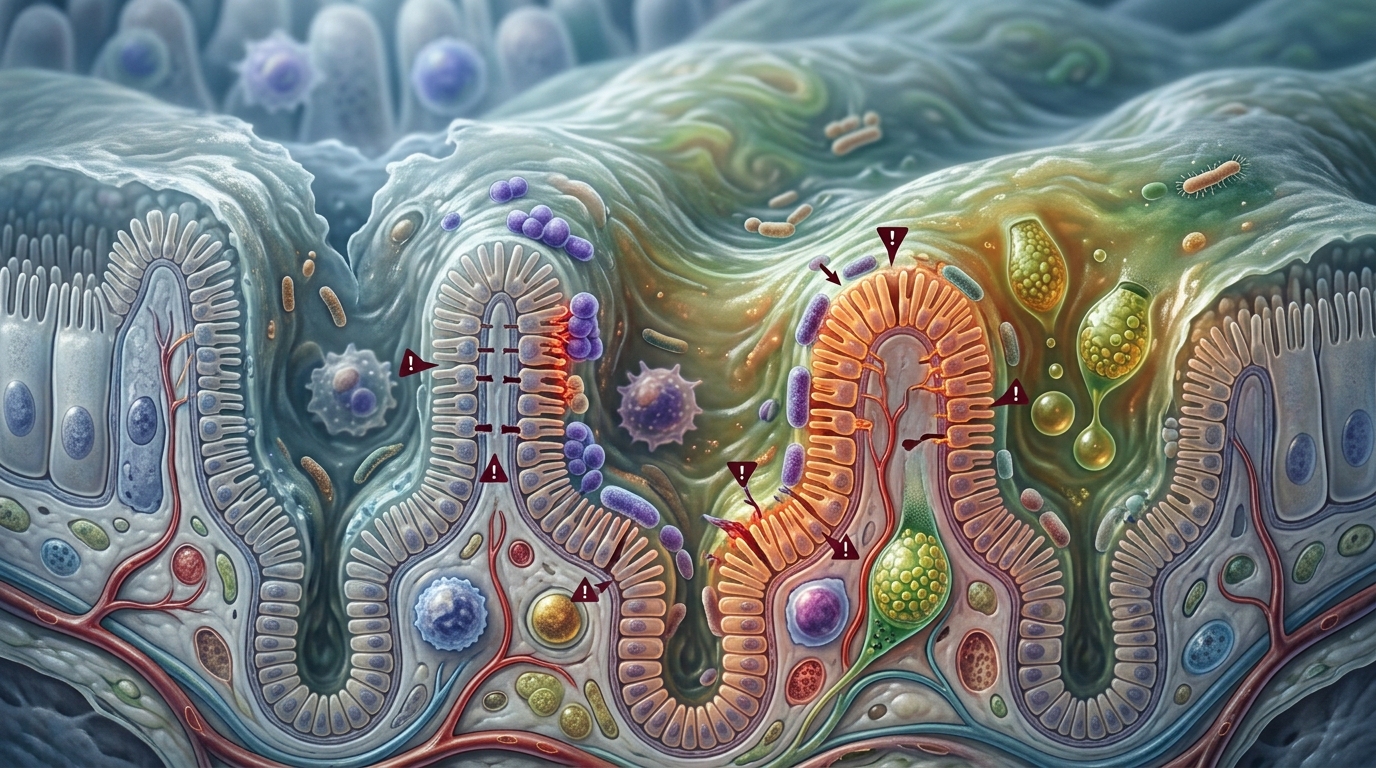
Polysorbates emulsify this layer, stripping it away and leaving epithelial cells exposed
This is dose-dependent: more emulsifier equals worse damage—but any amount of emulsification is problematic
Below the mucus is a second barrier: tight junctions between cells. When mucus is gone, bacteria contact these cells, trigger inflammation, and can eventually create "holes"
🔴 The Downstream Damage: From Leaky Gut to Brain Fog, Joint Pain, and Food Allergies
When the mucus layer is compromised, lipopolysaccharides (LPS)—potent inflammation triggers made by certain gut bacteria—can leak into your bloodstream. At low levels, you might not feel much.
But over time, the injuries add up. Dr. Torres says the gut is resilient, but chronic exposure leads to symptoms that seem unrelated: food allergies you never had, joint pain, brain fog, lethargy, malaise.
"If anybody's ever been food poisoned," he says, "that's severe LPS exposure. But low-grade LPS is a constant drip that your body is constantly fighting." The result is a body slowly turning on itself—and you don't know why.
Key Takeaways:
LPS (lipopolysaccharide) is a potent inflammation trigger made by certain gut bacteria
When it leaks into the blood, it can cause joint pain, brain fog, fatigue, and food sensitivities
Symptoms may be silent at first—the gut is resilient—but injuries accumulate over time
Non-dairy creamers on an empty stomach (like in your morning coffee) are among the worst offenders
🟠 It's Not Just Polysorbates: Lecithin, Oxalates, and the "Perfect Storm" Meal
Dr. Torres makes one thing clear: this isn't specific to polysorbates. Any emulsifier can potentially do this—including lecithin, which is also considered a detergent in chemistry. And oxalates (found in spinach, chard, potato skins, kale, and broccoli) can crystallize and physically tear cells. Pairing oxalates with calcium helps bind them so they're excreted rather than absorbed.
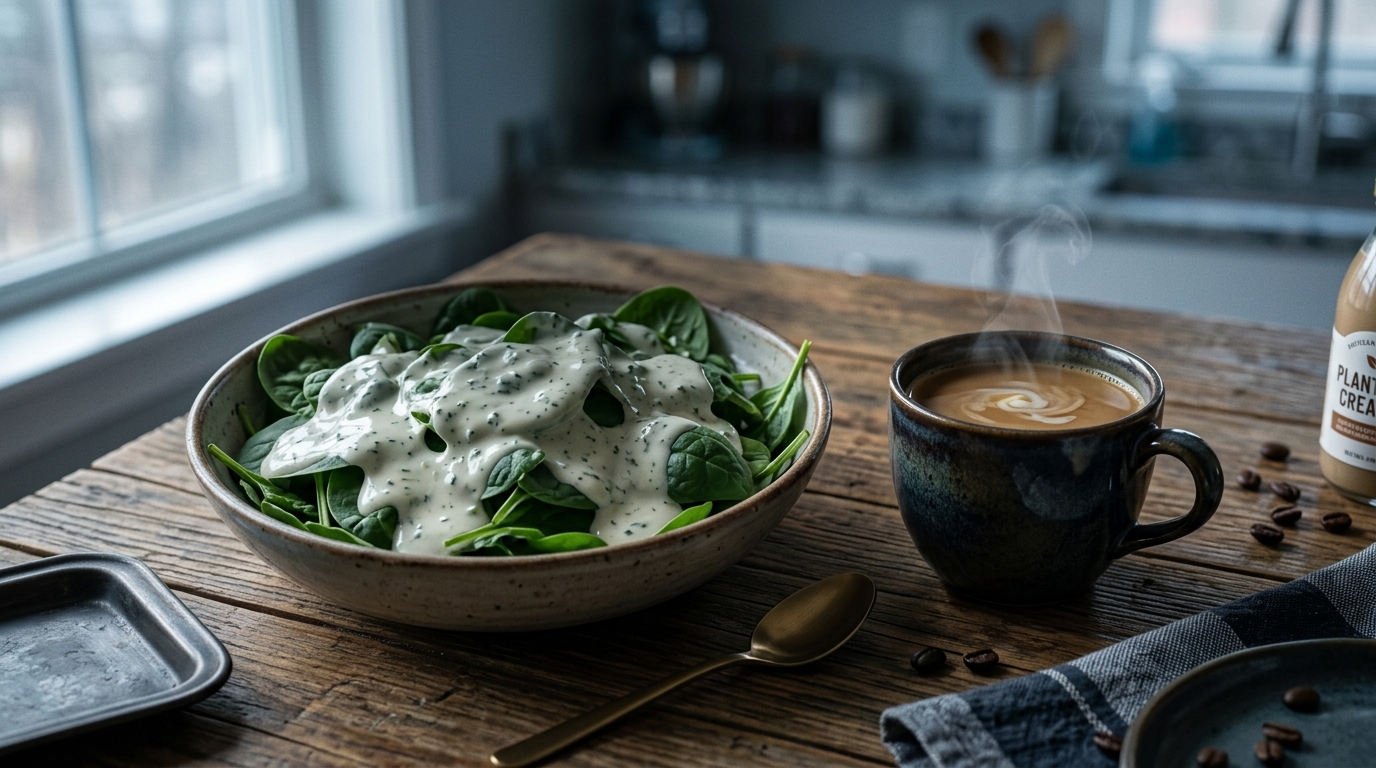
But the real problem is the combination. As Dr. Torres and the host noted: raw spinach with ranch dressing (polysorbate) and a cup of coffee with non-dairy creamer is "the literal worst combination you could have."
Key Takeaways:
Lecithin is also an emulsifier and considered a detergent—it can potentially disrupt the mucus layer too
Oxalates can crystallize (calcium oxalate) and physically damage cells; boiling reduces oxalate content
Pair oxalate-rich foods with calcium (yogurt, kefir) to bind them and prevent absorption
The "perfect storm" meal: raw spinach + ranch dressing + coffee with non-dairy creamer = maximum gut damage
🔵 The Fix: Remove the Emulsifier, Then Repair with Tributyrin
The first step is removal. The damage is mechanical—so removing the source is the only way to stop the assault.
But Dr. Torres's research points to a powerful repair tool: tributyrin, a triglyceride form of butyrate. Unlike free butyrate or sodium butyrate, tributyrin survives digestion and makes it to the colon, where it feeds colonocytes and thickens the mucus barrier. In animal studies, 4–5 grams per day showed significant benefit. Human supplements typically dose at 500mg–1g.
"For people with leaky gut," Dr. Torres says, "I think this would be very good."
Key Takeaways:
Step one: Remove emulsifiers. If it's creamy and shelf-stable, check the label. If it separates, it probably doesn't have emulsifiers.
Step two: Repair with tributyrin—a triglyceride form of butyrate that survives digestion and thickens the mucus barrier
Ghee and butter contain negligible butyrate compared to what gut fermentation produces—supplemental tributyrin is a different league
Tributyrin is especially beneficial for leaky gut, low-fiber diets, and conditions like FODMAP or SIBO where fiber intake is limited
🟣 The Restaurant Salad Trap (Why Your "Healthy" Choice Backfires)
You're at a restaurant. You're trying to make a good decision. You order the salad. Here's the problem: that ranch dressing—the one that makes the salad palatable—is likely loaded with polysorbates, seed oils, sodium, and MSG.
Dr. Torres and the host agree: "Making a salad at most mainstream chain restaurants is one of the worst things you could probably get on their menu."
The fix isn't complicated: order olive oil and vinegar, or accept that the burger might actually be the lesser evil. At home, buy refrigerated dressings made with real cream. Mayonnaise should have a handful of ingredients. If it has a long shelf life and a longer ingredient list, it's Franken food!
Key Takeaways:
Restaurant salads are often worse than burgers due to emulsifier-loaded dressings, seed oils, sodium, and MSG
Refrigerated dressings made with real cream are safer; shelf-stable creamy dressings are suspect
Simple rule: if it separates, it probably doesn't have emulsifiers—and that's a good thing
"I'd rather take 5 seconds to mix it than destroy my gut"
❓ Quick Reality Check (Before We Begin)
🔸 You might be thinking: "But I've always been told these additives are safe. The FDA approves them. Isn't this just another wellness conspiracy?"
The Truth: No one is saying polysorbates are acute poison. The issue is chronic, cumulative exposure. Dr. Torres's research shows the damage is mechanical and dose-dependent—and it adds up over time.
The FDA doesn't study long-term gut barrier disruption from emulsifiers in the context of a Standard American Diet. The science is catching up.
You can hold both truths: these additives are "generally recognized as safe" for acute consumption, and they may be contributing to chronic inflammation and gut dysfunction when consumed daily for decades.
🔸 "Does this mean I have to give up all creamy foods and become a monk who only eats boiled vegetables?"
The Truth: No. This is about awareness and swaps, not deprivation. Buy refrigerated dressings with real ingredients. Use real cream in your coffee. Mix your own salad dressing. Pair oxalate-rich foods with calcium.
If you do consume emulsifiers, consider tributyrin to support repair. The goal isn't perfection—it's reducing the constant assault so your gut can do what it's designed to do: protect you.
🚀 The REAP 5-Minute Accountability Reset
This is how we think. This is how we move. This is how we show up! Don't just read this—run one full round right now:
R — Recognize & Run Out (Minutes 1 & 2)
Name one creamy food in your fridge or pantry right now that you eat every day—your coffee creamer, your ranch, your ice cream. Fact-check it honestly: does it contain "polysorbate" or another emulsifier? Pause the old story that "it's just a little bit, it can't hurt."
E — Exchange + Envision + Emotion (Minutes 3 & 4)
Exchange your input. Visualize your next morning. Instead of reaching for the creamer without thinking, you pick up the carton, scan the label, and make a conscious choice. Feel the shift from autopilot to awareness. Feel the power of knowing exactly what you're putting in your body.
A — Activate with Action (Minute 5)
Write down the one emulsifier-containing product you will swap or eliminate this week. Commit to it before the day ends. Then write down one tributyrin-rich food or supplement you'll add to support repair.
P — Program & Prosper (The Theta Window)
Celebrate tiny wins and lock this in during your neurological goldmine: the first 5–10 minutes after waking, or the last 5–10 before sleep. Stack the reps. Presence becomes identity. Identity becomes reality!
(Note on the science: This is the foundation of Hebbian learning—often summarized as "neurons that fire together, wire together." Repeated mental patterns physically strengthen neural pathways, a principle first established by Donald Hebb in 1949 and continuously validated in modern neuroplasticity research).
🧠 SWAP IT Before Your Next Sip
If this reset shifted something for you, don't let it fade by noon!
Get tomorrow's Thirty Thursday Upgrade — Brainwash Yourself: The 5-Pillar Blueprint to Become Unrecognizable in 6 Months — dropping free at 4:44 AM.
Subscribe Free → and get instant access to the 2-Page REAP & Theta Mornings PDF
🎖️ Wellness Wednesday Upgrade: Go to your fridge right now. Pick up your creamer, your ranch, your ice cream. Scan the ingredients for "polysorbate" (20, 60, 80). If you see it, that's your first swap. Find a refrigerated version made with real cream—or go black.
Five minutes. One shift. One upgrade. Stay focused. Keep building!
P.S. — This is how we reach the perfect day. Not all at once. One deposit at a time. One honest pattern at a time. One upgraded morning at a time. See you tomorrow at 4:44 AM.
🌱 Start Here: The Foundation
🔸 Your Genes Are the Blueprint, Your Beliefs Are the Builder: Rewiring Reality Through Epigenetics
The foundation of our biology teaching: how beliefs, environment, and repeated inputs shape the way we live. CLICK HERE →
🔸 The Illusion of Reality: Where Consciousness Research Meets Direct Experience
The beginning of our consciousness and awakening series—an invitation to question the reality you have been handed. CLICK HERE →
💖 This post exists because I believe the best thing I can do for you is bring you the truth — Scientific, Soulful, and Actionable. YOU are why I'm here—so my mistakes and research become your shortcuts!
Pay It Forward! 🚀
~Brett
TheMorningMotivator.com
We're Upgrading 1%+ Every Day! (+34% Monthly, +38% Annually!)
Medical & Training Disclaimer: Hey, I'm just your science-backed, soul-led, unapologetically human mindset & performance trainer. The content provided in this blog post is for educational and informational purposes only. I am not a licensed physician, physical therapist, or medical professional, and this blog is NOT intended as a substitute for qualified medical advice. Always consult your healthcare provider or certified coach before making major life decisions or life changes. Got it? Good. I'll catch you tomorrow. Peace out!


