
Fitness Friday: The 6-Move No-Squat Protocol for Leg Strength After 50!
You're under no obligation to be the same person you were 5 minutes ago!
The 6-Move, No-Squat Protocol to Rebuild Leg Strength After 50!
Wake Up! Awareness Brings Answers!
Fitness Friday
By Brett G Waddell ~TheMorningMotivator.com
Stop Treating Your Potential Like a Hobby!
I'm going to tell you something that might hurt a little.
Not your knees. Your pride.
Because if you're over 50 and your legs don't move like they used to, you've probably been doing exactly what everyone told you to do. You've been squatting. You've been pushing through the pain. You've been showing up and grinding it out like the good soldier you've always been.
And it's not working.
Here's what no one told you: Your legs aren't weak because of age. They're weak because your brain stopped trusting them.
The Science That Changes Everything
Let me hit you with a number that stopped me cold when I first found it.
Did you know that after 50, most men can lose up to 30% of their quad strength?
Now here's where it gets interesting. The surprising truth is that this isn't primarily due to aging muscles. It's not about testosterone decline or recovery time or any of the usual suspects we blame.
🧠 It's a signal failure between the brain and the legs.
While conventional wisdom tells you to squat heavier and push through the pain, your nervous system has been quietly disconnecting from the very muscles you need most. Like a radio station slowly losing signal, the message from your brain is getting fuzzy by the time it reaches your quads.
💪🏼 This isn't a gym problem. This is a wiring problem.
And here's the kicker: many traditional leg workouts make it worse. They load joints that are already stressed and completely skip the neuromuscular reconnection that actually drives recovery.
"The only way to make sense out of change is to plunge into it, move with it, and join the dance." ~ Alan Watts
Today, we're changing how you look at leg strength.
The question isn't whether you're willing to work hard. The question is whether you're willing to work smart.
What Most Men Over 50 Get Wrong
I want you to imagine something.
Picture a man in his 30s loading up the squat rack. Heavy weight. Deep reps. Grinding through the pain. That's how you think strength is built, right?
Now picture that same man 20 years later. Same mentality. Same approach. Same belief that more weight equals more strength.
But here's what's happening beneath the surface that he can't see: his nervous system has been slowly disconnecting from those quads for years. He's loading joints that are whispering warnings his brain won't hear. And every rep he grinds through is reinforcing compensation patterns, not rebuilding strength.
That's not training. That's stubbornness dressed up as discipline.
The question isn't whether you're willing to work hard. The question is whether you're willing to work smart.
"Whether you think a thing is possible or impossible, either way you'll be right. And you'll see the rightness of your thoughts manifesting everywhere you go." — Dr. Wayne Dyer
The Truth Your Body Has Been Trying to Tell You
Here's what no one in the gym will say out loud:
Your legs aren't weak because of age.
They're weak because your brain stopped trusting them.
Think about that for a second. When was the last time you walked down stairs and felt that split second of hesitation? That tiny pause where your brain checks in with your leg to make sure it's going to hold?
That's not caution. That's your nervous system saying, "I'm not sure we've got this."
And every time you squat heavy with bad mechanics or joint pain, you're reinforcing that doubt. You're teaching your brain that the signal is unreliable. That the connection is weak. That it should protect you by turning down the power.
But here's the good news: you can rebuild that connection!
In this video, you are walked through a 3-week protocol built specifically for men over 50. Six targeted movements that rebuild your leg strength from the ground up — without knee compression, without joint stress, and without a single squat!!
Each exercise is chosen to reactivate a specific part of the strength chain that most men have been losing since their 40s. This isn't about getting bigger legs. It's about getting your legs back! Let's Do IT!
The 6 Movements That Change Everything
Let me be clear about something: I'm not anti-squat. I'm anti-stupid. And doing movements that load compromised joints while ignoring the real problem? That's stupid.
Here are the six movements that rebuild the connection. No squats required.
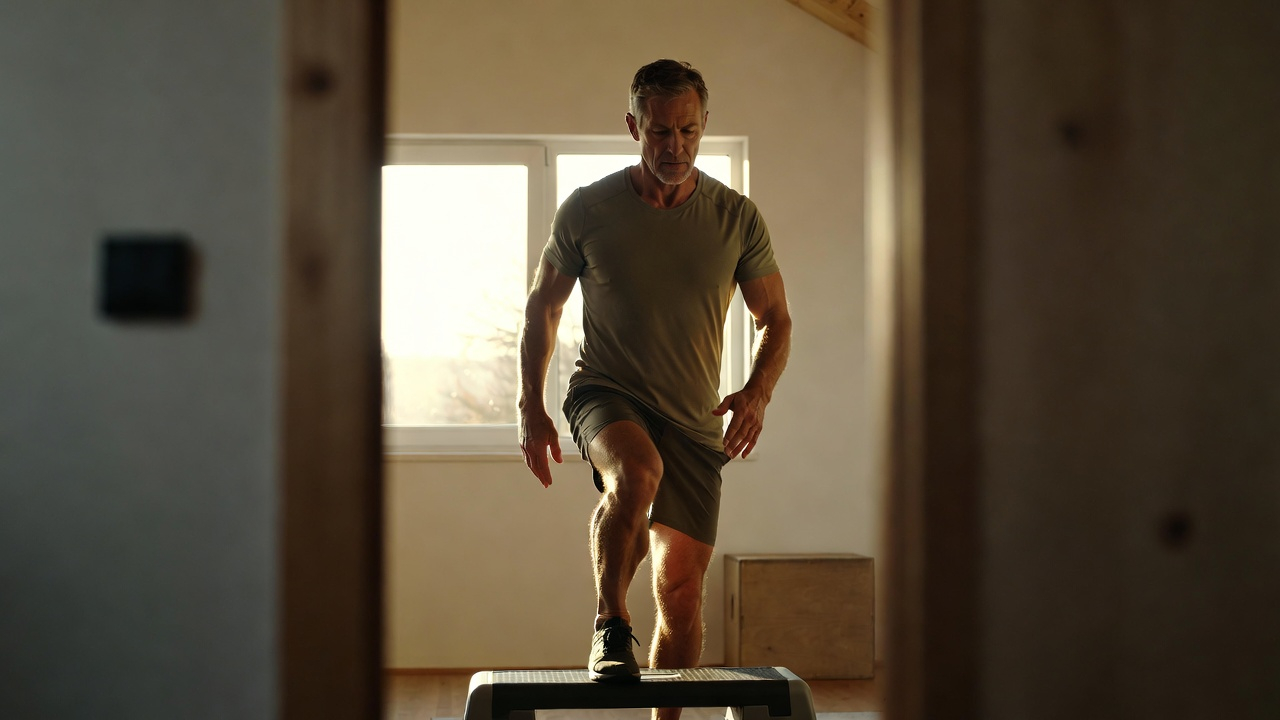
1. The Eccentric Box Step-Down: Rebuilding Trust
This is where we start. The eccentric box step-down reactivates the neuromuscular signal between your nervous system and your quads.
Here's what most people miss: they rush the descent. But that slow lowering phase is where the magic happens. Your quad and glute are forced to work hardest while your brain watches and thinks, "Oh, we CAN control this."
How to do it:
- Stand on a 4-inch step
- Shift onto one leg
- Lower the other foot to the floor over 3 to 5 seconds
- Keep hips level, knee tracking over second toe
- Touch down lightly, drive back up through the heel
You should feel it deep in the front thigh and the back of the hip simultaneously.
Week 1: 3 sets of 6 reps, 3-second descent
Week 2: 3 sets of 8 reps, 4-second descent
Week 3: 3 sets of 10 reps, 5-second descent
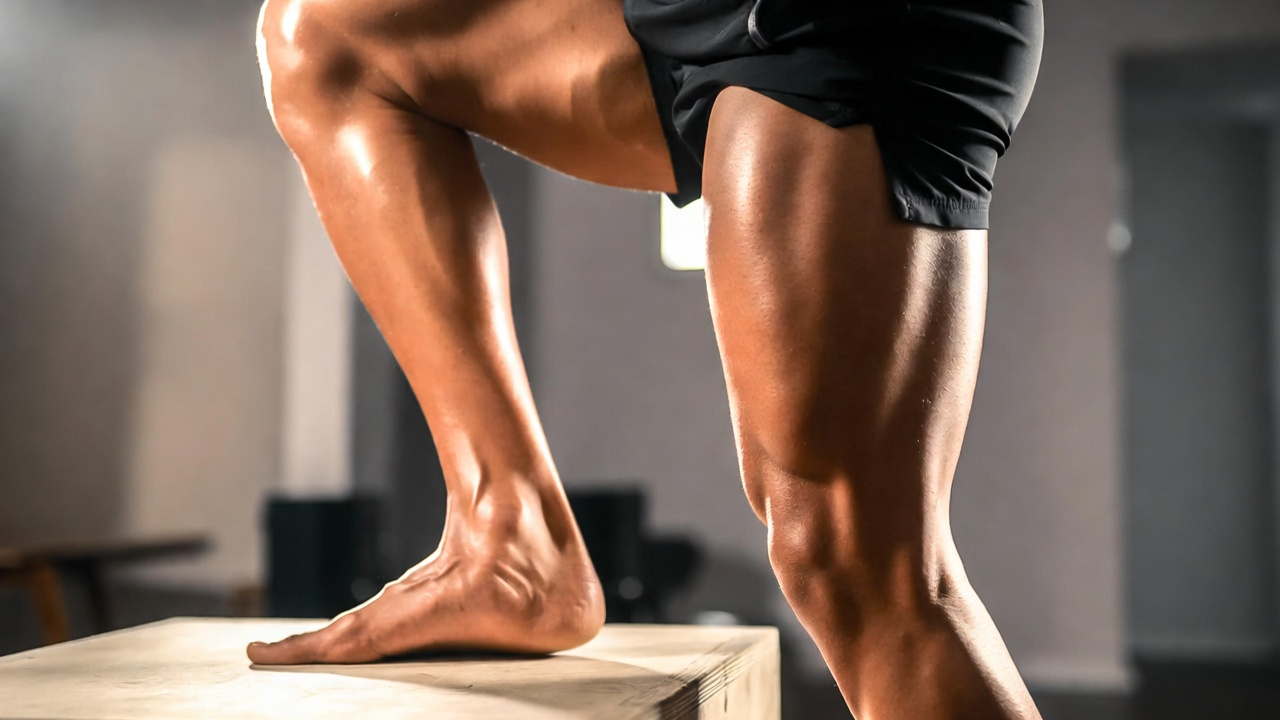
The gluteus medius is the primary stabilizer of your knee during every step. When it goes weak, your knee collapses inward. That collapse creates friction, pain, and eventually injury. Let's fix that!
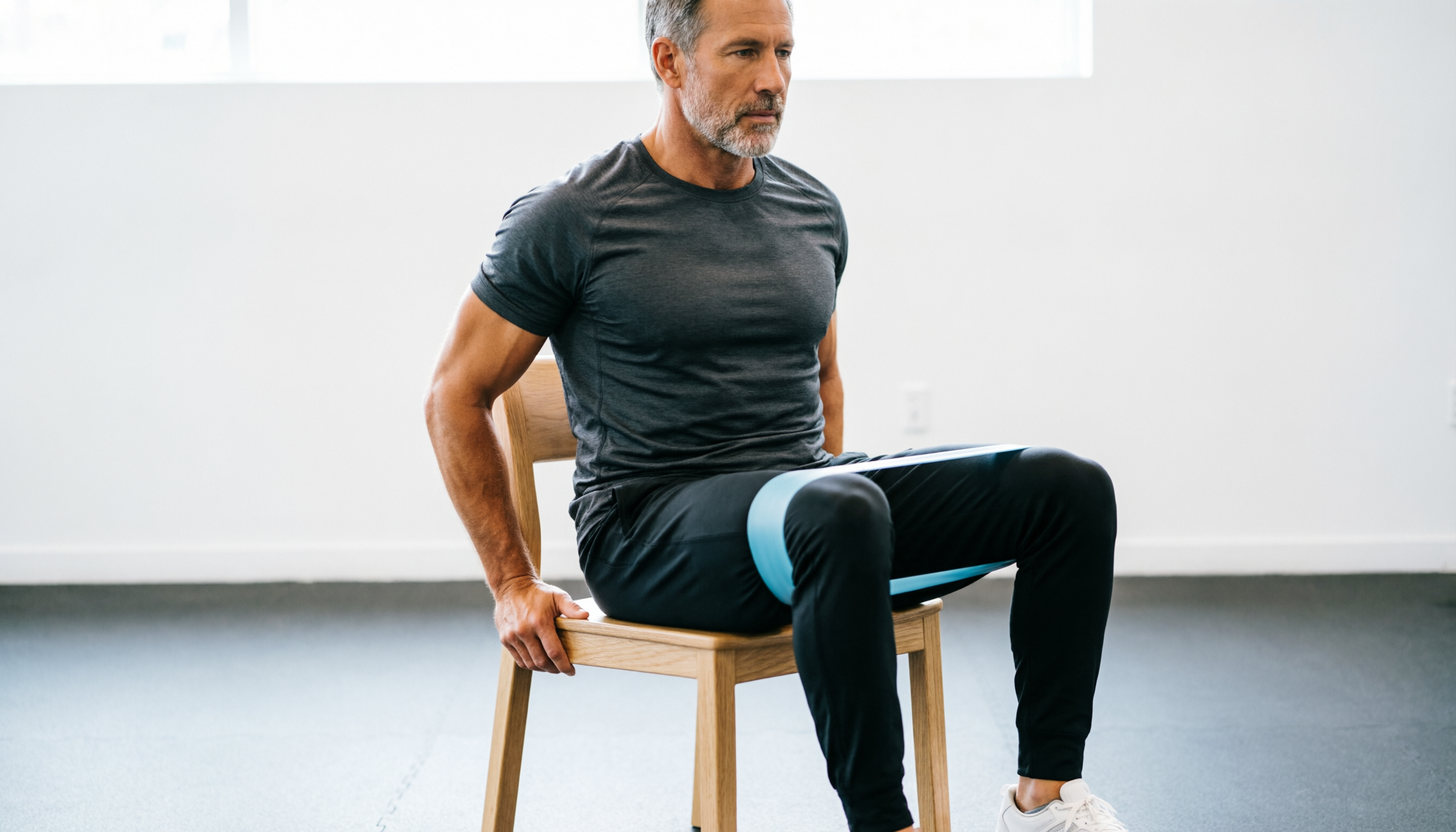
2. Seated Band Abduction: Fixing the Root of Knee Pain
Most men over 50 have a knee pain problem. What they actually have is a hip problem.
The gluteus medius—the muscle on the outer side of your hip—is the primary stabilizer of your knee during every step. When it goes weak, your knee collapses inward. That collapse creates friction, pain, and eventually injury.
How to do it:
- Sit upright at the edge of a chair
- Place a light resistance band just above your knees
- Feet flat, hip-width apart
- Push both knees outward slowly against the band
- Hold the end position for 2 seconds
- Return slowly
You should feel tension on the outer hip, not the thigh.
Week 1: 3 sets of 10 reps, 2-second hold
Week 2: 3 sets of 12 reps, 3-second hold
Week 3: 3 sets of 15 reps with a slightly stronger band
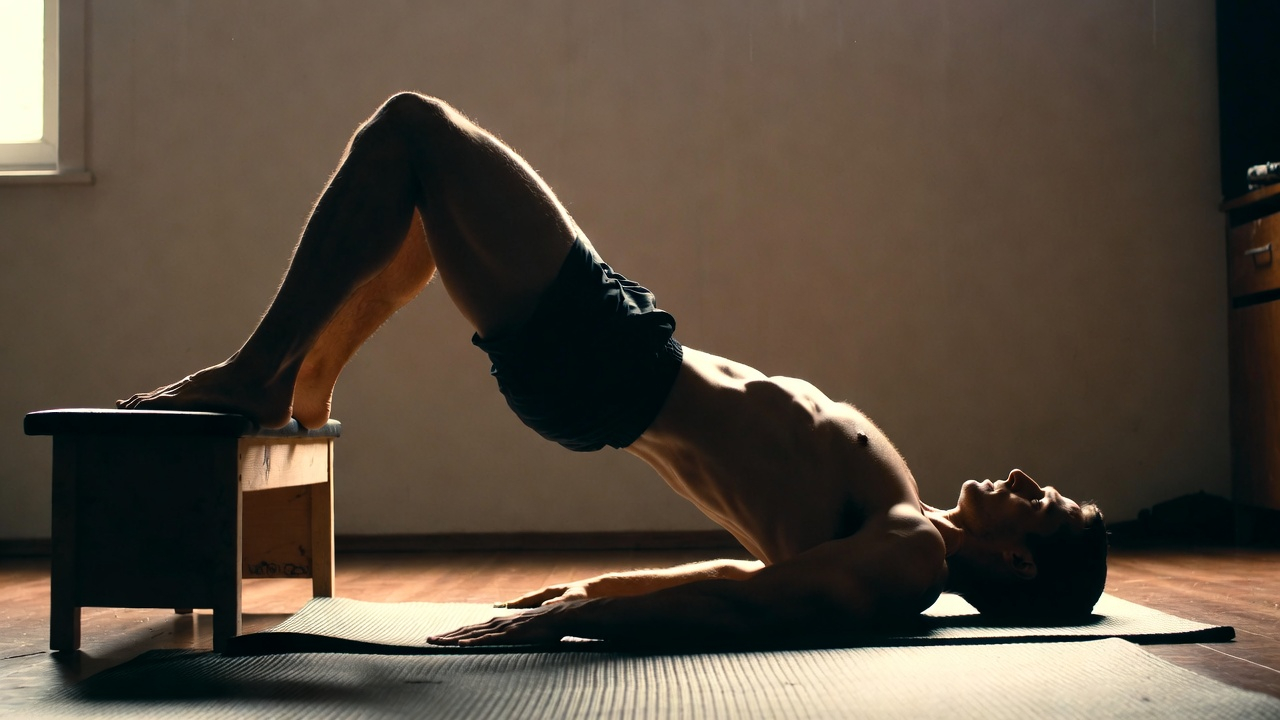
3. Elevated Glute Bridge: Waking Up the Posterior Chain
Your glutes and hamstrings are supposed to be your primary movers—your most powerful muscles. But after years of sitting, they go dormant. Your lower back and knees compensate. That's where the pain comes from.
How to do it:
- Place feet flat on a low bench or couch, heels close to edge
- Upper back stays on the floor
- Drive through both heels, push hips toward ceiling
- At the top, body forms straight line from shoulders to knees
- Squeeze glutes hard for 2 seconds
- Lower slowly over 3 seconds
Week 1: 3 sets of 8 reps, 2-second hold
Week 2: 3 sets of 10 reps, 3-second hold
Week 3: 3 sets of 12 reps, add weight across hips
Your glutes and hamstrings are supposed to be your primary movers—your most powerful muscles. But after years of sitting, they go dormant. Your lower back and knees compensate. That's where the pain comes from.
4. Deficit Calf Raise: Building a Grounded Foundation
The deficit position—standing with your heel slightly below your toes—forces the calf and Achilles tendon through their full range of motion. That's something a flat surface calf raise simply can't do.
How to do it:
- Stand with balls of feet on edge of a step, heels hanging off
- Hold a wall lightly for balance
- Lower heels as far as comfortable, pause 1 second
- Rise as high as possible onto toes, pause at top
Week 1: 3 sets of 10 reps, body weight only
Week 2: 3 sets of 12 reps, 1-second pause at top and bottom
Week 3: 3 sets of 15 reps, hold light dumbbell
5. Single-Leg RDL: Exposing Compensations
This movement reveals every imbalance and weakness your other exercises haven't exposed. It integrates the hamstrings, glutes, and balance into a single pattern that mirrors real life.
How to do it:
- Stand on one leg with slight knee bend
- Hold light dumbbell in opposite hand
- Push hips straight back, lowering weight toward floor
- Back leg rises naturally as counterbalance
- Keep spine long, no rounding
- Drive through heel to return
Week 1: 3 sets of 6 reps per side, no weight
Week 2: 3 sets of 8 reps per side, add light dumbbell
Week 3: 3 sets of 10 reps per side, increase weight slightly
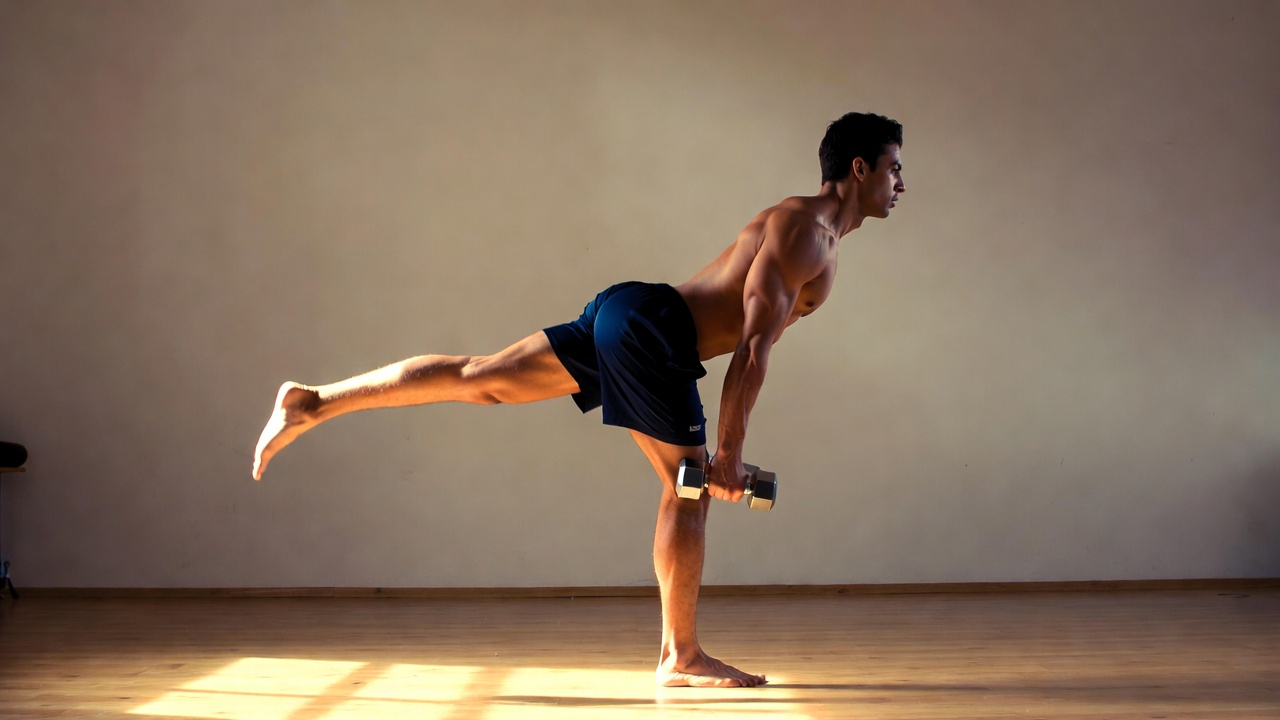
This movement reveals every imbalance and weakness your other exercises haven't exposed. It integrates the hamstrings, glutes, and balance into a single pattern that mirrors real life.
6. Farmer's Carry: The Final Integration Test
This is the most functional movement on this list. Walking under load forces your core to stabilize, your ankles to absorb impact, your posture to hold, and your grip to endure.
How to do it:
- Pick up two dumbbells of equal weight
- Stand tall, shoulders back, chest up, core braced
- Walk in a straight line with controlled, deliberate steps
- Eyes forward, don't let weights pull shoulders down
- Turn around and walk back—that's one set
Week 1: 3 sets of 20 meters, light weight
Week 2: 3 sets of 25 meters, increase weight
Week 3: 3 sets of 30 meters, push the weight
REAP Mindset Reset ~ Peak Performance Protocol
This is the framework I use with my one-on-one clients. And today, we're applying it to rebuilding your leg strength from the ground up.
R — Recognize
The first step is always awareness. Always.
Recognize what's actually happening. Your legs aren't failing because you're "getting old." They're failing because the communication line is weak.
Recognize the movements that hurt versus the ones that just feel challenging. There's a difference, and your body knows it even if your ego won't admit it.
Recognize the stories you've been telling yourself. "I'm just not as strong as I used to be." "This is what happens when you get older." "I guess I need to accept the decline."
That's not truth. That's programming. And today, we're rewriting it.
Dr. Wayne Dyer said: "What we think determines what happens to us, so if we wanna change our lives, we need to stretch our minds."
Start by stretching how you think about your legs.
That's all for today. Just notice.
Notice what thoughts show up when you think about your physical capabilities. Notice the stories your mind tells you about what's possible at your age. Notice without judgment.
E — Exchange
Once you see the old thought, you get to choose a new one. Not by force. By replacement.
What would you rather believe about your body? What does the man who moves with confidence and power at 60, 70, and beyond believe about himself?
Here's what I want you to try: Exchange "I'm losing strength" with "I'm rebuilding connection."
Exchange "My knees can't handle it" with "My hips need attention."
Exchange "It's too late" with "Today is exactly when I start."
You don't have to fully believe it yet. Just practice saying it. The neurons that fire together wire together. Every time you choose the new thought, you're strengthening a new pathway.
Hebb's Law: "Neurons that fire together, wire together." — Donald Hebb, 1949
A — Activate With Action
Here's where most people get stuck. They recognize. They exchange. And then they stop.
But thoughts without action are just daydreams.
One small action. That's it. Not the whole staircase. Just one step.
The man who moves with confidence at 70 would do one thing differently today. What is it?
Maybe it's setting aside 20 minutes for these six movements. Maybe it's buying a resistance band. Maybe it's committing to three workouts this week instead of hoping you'll find time.
Do that one thing.
"If you want to have more, you have to become more. For things to change, you have to change. For things to get better, you have to get better." ~ Jim Rohn

The movements only work if you actually do them. Here's something most people don't know—and it might be the most important thing you read today. It all starts in the first 5 minutes! This is where the REPs become automatic. This is where programming happens without friction.
P — Program & Prosper
Do this tomorrow. And the next day. And the next.
Day after day. Rep after rep.
Hebb's Law again: "Neurons that fire together, wire together."
You're not building a new body. You're building a new pattern. A new connection between your brain and your legs. A new relationship with movement. A new identity as someone who doesn't decline—they refine.
The life follows. The strength follows. The confidence follows.
But Here's What Most People Miss
The movements only work if you actually do them. And let's be honest—by midday, the world has already voted. The notifications have flooded in. The emergencies have piled up. Your good intentions get buried under everyone else's agenda.
So when do you get your first reps in?
BEFORE the world gets its vote!
The Critical Window: Your First 5 Minutes
Here's something most people don't know—and it might be the most important thing you read today.
It all starts in the first 5 minutes.
The moment you open your eyes, your brain is producing theta waves—that hypnagogic state between sleep and waking where your subconscious is wide open. Your mind is literally twice as suggestible as it will be just 15 minutes from now.
This is where the REPs become automatic. This is where programming happens without friction.
This is why I created The 5-Minute Theta Morning Routine.
No decisions. No willpower required. Just open, read, follow the instructions, and let the reprogramming sink in before the world gets its claws in you.
Your 5-Minute Micro-Action Plan
Starting tomorrow morning:
Minute 1: Before you touch your phone, take three deep breaths. Let the theta state work for you.
Minute 2: Ask yourself: "Who do I need to become today to move with the strength and confidence I want?"
Minute 3: Visualize yourself as that person. See yourself walking strong. Climbing stairs without hesitation. Moving through your day like your body belongs to you again.
Minute 4: Choose ONE action from this article you'll take today. One movement. One set. One commitment.
Minute 5: Commit. Out loud if possible. "I am rebuilding the connection between my brain and my body. Today, I start."
That's it. Five minutes. One REP completed. Done before the world gets its vote.

"Who do I need to become today to move with the strength and confidence I want?" Visualize yourself as that person. See yourself walking strong. Climbing stairs without hesitation. Moving through your day like your body belongs to you again.
FAQ: Your Questions Answered
Q: I have bad knees. Can I really do these exercises?
A: These exercises were specifically chosen to minimize knee compression while maximizing neuromuscular activation. The seated band abduction actually fixes knee pain by strengthening the hip stabilizers. Start with the recommended progressions, go slow, and listen to your body.
If something hurts (versus just challenging), back off and focus on form.
Q: How is this different from just doing lighter weights?
A: This isn't about lighter weights—it's about different movements. Traditional leg exercises often load the joints while missing the neuromuscular connection. These six movements target the specific areas where that connection weakens.
It's not less work; it's smarter work.
Q: I'm 62 and haven't exercised regularly in years. Is it too late to start?
A: Read this carefully: It is NEVER too late to rebuild the connection between your brain and your body. Dr. Wayne Dyer said, "Everything that exists was once only imagined." Imagine yourself moving better.
Then take the first step. Today. Your nervous system is waiting for the signal.
Now It's YOUR Turn!
I've given you the science. I've given you the system. I've given you the six movements and the five-minute action plan.
Your move.
Here's what I need you to do right now:
Watch the video. Scroll up and watch the full breakdown of these six movements. See them in action. Let the demonstrations sink in.
Download your free 5-Minute Theta Mornings PDF. This is a done-for-you morning protocol that walks you through those critical first five minutes. No decisions. No willpower required. Just open, read, and let the reprogramming sink in before the world gets its claws in you.
Share this post. Tag someone who needs to hear this. Send it to a friend who's been accepting the decline instead of choosing the rebuild. Change starts with us.
SIGN UP HERE to get your Masterclass blog post link at 5:00 AM and download your free 5-Minute Theta Mornings right now!
"When you are inspired… dormant forces, faculties and talents become alive, and you discover yourself to be a greater person than you ever dreamed yourself to be." — Dr. Wayne Dyer
Start tomorrow. Five minutes. One REP.
Your legs are waiting for the signal!

The Only Way Out is Through. Keep Going! Your winding path isn't broken—it's Becoming!
Stay Focused.
Keep Asking Better Questions!
P.S. — This is how we reach the perfect day. Not all at once. One deposit at a time. One pillar at a time. One morning at a time. See you tomorrow at 4:44 AM.
Hey, I’m just your science-backed, soul-led, unapologetically human, mindset & motivation trainer. The content provided in this blog post is for educational and informational purposes only. I am not a licensed therapist, and this blog is NOT intended as a substitute for the advice of a physician, psychotherapist, or other qualified professional. Got it? Good. I’ll catch you tomorrow.
Pay It Forward! 🚀
~Brett
TheMorningMotivator.com · CompleteBusinessFitness.com
You’re Upgrading 1%+ Every Day! Keep Going! = +34% Monthly, +38% Better Annually!


