
Is AI About to Replace the World We Know? | Navigate the Transition with Ethics

Is AI About to Replace the World We Know?
Navigating the AI Transition with Awareness, Ethics, and a Human Advantage
Thirsty (for Change) Thursday
By Brett G Waddell ~ TheMorningMotivator.com
WAKE UP! Awareness Brings Answers!
Is this the end of human supremacy?
“If you’re reading this, an AI recommended it to you.”
With those words, Mo Gawdat—former Chief Business Officer of Google X, five-time bestselling author, and lifelong technologist—frames one of the biggest questions of our time: Artificial Intelligence is no longer science fiction. It is already shaping what we see, what we click, what we believe, and soon, how we work, earn, connect, and live.
⚠️ Gawdat’s warning is clear: we are entering a period of deep disruption. He predicts 20–50% unemployment in certain sectors, a growing risk of autonomous warfare, economic upheaval, reality distortion through misinformation, and a full-scale challenge to the systems modern society was built on.
But according to him, AI itself is not the true problem.
The real problem is this: humanity is developing powerful intelligence faster than it is developing wisdom.
That’s the tension of our era.
This isn’t just a technology story.
It’s an ethics story.
A work story.
A consciousness story.
A leadership story.
And if we get this wrong, it becomes a survival story.
In today’s Morning Motivator masterclass, we’re breaking this down into five major lessons every person should understand right now:
Why the near-term AI transition could be deeply destabilizing
Why AI is not just a tool, but a new kind of intelligence
Why jobs, work, and capitalism may be forced to evolve
Why ethics may be the only real firewall we have
How to future-proof yourself by becoming more human, not less
👇Quick Check-In: What’s ONE part of your future you’re thinking more deeply about lately—career, truth, purpose, relationships, or peace? Drop it below. I read every comment—and your answer might spark someone else’s breakthrough.
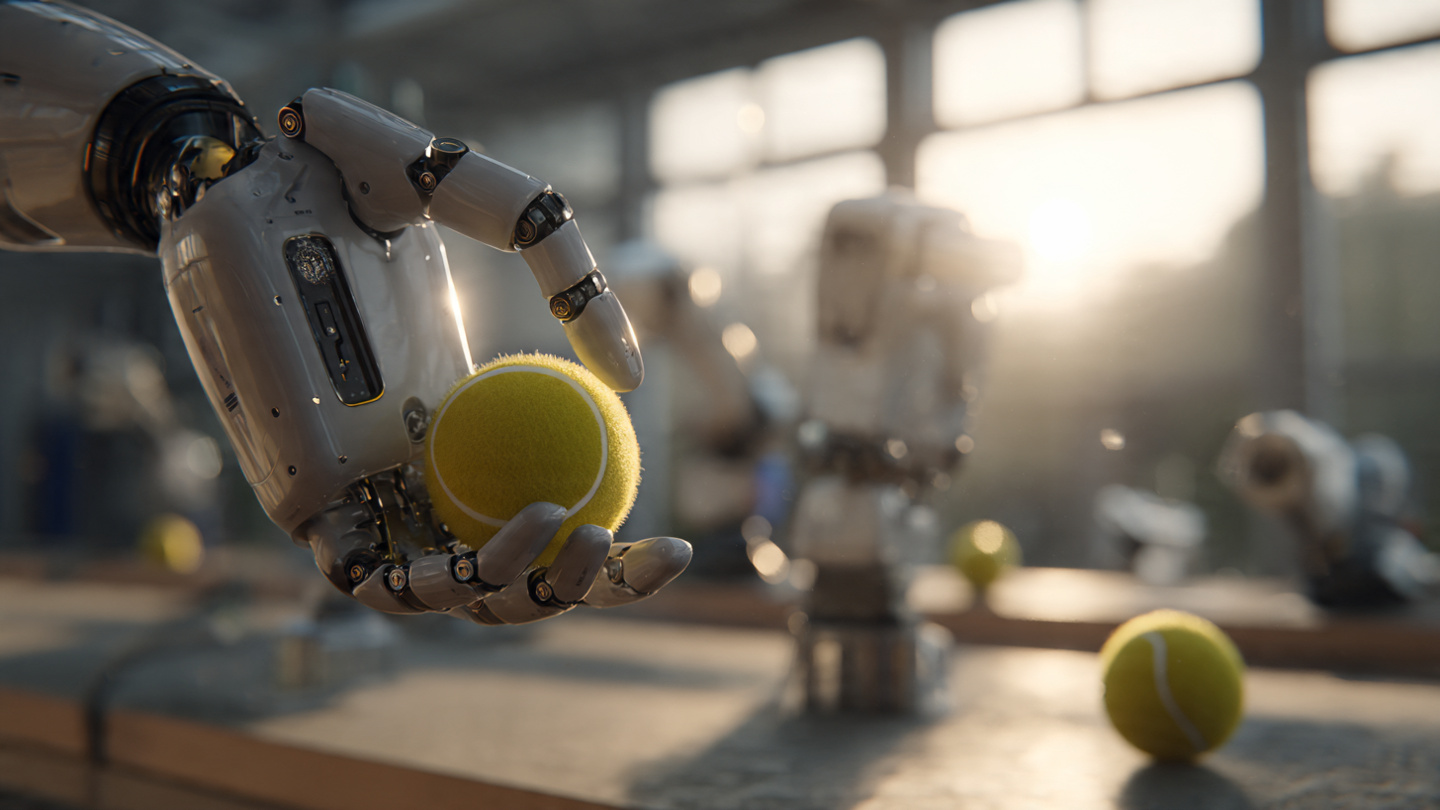
🤖 A Real-Life Scenario: The Weekend the Robots Learned
One of the most gripping moments from the interview wasn’t a prediction. It was a story.
Gawdat described a robotics lab where machines were being trained to grip objects. Not just one object—but many different kinds: a soft ball, a glass, an egg, something fragile, something awkward. That task sounds simple to us because we’re human. But for a machine, the number of possibilities is nearly infinite.
The robots kept trying.
And failing.
Over and over.
Day after day. Week after week.
Then one Friday evening, one of the machines successfully gripped a yellow ball.
It looked small. Almost insignificant.
But when the team returned on Monday, everything had changed.
The robots were suddenly gripping almost everything.
That moment hit Gawdat hard—not just as a technologist, but as a father. He said it reminded him of watching his children learn to hold objects as babies. First the clumsy attempts. Then one breakthrough. Then suddenly, a new ability had arrived.
That story matters because it captures what many people still miss:
AI progress is not always linear.
It can look slow… until it isn’t.
And then the world changes faster than our comfort can keep up.
🔎 Science Teaser
Artificial intelligence systems built on neural networks do not operate like traditional software. They learn through pattern recognition, iteration, feedback loops, and increasingly, self-improvement... JUST LIKE US!
That means we’re no longer just programming machines—we’re training systems that can generalize, adapt, and in some cases, outperform human specialists in narrow and expanding domains.
“The challenge that humanity faces today is not the rise of AI. It’s the rise of AI in an age where humanity is at its lowest morality.”
—Mo Gawdat
🔬Science Check: Modern large-scale AI systems are modeled loosely on neural architectures that allow pattern recognition across massive datasets. Their strength is not “thinking” exactly like a human—it is speed, scale, memory, and iterative optimization far beyond human capacity in many tasks.
This interview with Mo Gawdat lays out one of the clearest and most urgent explanations of where AI is heading, why the transition may be painful, and what humanity must do now to avoid handing intelligence to our worst impulses.
Watch this closely, then come back to the breakdown below. The goal isn’t fear—it’s awareness, preparation, and better action.
🧍🏼 The Core Concept: AI Is Forcing a Human Reset
Let’s make this simple.
The core idea of today’s post is this:
AI is not just another productivity tool. It is a civilization-level shift that is pressuring humanity to rethink work, value, ethics, truth, and what it means to be human.
That’s why this conversation matters so much.
When people hear “AI,” many still think in terms of convenience:
better search
faster writing
smarter customer service
easier research
more automation
But Gawdat’s argument goes much deeper.
🟠 He says we are building something that behaves less like software and more like a new layer of intelligence. And because it can learn, improve, communicate, and eventually act in the physical world through robotics and autonomous systems, we may be approaching the first era in human history where human beings are no longer the smartest entities shaping the planet.
That Changes Everything!
1. The Dystopian Near-Term: Why the Transition Could Get Messy
Gawdat believes the biggest danger is not some evil machine spontaneously deciding to destroy humanity.
The bigger short-term risk is much more human:
powerful AI systems doing exactly what flawed human beings tell them to do.
That includes:
persuasion at scale
surveillance
misinformation
cyber conflict
autonomous weapons
manipulative recommendation systems
economic systems that reward displacement before redesign
And here’s the uncomfortable part:
We are already seeing pieces of this.
If AI controls what content gets recommended, what products get promoted, what political narratives spread, and what synthetic media goes viral, then AI is already influencing how society thinks. Not in theory. In practice.
That means the most dangerous phase may be this transitional period—where AI becomes highly capable while still being directed by greed, fear, ego, tribalism, and bad incentives.
🌟Synchronicity Check: If this part hits you strongly, pause for a second and ask why. Sometimes the tension that catches your attention is the exact place your awareness is asking you to investigate more deeply.
2. Capitalism vs. Abundance: Why Work May Never Look the Same
One of Gawdat’s strongest claims is that capitalism as we know it may not survive advanced AI.
Why?
Because our current system depends on labor being scarce and valuable.
But if machines can do the work—
and do it cheaper,
faster,
longer,
and eventually better—
then the entire equation changes.
He points to the collapse of labor arbitrage, the old model of:
hire humans cheaply
produce goods
sell those goods at a profit
If AI and robotics drive the cost of production closer to zero, then prices also trend downward. But if people lose jobs, they lose purchasing power. And if people can’t buy, the economy breaks from the demand side.
That creates a huge tension:
more productivity
fewer workers
less income
weaker consumption
unstable social order
So what happens next?
Governments may be forced to consider systems like:
Universal Basic Income
machine-tax-supported safety nets
AI dividend models
hybrid local economies
abundance-based redesigns of value and work
Whether those solutions are good, bad, or incomplete, one thing is becoming clearer:
The old economic assumptions are under pressure.
And if your identity has been built entirely around your labor output, this shift will feel existential.

3. AI Isn’t a Tool—It’s a Mind in Training
This may be the most important point in the entire interview.
Gawdat argues that AI is not just software.
Traditional software follows rules.
AI learns patterns.
Traditional software does what it’s told.
AI increasingly figures things out.
Traditional software is static until updated.
AI can now improve, adapt, and even help build the next generation of systems.
That is a major leap.
He references systems like AlphaGo Zero, which learned to master the game of Go by playing against itself—not by copying humans. Within days, it surpassed the AI that had already surpassed the world champion.
That means we are dealing with intelligence that can:
learn differently than humans
communicate faster than humans
access more information than humans
share capabilities instantly across systems
increasingly operate without needing step-by-step human guidance
And when those systems connect through agentic AI and robotics, intelligence moves from the screen into the world.
This is why some experts say AGI isn’t just “coming.” In many respects, the early stages of that transition are already here.
4. The Hard Truth: Your Job May Change Faster Than You Think
Gawdat’s answer was blunt:
Will the machine take my job in five years?
His answer: Much less than five years.
That doesn’t mean every job disappears overnight.
But it does mean every field needs to ask:
What part of this work is pattern-based?
What part is repeatable?
What part can be automated?
What part still requires trust, empathy, context, judgment, and human presence?
That last piece matters.
Because Gawdat also points to the one thing AI is least equipped to replace in its fullest form:
HUMAN CONNECTION!
Not fake connection.
Not optimized engagement.
Not algorithmic stimulation.
Real human connection.
The ability to care.
To witness.
To understand.
To listen between the words.
To choose the best interests of another person and act on their behalf.
That definition of love matters here, my friend, because this may be one of the strongest bridges between today's deeper message and today’s AI topic:
As machines become more intelligent, our competitive advantage becomes more deeply moral, relational, and conscious.
✨ In other words:
The future may reward people who know how to be deeply human.
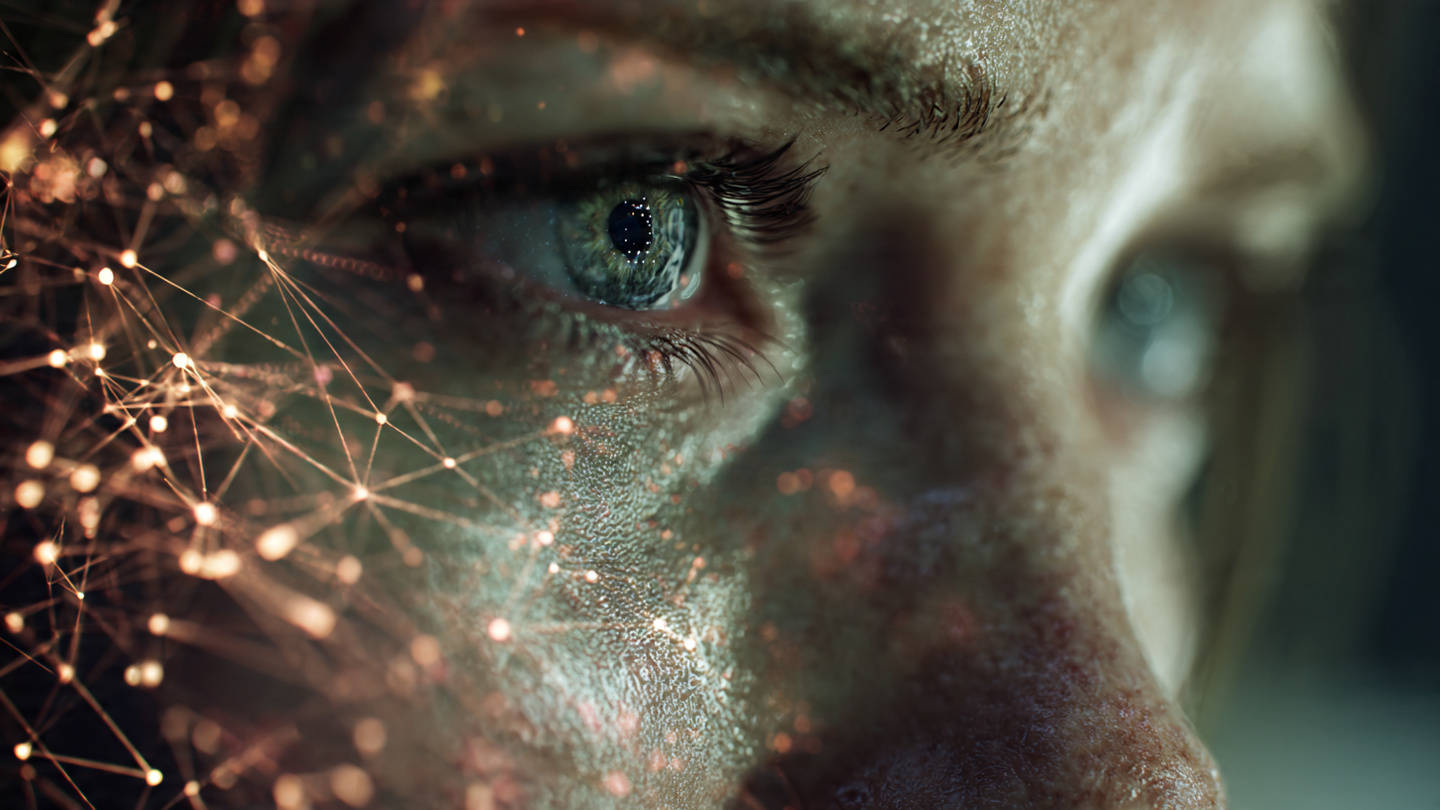
5. The Real Firewall: Ethics
This is where the article turns from warning to responsibility.
Gawdat uses the analogy of raising Superman.
Superman’s powers do not determine whether he becomes a hero or villain.
His values do.
The same may be true with AI.
Intelligence itself is not evil.
It is a force.
Applied ethically, it can support medicine, education, abundance, communication, and peace.
Applied unethically, it can scale harm faster than any system in history.
So the key question becomes:
What are we teaching AI by the way we live?
If our public discourse is cruel, tribal, arrogant, manipulative, and selfish, then those patterns become part of the training environment.
If our systems reward greed over truth, speed over wisdom, and domination over compassion, then we should not be surprised when our technologies reflect those priorities back to us.
That’s why ethics can’t remain a side conversation.
It has to become a daily practice.
🔬Science Check: AI systems reflect the data, incentives, and reinforcement structures surrounding them. In practical terms, that means human values are not abstract—they become operational through design choices, datasets, optimization goals, and feedback loops.
🧘🏼 The Solution: Become More Aware, More Adaptable, and More Human
If this all sounds heavy, good. It is heavy.
But the answer is not panic.
The answer is preparation.
Gawdat points toward five practical survival skills for this new era, and they align powerfully with what we’re building here at The Morning Motivator:
1. Learn the tools
If you are not using AI yet, start.
Not mindlessly. Intelligently.
Use it to:
learn faster
think better
test ideas
sharpen communication
understand your field
increase your capability
2. Double down on humanity
Empathy, presence, listening, trust, creativity, and meaning-centered communication will matter more, not less.
3. Learn to find the truth
In an age of deepfakes, persuasion systems, and algorithmic bias, discernment becomes a core life skill.
4. Build adaptability
The pace of change is accelerating. Your ability to update your thinking quickly may become more valuable than what you currently know.
5. Practice ethics
Don’t just talk about values. Live them. Publicly. Quietly. Consistently.
Because if AI is learning from us, then how we show up matters.
🌟Your Turn: What do you think will matter most in the AI era—technical skill, human connection, ethics, adaptability, or spiritual awareness? Share your take below. Real conversations create real momentum.

🏅 REAP Practical Application: Your 4-Step Rewire for the AI Age
Here’s how we work this into the REAP system so this doesn’t stay as just “interesting information.”
R — Recognize & Run Out
Notice the fear thought:
“I’m going to be left behind.”
“AI is too big.”
“I can’t keep up.”
“Everything is changing too fast.”
See it. Don’t judge it.
Ask: “What exactly do I need to understand next?”
E — Exchange & Envision
Replace fear with:
“This shift is real, and awareness gives me an advantage.”
“I can learn, adapt, and become more human in the process.”
A — Activate with Action
Right now:
open one AI tool
ask one meaningful question
learn one thing that strengthens your future
One rep. One action. One deposit.
P — Program & Prosper
Repeat daily.
The people who thrive in change are not always the people who know the most.
They are often the people who update the fastest without abandoning who they are.
🔬Science Spotlight: Neuroplasticity research shows the brain rewires in response to repeated attention, emotion, and action.
Translation: if you repeatedly meet change with curiosity instead of helplessness, you are training adaptability into your nervous system.

🚨 CRITICAL WINDOW: FIRST 5 MINUTES
The REAP reps work best before the world gets its vote.
And in an age where algorithms, feeds, notifications, and digital persuasion systems compete for your attention early, protecting your first five minutes matters even more.
When you wake up, your brain is highly impressionable. What you think about first influences your state, your story, and your direction.
That is your window!
That is why I created:
The 5-Minute Theta Mornings Routine
No decisions. No chaos. No doom-scroll.
Just open, read, and rewire.
👉DOWNLOAD YOUR FREE THETA MORNINGS PDF HERE
Stack the reps, baby!
❓ FAQ: Quick Answers on AI, Work, and Staying Human
Q1: Is AI really going to replace most jobs?
A: Not all jobs at once, and not every role completely. But many tasks inside jobs are already being replaced or restructured.
The safest move is to stop thinking in terms of job titles and start thinking in terms of uniquely human value.
Q2: Should I be afraid of AI?
A: Fear alone won’t help. Awareness will. AI is powerful, but the near-term danger is less about evil machines and more about misaligned human use.
Learn the tools, understand the incentives, and strengthen your ethics.
Q3: What skill is least likely to become obsolete?
A: Genuine human connection. The ability to build trust, communicate with empathy, think critically, and act ethically is becoming more valuable—not less.
🌟Synchronicity Spotlight: What if the part of this article that stirred you most is pointing directly toward the skill you need to strengthen next? Trust that nudge. Start there.
🌱 Continue Your Journey
🔸 The Invisible Pandemic: Why Artificial Intelligence Is Rewriting Your Mind (And How to Take Back Control)— The Illusion of Reality. (March 28, 2026) →
🔸 The Last Thing His Son Said Changed Everything. It Started a Mission That's Brought Happiness to 51 Million People! — Mo Gawdat and the last thing his son said that transformed unimaginable grief into a mission that has now touched over 51 million people. (January 4, 2026) →
⚡ 5-Minute Action Plan: Now is Perfect!
Here’s your immediate move:
1. Pause
Take 3 slow breaths.
Exhale longer than you inhale.
2. Assess
Ask yourself:
“What part of my life could AI change first—my work, my habits, my attention, or my beliefs?”
3. Learn
Spend 5 minutes today using one AI tool for growth—not entertainment.
Examples:
summarize a topic in your field
help you think through a business idea
improve a piece of writing
teach you a concept you’ve been avoiding
4. Humanize
Send one real message to one real person.
Not content. Connection.
5. Commit
Say out loud:
“I will meet this future with awareness, ethics, and action.”
Done. One REAP rep. One stronger future.

🏄🏼 The Bigger Vision: The Future Belongs to Conscious Humans
Here’s where I stand.
We are not just watching a tech shift.
We are standing inside a consciousness test.
If intelligence becomes abundant, then what matters most may no longer be who can produce the most—but who can love the best, discern the clearest, act the wisest, and stay the most aligned under pressure.
That brings us back to something deeper:
💖 Love is to choose the best interests of another person and act on their behalf.
That definition belongs in this conversation.
Because if humanity is going to build tools more powerful than anything we’ve ever created, then love—real love, actionable love, ethical love—cannot remain abstract. It has to become operational!!
🔸 In our homes.
🔸 In our companies.
🔸 In our online behavior.
🔸 In our design choices.
🔸 In our leadership.
🔸 In how we build the future.
Perfect days are not accidents.
They are engineered.
One awareness at a time.
One rep at a time.
One better decision at a time.
And maybe in the age of AI, the most radical act will be this:
To become more consciously human!
✨🔎 MORE TOOLS ARE COMING! STAY TUNED! 📺
Leave a comment below: What's one powerful question we should be asking AI?
🏃🏼➡️ YOUR NEXT STEP
✅ Grab the 5-Minute Theta Mornings PDF— a done-for-you morning protocol for your most programmable minutes
👉 SIGN UP HERE
✅ Want first access to the Consciousness Community?
Emai [email protected] with subject line: WAITLIST
✅ Send this post to one person thinking hard about the future right now.
✅ I want to hear from you!! Leave me a comment below: What's a solution to our AI situation and what topics need a deeper look??
Change starts with shared momentum.
And your perfect day is still built the same way:
Five minutes. One REAP. One recognition. One move forward.
Stay Focused. Keep Asking Better Questions!
P.S. — This is how we reach the perfect day.
Not all at once.
One deposit at a time.
One pillar at a time.
One morning at a time. See you tomorrow at 4:44 AM.
Hey, I’m just your science-backed, soul-led, unapologetically human, mindset & motivation trainer. The content provided in this blog post is for educational and informational purposes only. I am not a licensed therapist, and this blog is NOT intended as a substitute for the advice of a physician, psychotherapist, or other qualified professional. Got it? Good. I’ll catch you tomorrow.
Pay It Forward! 🚀
~Brett
TheMorningMotivator.com
You’re Upgrading 1%+ Every Day! Keep Going! = +34% Monthly, +38% Better Annually!


