
Minimum Effective Dose: The 73-Year-Old's Longevity Secret

The 73-Year-Old Longevity Expert Who Says You're Working Out Too Hard (And What To Do Instead)
You can hit 85% of your genetic potential with daily walking, two strength sessions, and one sprint per week. Most people are doing too much of the wrong thing—and their feet are paying the price.
Fitness Friday
By Brett G Waddell ~ TheMorningMotivator.com
🎙️ This Weekend on The Morning Motivator — featuring Gabby Bernstein and her guests:
Spotlight Saturday: The 6 Signs Spirit Is Guiding You Right Now (You're Ignoring #3)
Strategic Sunday: The Invisible Drain — How to Cut Energetic Cords and Release Resentment for Good
Two days. Two experts. One host bringing them in. Free at 4:44 AM. Subscribe →
WAKE UP! Awareness Brings Answers!
You woke up this morning, grabbed your phone before your feet even hit the floor, and somewhere between the scroll and the coffee, you told yourself the same lie you've told yourself a thousand times: "I'll start tomorrow."
I've been there. For years, I treated my body like a machine I could just override—push harder, sleep less, grind more. I thought discipline meant ignoring every signal my body sent me. And then one day I realized I wasn't disciplined. I was just… disconnected.
Here's what I've learned: most of us aren't lazy. We're just exhausted from doing all the wrong things harder. We're running ourselves into the ground when we should be walking. We're chasing the next hack when we haven't nailed the basics.
👉🏼 And the cost? It's not just feeling tired. It's the fall you don't catch at 65. The hip you break at 70. The grandkids you can't chase. The life you planned to enjoy "someday" that never comes because you spent today running on a treadmill to nowhere.
That's why I brought in someone who's been living this for 60 years. Mark Sisson is 73, ripped, and more fired up than men half his age. He's not selling you a hack—he's selling you the truth: you're probably doing too much of the wrong thing and not enough of the right ones. And what he's about to tell you about your feet might just change everything.
But here's the real question: if you found out that the key to living longer, moving better, and feeling vibrant wasn't about adding more—but about doing less, more intelligently… would you actually be willing to slow down and do it? Or would your ego keep you running until you break?
🏆 Fitness Friday UPGRADE
Most people think more is better—more miles, more sets, more sweat. Mark Sisson did the opposite for 60 years and he's 73 with the same body fat he had as a marathoner. Here's the real problem: you're not undertrained. You're overrun.
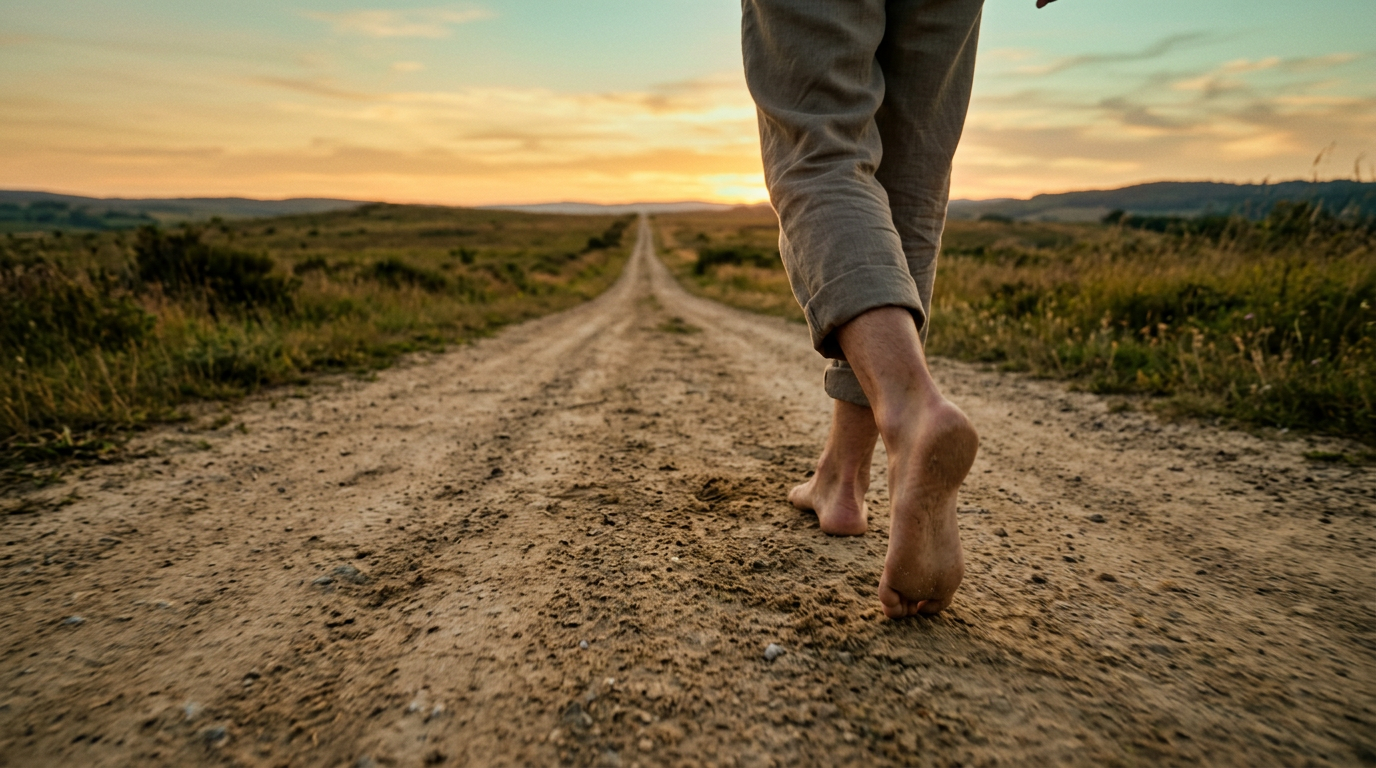
🎖️ The Upgrade: On your very next walk, leave the cushioned shoes at home. Go barefoot or wear minimal footwear for 10 minutes. Feel the ground. That's the signal your brain has been missing.
(Full REAP breakdown and theta application below 👇)
That's not just a footwear swap. That's how you rebuild the foundation of every step you take for the rest of your life. Awareness, as always, brings answers. Here's the breakdown.
"Everyone would be better off slightly undertraining than slightly overtraining. There's no benefit to be gained from overtraining. It's one of the worst things you can do."
— Mark Sisson
Don't have time for the full podcast? I already pulled the exact moments that matter below. Hit play if you want to see it live, or keep scrolling for the breakdown.
Seeing it makes it real. Now, let's extract the exact mechanics so you can apply this to your life today. Keep reading for the core concepts, the 5-minute audit, and the REAP framework to wire this in for good.
🌞 The Core Concept: The Minimum Effective Dose — Why Less (Done Right) Beats More
Mark Sisson spent decades as an elite endurance athlete. He ran 50 marathons, competed in Ironman Hawaii, and trained alongside world-class triathletes.
Then he spent the next 30 years learning that almost everything he did was wrong for longevity.
At 73, he's leaner, stronger, and more vibrant than most men in their 40s. His secret isn't more discipline—it's smarter discipline.
Here's what he's learned.
🟢 Pillar #1: Diet — Metabolic Flexibility Is the Holy Grail
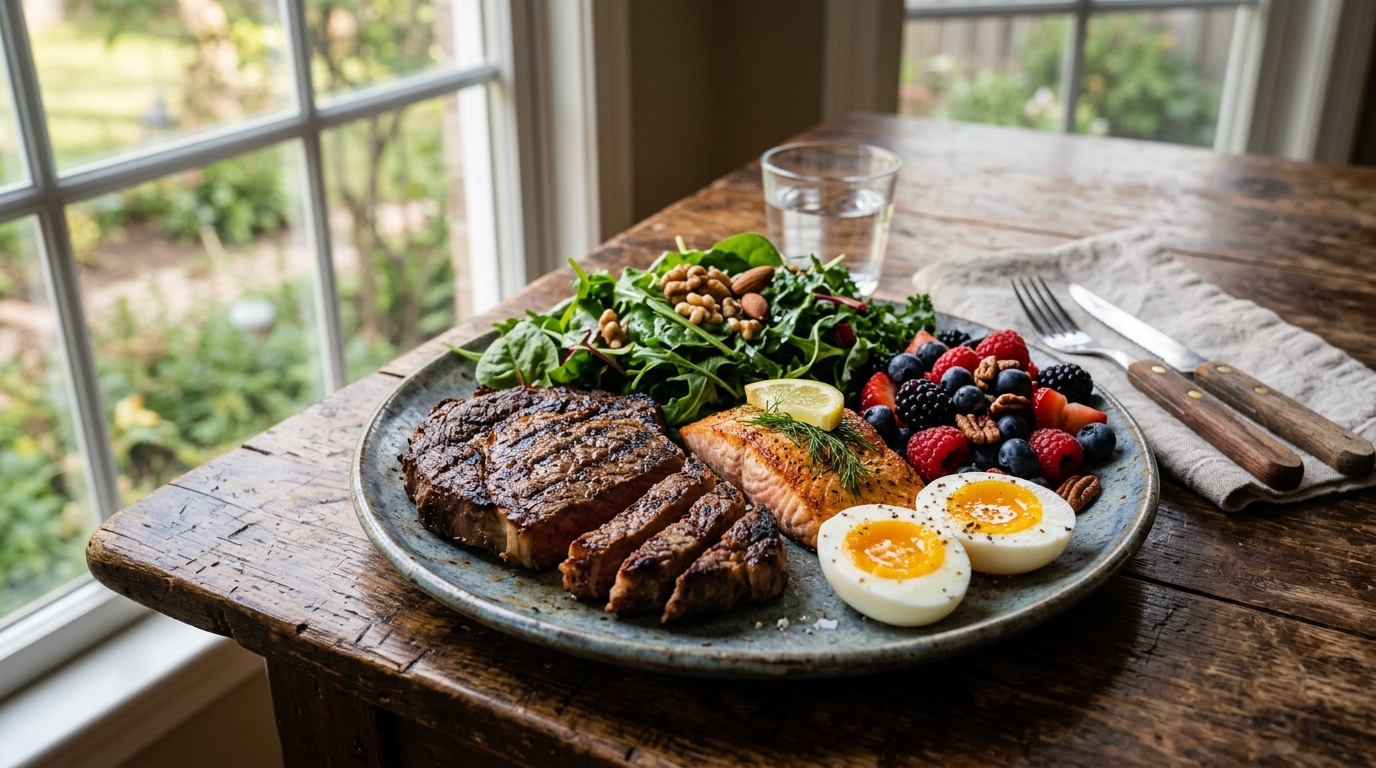
Eighty percent of your body composition and energy production comes from the food choices you make—not just what you eat, but how much and when.
Mark's formula: eliminate the processed foods, sugars, sweetened beverages, pies, cakes, and candies. What's left is an infinitely sustainable list—meat, fish, fowl, eggs, nuts, seeds, vegetables, and a little fruit.
The goal isn't deprivation. It's metabolic flexibility—the ability to burn your own stored body fat all day long instead of running to the refrigerator every time you feel low on energy. You achieve it through carb restriction, time-restricted eating, and low-level movement that trains your body to burn fat.
Key Takeaways:
Eliminate processed foods, sugars, and seed oils — what's left is your sustainable list
Metabolic flexibility means burning stored fat instead of constantly refueling
You cannot out-exercise a bad diet. Period.
🟡 Pillar #2: Movement — Walk More, Lift Twice, Sprint Once
Humans are designed to move all the time—through different ranges and planes of motion. But "movement" doesn't mean grinding through daily brutal workouts.
Mark's minimum effective dose: lots of low-level activity (walking, Zone 1-2), lift heavy things twice a week (spread around the body, put muscles under tension, not to failure), and sprint once a week (20-30 second all-out bursts with 2-minute rest).
That's it. If you're doing it right twice a week, you can't do it again the next day—you need recovery. That's not a bug. That's the design.
Key Takeaways:
Walk, don't run — low-level activity is the foundation
Lift heavy twice a week — no pain, no gain is a myth
Sprint once a week — 20-30 seconds all out, then rest 2 minutes, repeat
More is not better. Slightly undertraining beats slightly overtraining.
🔵 Pillar #3: Sleep — Consistency Beats Duration
Mark wakes up three or four times a night. He's 73 and has prostate concerns. He doesn't apologize for it. The assumption that you need eight hours of uninterrupted sleep is a misnomer. Ancestral sleep patterns involved waking in the middle of the night, walking around, maybe eating something, and going back to sleep.
What matters most? Consistency—getting up at the same time every day, even if you went to bed late. Don't shift your whole schedule just to chase eight hours. Get up, get moving, and let your body find its rhythm.
Key Takeaways:
Waking up at night is normal and ancestral
Consistency of wake time matters more than total duration
Don't apologize for the sleep you need — but don't chase a myth either
🔴 Pillar #4: Stress — Find Your Meditation (And Reframe Your Language)
When Mark figures out stress management, he'll let you know. But here's what he's learned: it comes with age, refinement, and not caring as much.
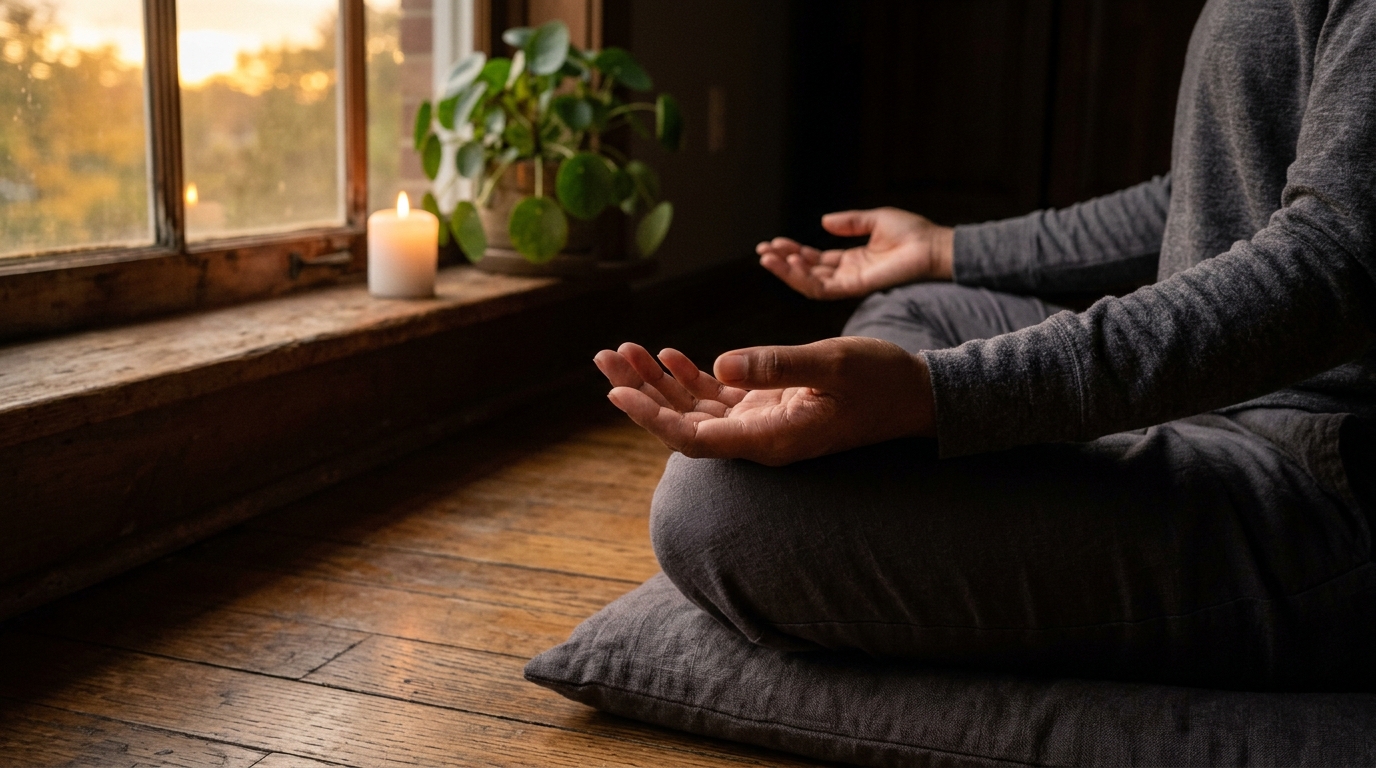
His daily practice? A 50-minute walk every night at 6:30. He reframed it from "I have to go for a walk" to "I get to go for a walk." That walk is his meditation, his de-stressing, his most productive thought time.
And it's also when he senses the ground beneath him—a gratitude and connection he never had before. "When people work out too much more than they're trained to do," Mark says, "it's not the muscles that give out. It's the central nervous system that's taken an onslaught."
Key Takeaways:
Stress management starts with reframing your language
A daily walk can be your meditation, your reset, your gratitude practice
Overtraining is a central nervous system assault — not just muscle fatigue
🟣 The Foot Health Revolution — The Lowest Hanging Fruit in Longevity
This is the part that changes everything. The greatest risk of mortality for anyone over 50 is falling and breaking something. Thirty percent of people who fall and break a hip die within a year. Another thirty percent are incapacitated for life.
And it's almost directly a function of your foot strength—particularly the strength in your big toe. Your feet have tens of thousands of sensory receptors that tell your brain how to orchestrate every step, every jump, every change of direction.
Modern shoes—cushioned, narrow, heel-raised—cut off that signal. They atrophy your feet, destroy your gait, and disconnect you from the ground.
Mark's solution: wide toe box, individual toe slots, thin sole, zero drop. "Relax, realign, strengthen." It's not just for athletes. It's for anyone who wants to walk without pain, fix bunions, and maintain mobility for life.
Key Takeaways:
Falling and breaking a hip is a top mortality risk for people over 50
Foot strength — especially the big toe — determines whether you catch yourself when you trip
Modern cushioned shoes atrophy your feet and cut off sensory input to the brain
Foot health is the new sleep — the lowest hanging fruit in longevity
⚫ The Anti-Biohacking Stance — Bad Data Is Worse Than No Data
Mark calls biohacking "the day trading of health." If you haven't nailed the basics—diet, movement, sleep, stress—no amount of methylene blue, cold plunges, or CGMs will save you.
He's "the unquantified self." He doesn't need a ring to tell him how he slept. He doesn't need a CGM to tell him an extra bowl of rice will spike his blood glucose. He already knows. "To what end are we taking this information?" he asks. "How are you going to change your life?"
The basics are free. The basics work. Everything else is noise.
Key Takeaways:
Biohacking is the day trading of health — most people lose
If you haven't nailed the four pillars, no gadget will save you
Bad data is worse than no data — trust your instincts
❓ Quick Reality Check (Before We Begin)
🔸 You might be thinking: "But I've always been told cardio is king for heart health and longevity. Isn't walking just… not enough?"
The Truth: Walking is the most sustainable, lowest-impact, highest-return movement you can do. It builds metabolic flexibility, supports your nervous system, and doesn't assault your central nervous system the way chronic running does. You can hold both truths: intense cardio has its place, and daily walking is the foundation that makes everything else possible.
Mark hasn't run a mile in 35 years. He's 73 and ripped. The science supports consistency, not chronic intensity.
🔸 "Does this mean I have to throw out my running shoes and never run again?"
The Truth: No. If you're a genetically gifted runner—ectomorph, long legs, large lung capacity, high pain tolerance—run once in a while. If you want to do a 5K or a marathon as a bucket list item, go for it.
But understand that it's a catabolic event. It breaks down muscle. It's not advancing your longevity strategy. The fix isn't never running—it's recognizing that running is not the foundation. Walking is.
🚀 The REAP 5-Minute Accountability Reset
This is how we think. This is how we move. This is how we show up! Don't just read this—run one full round right now:
R — Recognize & Run Out (Minutes 1 & 2)
Name one area where you've been overdoing it—more miles, more sets, more intensity—and calling it discipline. Fact-check it honestly: has that extra effort actually moved you closer to vibrant health, or just kept you exhausted and injured? Pause the old "more is better" story.
E — Exchange + Envision + Emotion (Minutes 3 & 4)
Exchange your input. Visualize your next walk—not a run, a walk. Feel your feet connecting with the ground. Envision what it would feel like to move without pain at 75. Feel the shift from "grinding through workouts" to "building a body that lasts."
A — Activate with Action (Minute 5)
Write down the one walk you will take today—barefoot or in minimal shoes—and commit to it before the day ends.
P — Program & Prosper (The Theta Window)
Celebrate tiny wins and lock this in during your neurological goldmine: the first 5–10 minutes after waking, or the last 5–10 before sleep. Stack the reps. Presence becomes identity. Identity becomes reality!
(Note on the science: This is the foundation of Hebbian learning—often summarized as "neurons that fire together, wire together." Repeated mental patterns physically strengthen neural pathways, a principle first established by Donald Hebb in 1949 and continuously validated in modern neuroplasticity research).
🧠 LOCK IN Your Next Step Before You Take It
If this reset shifted something for you, don't let it fade by noon!
Get tomorrow's Spotlight Saturday Upgrade — 6 Signs Spirit Is Guiding You Right Now (You've Been Ignoring #3) — dropping free at 4:44 AM.
Subscribe Free → and get instant access to the 2-Page REAP & Theta Mornings PDF
🎖️ Fitness Friday Upgrade: On your very next walk, leave the cushioned shoes at home. Go barefoot or wear minimal footwear for 10 minutes. Feel the ground. That's the signal your brain has been missing!
Five minutes. One shift. One upgrade. Stay focused. Keep building!
P.S. — This is how we reach the perfect day. Not all at once. One deposit at a time. One honest pattern at a time. One upgraded morning at a time. See you tomorrow at 4:44 AM.
🌱 Start Here: The Foundation
🔸 Your Genes Are the Blueprint, Your Beliefs Are the Builder: Rewiring Reality Through Epigenetics
The foundation of our biology teaching: how beliefs, environment, and repeated inputs shape the way we live. CLICK HERE →
🔸 The Illusion of Reality: Where Consciousness Research Meets Direct Experience
The beginning of our consciousness and awakening series—an invitation to question the reality you have been handed. CLICK HERE →
💖 This post exists because I believe the best thing I can do for you is bring you the truth — Scientific, Soulful, and Actionable. YOU are why I'm here—so my mistakes and research become your shortcuts!
Pay It Forward! 🚀
~Brett
TheMorningMotivator.com
We're Upgrading 1%+ Every Day! (+34% Monthly, +38% Annually!)
Medical & Training Disclaimer: Hey, I'm just your science-backed, soul-led, unapologetically human mindset & performance trainer. The content provided in this blog post is for educational and informational purposes only. I am not a licensed physician, physical therapist, or medical professional, and this blog is NOT intended as a substitute for qualified medical advice. Always consult your healthcare provider or certified coach before making major life decisions or life changes. Got it? Good. I'll catch you tomorrow. Peace out!


