
He Quit Silicon Valley to Teach Meditation—The 6-Phase System

He Quit Silicon Valley to Teach Meditation—Here's the 6-Phase System That Rewrites Your Future
Vishen Lakhiani's 6-Phase meditation turns passive practice into active life design—compassion, gratitude, forgiveness, vision, perfect day, blessing—to manifest your future and crush your goals.
Thirsty (for Change) Thursday DEEP DIVE
By Brett G Waddell ~ TheMorningMotivator.com
Don't miss tomorrow's Fitness Friday Upgrade: The 72-Hour Rule: How to Build Muscle With Only 2 Days a Week — free at 4:44 AM. Subscribe →
WAKE UP! Awareness Brings Answers!
You know that moment when you're lying in bed, phone in hand, watching your third motivational video—and you still feel stuck? Yeah. That was me for years. Consuming everything, creating nothing.
I didn't realize I was doing the same thing with meditation. Sitting. Breathing. Waiting for something to happen. Passive. Receptive. Empty.
Then I found Vishen Lakhiani—a guy who quit Silicon Valley to teach meditation. And he said something that reframed everything: "The point of meditation is not to get good at meditation. It is to get good at life."
That's when I learned the difference between passive meditation and active meditation. One helps you cope. The other helps you create.
Vishen's 6-Phase system is the active kind—a daily practice that rewires your future instead of just calming your present.
If you've ever felt stuck in consumption mode—watching, reading, scrolling, but never changing—this is the phase that breaks it.
Stay with me. small choices = BIG LIFE!
"The point of meditation is not to get good at meditation. It is to get good at life."
— Vishen Lakhiani
"Compassion is not something you do for other people. That's a great side effect. Compassion is something you do for yourself."
Don't have time for the full podcast? I already pulled the exact moments that matter below. Hit play if you want to see it live, or keep scrolling for the breakdown.
Seeing it makes it real. Now, let's extract the exact mechanics so you can apply this to your life today. Keep reading for the core concepts, the 5-minute audit, and the REAP framework to wire this in for good.
🌞 The Core Concept: Active Meditation—The Power Tool You've Been Missing
Most people think meditation is about emptying your mind, sitting still, and hoping something magical happens. Vishen Lakhiani wants you to throw that idea out the window!
He grew up in a Hindu family in Malaysia, dragged to temple to listen to a priest speak in Sanskrit—a language he didn't even understand. He hated it. At 19, he gave up Hinduism entirely. But then he found something different: a form of meditation that wasn't about escaping your problems—it was about solving them.
That's the difference between passive and active meditation. And it changes everything!
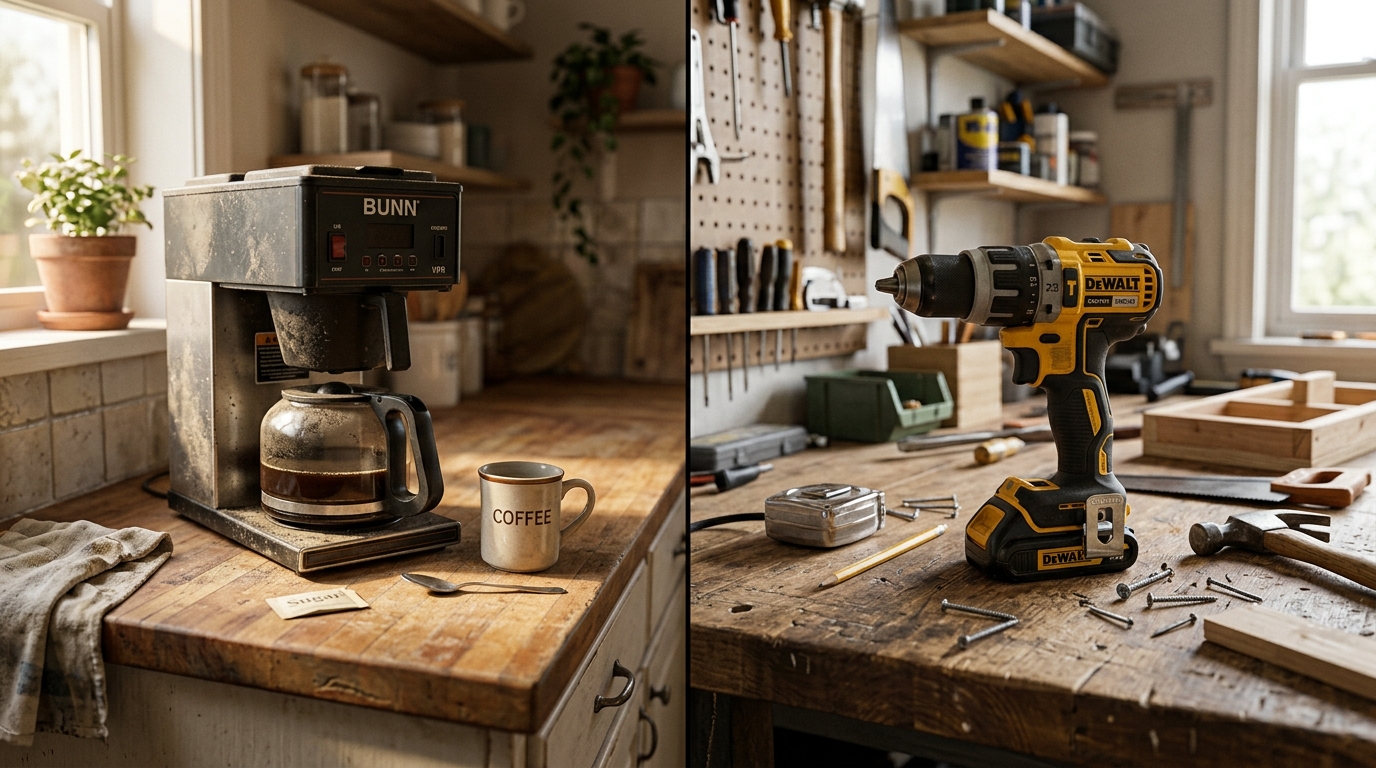
🟢 The Coffee Maker vs. The Electric Drill
Vishen uses a simple analogy to explain the two types of meditation tools you need in your arsenal.
A coffee maker is something you use every single day—it puts you in a good state to start your morning. An electric drill is a power tool. You don't use it daily. You use it when you have a problem to solve, a hole to drill, something specific to fix.
In meditation, the same principle applies. You need a daily practice (the coffee maker) AND a problem-solving tool (the electric drill).
The 6-Phase system is the coffee maker—something you use every single day, even if your life is already amazing, because it puts you in a peak state for work, happiness, and human connection.
The Silva Method is the electric drill—you pull it out when you've got a migraine, a health issue, or a business goal that needs breaking through.
Key Takeaways:
Passive meditation (breath-focused, going within) has value—but it's not the only tool.
Active meditation uses structured methods to reduce brain wave frequency to alpha and theta levels, reprogram the subconscious, and solve specific problems.
The 6-Phase system is designed as a daily "coffee maker" practice—not a problem-solving drill.
Vishen used the Silva Method to hold down two jobs and become a VP at a booming .com by age 26.
🟡 Compassion Is Not What You Think It Is
Here's where most people get it backwards.
Vishen says: "Compassion is not something you do for other people. That's a great side effect. Compassion is something you do for yourself."
It changes the way you function. It changes the way you show up in the world. And the science backs it up.
💖 The HeartMath Institute found that when you close your eyes and visualize someone you love—their eyes, their nose, the feeling of love for them in your heart area—it changes your heart resonance. And heart resonance is a biomarker of health.
But here's where it gets real. Vishen tells a story about going to breakfast after the pandemic. The restaurant was packed. He waited 40 minutes in line. His coffee came 20 minutes late—cold. His omelet arrived 40 minutes after that. They forgot the avocado. The waitress was running around with a mask on, clearly overwhelmed.
At the end of the meal, Vishen tipped her 50% of the bill.
His friend was baffled. "The service was horrible. She doesn't deserve 50%."
Vishen explained: "I'm just happy to be here. To be able to eat outdoors again. That waitress—she's been running around with a mask for maybe 12 hours. Probably for the last 3 months, she didn't have a job. She was worried about how to put food on the table."
Key Takeaways:
Compassion is a muscle—you can train it, and when you do, you become more loving.
The HeartMath Institute proved that visualizing someone you love changes your heart rhythm to a healthier state.
Compassion reframes your definition of the world—it puts you in a state of appreciation, not judgment.
The side effect? Everyone you come in contact with gets a taste of that peace.

🔵 Why We Mistake Kindness for Weakness (And Why That's Changing)
For the longest time, society equated strength with power over others. Kindness was seen as soft. Compassion was for suckers.
Vishen says that's not just wrong—it's outdated.
A Gallup study of 10 million employees found that the employees who loved their jobs most, who were most engaged and productive, who had the highest correlation with revenue growth, all answered yes to one question: "My supervisor or someone at work cared about me as a person."
That's compassion. And it's the ultimate flex in today's world. People used to post Lamborghinis to show status. Now the stuff that goes viral is people doing kind acts, saving animals, helping kids.
Vishen shares a story about his friend Jay Shetty—who disappeared for two hours during a dinner at a festival in Ibiza. Vishen was mildly annoyed. Then he realized: Jay had gone to the restroom, and on his way out, people kept stopping him for photos, advice, hugs. He stood there for two hours, giving everyone what they needed, until he was so tired he just went to sleep.
That's compassion. That's the flex.
Key Takeaways:
The Gallup study proves that feeling cared for at work is the #1 predictor of engagement and productivity.
Compassion is no longer seen as weakness—it's the new status symbol.
Small acts of presence—like Jay Shetty's two hours of listening—create hero status in people's minds.
Kindness is the ultimate flex. Not the car, not the watch. The way you make people feel.
🟣 Blissipline: Why Happiness Isn't the Goal
Vishen drops a truth bomb: "Happiness is not the goal at all. In fact, happiness is not even what we care about."
What he's after is something he calls blissipline—the discipline of nurturing positive emotions, not forcing yourself to be happy.
He's a person who is prone to depression. It's in his DNA. He's also prone to melancholy—those rainy days when he wants to sit by the fire, listen to sad music, and just be. And that's beautiful. It's not happy, but it's not depressed either.
It's human.
The goal isn't to push away sadness. It's to channel it. When Vishen missed his son's 15th birthday because he was doing a big event in LA while his son was in Estonia, he was sad. But instead of letting that sadness turn into guilt—"I'm a terrible dad"—he channeled it into love. He left his son one of the most beautiful voicemails he's ever left. That's blissipline.
Key Takeaways:
Blissipline is not about being fake happy. It's about having the discipline to nurture positive emotions even when you're sad.
There's a study called PQ (Positivity Quotient)—your ratio of good thoughts to overall thoughts. Higher PQ = better function at work, better team performance, better quality of work.
The #1 thing that determines how well a team functions is their collective PQ.
John D. Rockefeller, the richest man who ever lived, wrote at age 83: "I was early taught to work as well as play / My life has been one long happy holiday / Full of work, full of play, and I left the worry along the way / And God was good to me every day."
🔴 The 6 Phases (And Why the Order Matters)
Here's the system. Each phase takes about 2 minutes. Together, they create a daily practice that rewires your brain for compassion, self-love, forgiveness, vision, presence, and connection.
🔸 Phase 1: Compassion
You start with love for others. Not for yourself—for others. You visualize someone you love, feel that love in your heart area, and then expand it outward: family, neighborhood, city, country, world. This is the foundation. It trains your heart to see humanity, even when people disappoint you.
🔸 Phase 2: Gratitude
You express gratitude for what you love about yourself. Most people don't have a self-love problem—they have a self-loathing problem. The world doesn't tell us to love ourselves. Since we're kids, the education system and the people around us point out our flaws. This phase corrects that.
🔸 Phase 3: Forgiveness
An 8-step protocol to forgive yourself and others. Vishen calls it the #1 hack to achieve monk-level brain waves. A study at the Biocyonaut Institute in Vancouver mapped the brain wave states of Zen Roshi monks who'd spent 20-40 years in meditation. They found two qualities: high left-right brain coherence and high alpha amplitude.
Forgiveness is the fastest way to get there. It's been proven to improve back pain, increase heart health, improve sleep, reduce depression and anxiety—and even improve your vertical jump and endurance.
🔸 Phase 4: Vision
This is where you focus on the what and the why, not the how, when, or who. Your destiny is a highway. You can't take the exit ramp. But within the highway, you can change lanes—that's your intention.
Vishen says his highway is spreading consciousness through education. Every venture outside that zone fails or becomes unnecessarily hard. When you're manifesting, focus on the what and why. The how, when, and who add resistance.
🔸 Phase 5: Commanding Your Perfect Day
Ask: What was my favorite part of today? This phase is about presence—noticing the moments that made you come alive and commanding more of them.
🔸 Phase 6: Blessing
A prayer-like connection to God, the universe, or a higher power. Ask: Did I feel the universe had my back today? This is the closing note—a moment of surrender and trust.
Key Takeaways:
The order matters: compassion first (love for others), then gratitude and forgiveness (love for yourself). This avoids narcissism.
Forgiveness is the #1 hack for monk-level brain waves—high left-right coherence and high alpha amplitude.
Your destiny is a highway. You can change lanes, but you can't take the exit ramp.
Focus on the what and the why. Park the how, when, and who—they add resistance.
At the end of the day, ask the 6 questions. If the qualities expressed themselves in your life, you had a good meditation.

❓ Quick Reality Check (Before We Begin)
🔸 "But I've tried meditation before. I can't sit still. My mind races. Isn't this just for monks and yoga people?"
The Truth: Vishen hated meditation as a kid. He found it boring and irritating. What changed wasn't his ability to sit still—it was finding a structured approach that gave his mind something to do.
Active meditation isn't about emptying your mind. It's about directing it. If sitting still is hard, that's not a sign you're bad at meditation. It's a sign you haven't found the right tool yet.
🔸 "This sounds like a lot. 6 phases? 2 minutes each? I barely have time to brush my teeth."
The Truth: The entire practice takes about 12 minutes. And Vishen says each phase takes about 2 minutes. This isn't an hour-long commitment. It's a coffee maker—something you use every day because it puts you in a peak state. And if you're really pressed for time, you can do one phase.
The point isn't perfection. It's consistency. One deposit at a time.
🚀 The REAP 5-Minute Accountability Reset
This is how we think. This is how we move. This is how we show up! Don't just read this—run one full round right now:
R — Recognize & Run Out (Minutes 1 & 2)
Name one area of your life where you've been running on autopilot—consuming content, chasing goals, checking boxes—but still feel stuck. Fact-check it honestly: has all that consumption actually changed anything, or just given you a false sense of progress? Pause the old "I'll start tomorrow" story.
E — Exchange + Envision + Emotion (Minutes 3 & 4)
Exchange your input. Visualize your morning tomorrow. Instead of reaching for your phone the second you wake up, envision sitting up, closing your eyes, and starting with Phase 1: Compassion. See the face of someone you love. Feel that love in your chest. Then expand it outward. Feel the shift from "going through the motions" to "commanding your state."
A — Activate with Action (Minute 5)
Write down the one phase you will start with tomorrow morning. Just one. Commit to it before the day ends.
P — Program & Prosper (The Theta Window)
Celebrate tiny wins and lock this in during your neurological goldmine: the first 5–10 minutes after waking, or the last 5–10 before sleep. Stack the reps. Presence becomes identity. Identity becomes reality!
(Note on the science: This is the foundation of Hebbian learning—often summarized as "neurons that fire together, wire together." Repeated mental patterns physically strengthen neural pathways, a principle first established by Donald Hebb in 1949 and continuously validated in modern neuroplasticity research).

🧠 LOCK IT IN Before Your Next Morning
If this reset shifted something for you, don't let it fade by noon!
Get tomorrow's Fitness Friday Upgrade — The 72-Hour Rule: How to Build Muscle With Only 2 Days a Week — dropping free at 4:44 AM.
Subscribe Free → and get instant access to the 2-Page REAP & Theta Mornings PDF
🎖️ Thirsty (for change) Thursday Upgrade: Tomorrow morning, before you touch your phone, sit up and run Phase 1: Compassion. Visualize someone you love. Feel it in your chest. Expand it outward. Two minutes. That's it. (One phase. One shift. One deposit.)
Five minutes. One shift. One upgrade. Stay focused. Keep building!
P.S. — This is how we reach the perfect day. Not all at once. One deposit at a time. One honest pattern at a time. One upgraded morning at a time. See you tomorrow at 4:44 AM.
🌱 Start Here: The Foundation
🔸 Your Genes Are the Blueprint, Your Beliefs Are the Builder: Rewiring Reality Through Epigenetics
The foundation of our biology teaching: how beliefs, environment, and repeated inputs shape the way we live. CLICK HERE →
🔸 The Illusion of Reality: Where Consciousness Research Meets Direct Experience
The beginning of our consciousness and awakening series—an invitation to question the reality you have been handed. CLICK HERE →
💖 This post exists because I believe the best thing I can do for you is bring you the truth — Scientific, Soulful, and Actionable. YOU are why I'm here—so my mistakes and research become your shortcuts!
Pay It Forward! 🚀
~Brett
TheMorningMotivator.com
We're Upgrading 1%+ Every Day! (+34% Monthly, +38% Annually!)
Medical & Training Disclaimer: Hey, I'm just your science-backed, soul-led, unapologetically human mindset & performance trainer. The content provided in this blog post is for educational and informational purposes only. I am not a licensed physician, physical therapist, or medical professional, and this blog is NOT intended as a substitute for qualified medical advice. Always consult your healthcare provider or certified coach before making major life decisions or life changes. Got it? Good. I'll catch you tomorrow. Peace out!


