
Why You Know Better But Don't Do Better | Science of Change
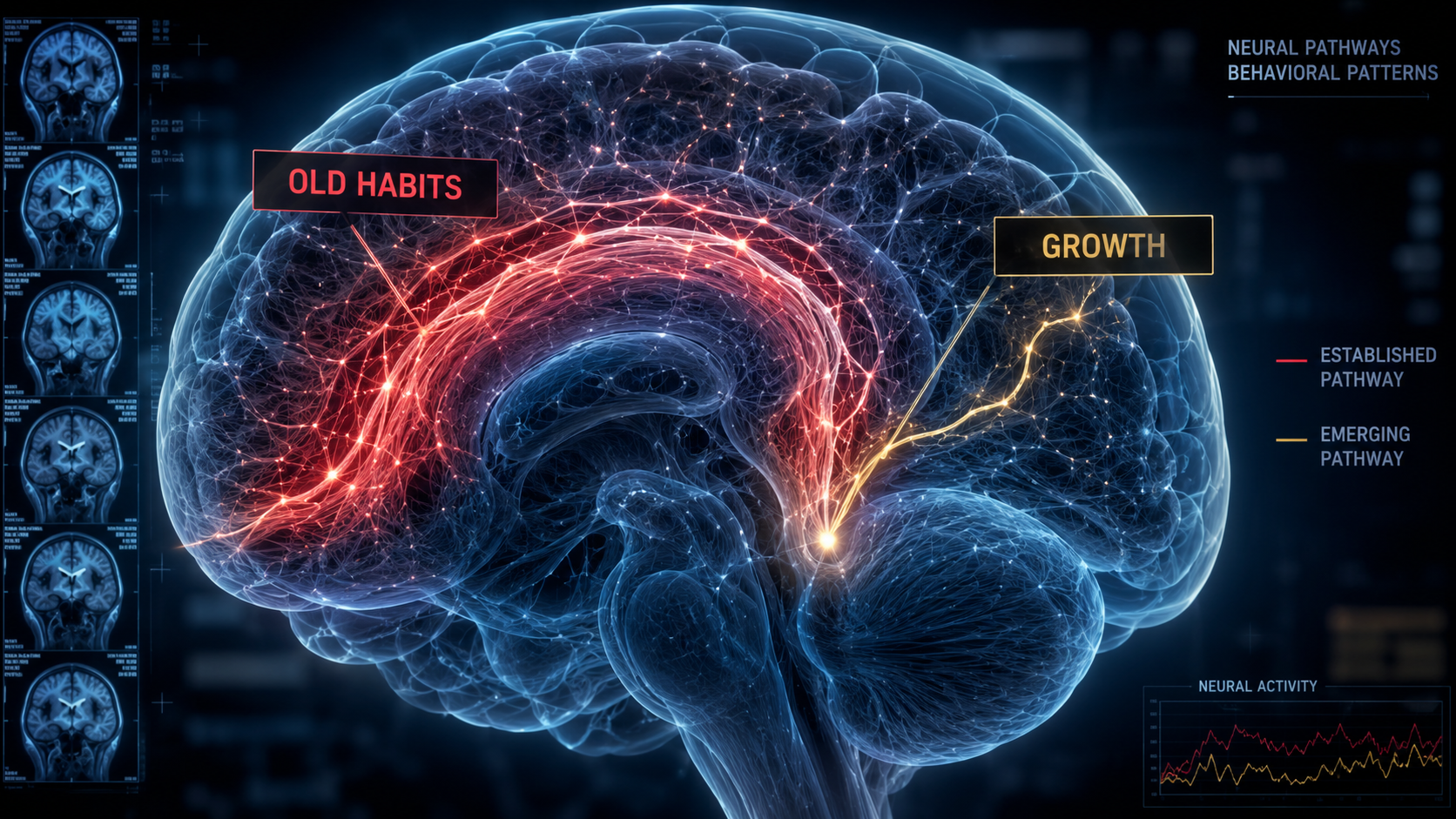
The Science of Change: Why You "Know Better" But Still Don't "Do Better" (And How to Fix It)
Change fails because you're defending old habits, not learning new ones — model it, invite it, reward it, never force it.
Thirsty Thursday
By Brett G Waddell ~ TheMorningMotivator.com
WAKE UP! Awareness Brings Answers!
Are you exhausted from holding yourself and others to impossible standards, only to end the day feeling like you constantly fall short?
You know exactly what you should do, but actually doing it feels like pushing through mental concrete.
That is why I am bringing in NYU Stern School of Business professor Dr. Dolly Chugh, featured on the Mel Robbins Podcast, to expose the real science behind the "knowing-doing" gap.
Together, we are going to drop the exhausting need to "prove" your worth and unlock the sustainable momentum of becoming a "goodish" person who continuously improves.
You can't learn from a mistake you're still defending!
Today I'm breaking it down piece by piece, so you can pull out exactly what you need. Quick read now. Quick reference later. Let's get into it.
🎯 Thirsty Thursday UPGRADE: Become "Goodish" Instead of "Good"
Most people exhaust themselves trying to prove they're a "good person" by impossible standards. Champions do the opposite—they embrace being "goodish," which means constantly improving while giving themselves grace for the messy human moments. Here's the real problem: you're not lacking willpower. You're fighting two mental bodyguards that protect your energy and ego.
🎖️ The Upgrade: Tonight, replace "Did I succeed?" with two questions: "What did I learn today?" and "Did I try my best?" That's it. No scorecard. No moral judgment. Just honest reflection.
Now wire it in with REAP:
• Recognize the story that says "I must be perfect to be worthy."
• Envision who you'd be if improvement mattered more than proof.
• Act today as that person would (one tiny victory).
• Program it in your theta window tomorrow morning.
(Full REAP breakdown and theta application below 👇)
That's not just a journal prompt. That's how sustainable change is built. Awareness, as always, brings answers. Here's the breakdown.
"We get in a space of trying to prove ourselves rather than trying to improve ourselves... Goodish is actually better than good because you're constantly getting better and you're giving space for the days where you blow it."
— Dr. Dolly Chugh, NYU Stern School of Business
I can give you the exact breakdown, the science, and the action steps below—but nothing captures the raw power of this truth quite like watching Dr. Dolly Chugh deliver it. Before you dive into the notes, hit play to see the framework in action.
Seeing it done makes it real. Now, let's extract the exact mechanics so you can apply this to your life today. Keep reading for the core concepts, the 5-minute audit, and the REAP framework to wire this in for good.
🌞 The Core Concept: The Two Bodyguards of Change
Dr. Chugh reveals that your mind has two powerful "bodyguards" that actively resist change:
Energy (which keeps you on autopilot to conserve mental resources) and
Ego (which protects your identity and sense of self).
Understanding these forces explains why knowing what to do and actually doing it feel like two different universes—and why unlearning is harder than learning.
🟢 Bodyguard #1: Energy (The Autopilot Protector)
Your brain processes 11 million thoughts per second on autopilot—that's the Energy bodyguard working overtime to conserve mental resources.
When you drive home and don't remember the commute, that's your brain's brilliance at work. But here's the catch: those autopilot habits keep you stuck in the gap between knowing and doing.
You can intellectually know you should go to the gym (that's 40 "big T" conscious thoughts), but your 11 million "little t" unconscious thoughts are running the show, keeping you on the couch because it's easier.

🟡 Bodyguard #2: Ego (The Identity Protector)
This bodyguard is even more powerful.
Research shows we value protecting our identity more than our favorite food, time with friends, or even our favorite sex act.
When someone suggests you change—whether it's eating healthier, being kinder, or showing up differently—your ego hears: "You're not good enough as you are."
That's why you rebel against advice, even from people who love you. It's not stubbornness; it's your fundamental human need for agency (the need to be your own person) clashing with external pressure.
🔵 The Stroop Test: What Unlearning Actually Feels Like
Dr. Chugh demonstrates this with the Stroop test: when the word "GREEN" is printed in orange ink, your brain scrambles because two automatic processes (reading and color detection) conflict.
That mental friction you feel? That's what change feels like. You're not failing when change feels hard—you're experiencing the necessary discomfort of unlearning.
Real growth requires you to first let go of the old pattern, then learn the new one. That's a two-step process, not a flip of a switch.
🟣 The W.A.I.T. Rule: Stop Giving Unsolicited Advice
Before you try to fix someone's problem, ask yourself: Why Am I Talking?
Often, we give advice to relieve our own discomfort with their pain, which strips them of their agency. Instead, ask them what they actually need using the 4 H's:
Heard: They just need to vent.
Hugged: They need comfort and reassurance, not a pep talk.
Helped: They are explicitly asking for your advice.
High-Fived: They need you to notice how hard they are trying.
Most of the time (about 90%), people just want to be Heard. When you skip straight to "Helped," you trigger their Ego bodyguard and waste your breath.
🟠 Feedback That Actually Works: Expectation + Behavior + Impact
When we get emotionally flooded, we give feedback using vague adjectives ("You're being lazy," "This isn't thorough"). Adjectives are easy to argue with and instantly trigger the Ego bodyguard. Instead, use the 3-step behavioral formula:
State the Expectation: "We agreed the house would be left as we found it."
Describe the Specific Behavior: "I walked in and saw wet towels on the floor and unmade beds." (No adjectives, just undeniable facts).
Explain the Impact: "After working all week, coming home to this makes me feel disrespected and exhausted."
When you remove the adjective, you remove the argument. Mel Robbins used this exact framework with her son's friends: she showed them a photo of the messy bunk room (the behavior), reminded them of the expectation, and shared how it made her feel. Result? They fixed it immediately without defensiveness.
⚪ The 1-to-10 Rule: Uncover the Real Priority
When you and someone else are stuck in a disagreement, stop arguing about the surface-level issue and ask: "On a scale of 1 to 10, how important is this to you?"
Often, you'll discover a mismatch. You might think them leaving their shoes in the hallway is a 10, but to them, it's a 2. However, their real 10 might be: "I need to feel like this is still my space when I come home from college."
The rule: If both people are between 1-7, whoever has the higher number wins—don't waste energy. If either person is an 8, 9, or 10, it's worth discussing and understanding. This stops you from fighting about the shoes and helps you address the actual underlying need.

🔴 Good vs. Goodish: The Game-Changer
Here's where it gets powerful: stop trying to prove you're a "good person" and start improving as a "goodish person."
A "good person" is static—you either are or you're not. A "goodish person" is always growing, always learning, and gives themselves space for the days they blow it.
The irony? Goodish is actually better than good because you're constantly getting better instead of defending your past mistakes.
🟤 The Two Questions That End the Guilt Cycle
At the end of every day, ask yourself:
What did I learn today?
Did I try my best?
Not "Did I succeed?" Not "Did I get it all done?"
Just those two questions. This shifts you from evaluation ("I'm a failure") to growth ("I'm learning").
Dr. Chugh shares that when her kids brought home grades, they'd ask: "Do you understand what you got wrong? Did you try your best?"
That's the energy we need to bring to ourselves!!
🚀 Solution: 5-Minute "Goodish Person" Audit — Run One Full Round
Here's how to apply that in the next five minutes, today:
Minute 1 - Identify the Bodyguard: Write down one area where you're stuck (health, relationships, work). Ask: "Is this my Energy bodyguard (autopilot habit) or my Ego bodyguard (identity protection) keeping me stuck?"
Minute 2 - Catch the Proof Trap: Notice where you're trying to prove you're "good" instead of improve. Write: "I'm defending myself when I..." (Example: "I'm defending myself when I say I don't have time to exercise instead of admitting I'm protecting my comfort.")
Minute 3 - Name One Unlearning: What's one old pattern you need to unlearn? Be specific. (Example: "I need to unlearn the habit of giving advice when people just want to be heard.")
Minute 4 - Design a Tiny Victory: What's the smallest action you could take in the next 24 hours that proves you're capable of change? Make it so small it feels almost ridiculous. (Example: "Before giving advice, I'll ask: 'Do you want to be heard, hugged, helped, or high-fived?'")
Minute 5 - Ask the Two Questions: Write down: "Today I learned..." and "I tried my best when..." This wires in the goodish mindset instead of the proving mindset.
This isn't about perfection. It's about precision — giving your mind a known off-ramp before you ask it to solve anything.
🧠 If this shifted something for you, there's more where it came from! Get a daily upgrade like this dropped in your inbox every morning. Subscribe free →

❓ FAQ
Q: But what if I'm genuinely tired of "working on myself"? This feels exhausting.
A: That exhaustion isn't from growth—it's from proving. When you're trying to prove you're a "good person," every day is a test you can fail. When you shift to being "goodish," you're not grinding toward perfection; you're allowing yourself to be a work in progress. The paradox? Improvement feels lighter than proof because you're not defending every mistake.
Q: How do I use this with someone who refuses to change (my partner, my boss, my adult kid)?
A: Dr. Chugh's framework is clear: You cannot make anyone change. You can only (1) Model it (let them see your own struggles and growth), (2) Invite it (create safe conditions where they can try without shame), and (3) Reward it (notice and appreciate tiny attempts). The W.A.I.T. rule applies here: "Why Am I Talking?" Ask yourself: Do they want to be heard, hugged, helped, or high-fived? Most of the time, it's "heard," not "fixed."
Q: How do I know if I'm actually improving or just making excuses for myself?
A: The difference is ownership. A "goodish" person says: "I messed up, I see the impact, I'm going to learn and do better next time." A person making excuses says: "I messed up, but here's why it's not really my fault." The two questions reveal the truth: "What did I learn?" requires honesty. "Did I try my best?" requires self-compassion. If you're doing both, you're in the growth zone.
🌞 REAP Practical Application: The Goodish Person Reframe
This is how we think. This is how we move. This is how we show up!
R — Recognize & Run Out: Notice the old pattern: "I'm a failure because I didn't [insert impossible standard]." Pause. Ask: Has trying to prove I'm "good" actually worked yet? Or has it just left me exhausted and defensive?
E — Exchange + Envision + Emotion: Replace it with: "I'm a goodish person who's learning and improving." Feel that land — not avoidance, relief. The pressure lifts. You're allowed to be human.
A — Activate with Action: Run one full 5-Minute Goodish Person Audit on whatever you're carrying right now. Identify the bodyguard, catch the proof trap, name one unlearning, design one tiny victory, ask the two questions. Do this daily for 7 days.
P — Program & Prosper: Use this inside your theta window — the first 5–10 minutes after waking, or the last 5–10 before sleep. Stack the reps. Presence becomes identity. Identity becomes reality.
"Neurons that fire together, wire together." — Donald Hebb

🚨 Critical Window: Your 5-Minute Theta Mornings
The first 5–10 minutes after you wake up is neurological gold!
Your brain is still in a more receptive theta state — the exact window to feed your mind the input you actually want wired in, instead of whatever the group chat throws at you first.
That's why I built the 5-Minute Theta Mornings Routine: no decisions, no overthinking, just a simple practice to program your mind for strength, presence, and purpose.
Today's topic hits different in that window—forgiving yourself before the world tells you who you should be is how you claim your own identity.
🌟 Synchronicity Check: If a moment of self-judgment or comparison shows up right after you read this, that's not random. Something in you already knows what you'd forgive yourself for first. Honor that. Name it today.
💪🏼 Subscribe Free and get your Theta Mornings PDF → Program... don't be programmed.
🏖️ The Bigger Vision
Perfect days are engineered. One decision. One behavior. One moment of awareness at a time.
You don't need better conditions to become the person you're meant to be.
You need five minutes, the two questions (What did I learn? Did I try my best?), and the willingness to embrace being goodish instead of proving you're good.
That's not a self-help trend. That's a Thirsty Thursday-morning decision, repeated until it becomes who you are.
This is the mission: Awareness → REAP → Repetition → Identity → Reality.

✨ Thirsty Thursday UPGRADE: Your Next Step
✅ If today's post shifted how you see your own self-judgment, impossible standards, and resistance to change — there's more where that came from, every single day at 4:44 AM. Subscribe Free and get your Theta Mornings PDF →
✅ Share this with someone who has been trying to force themselves (or others) to change through willpower and criticism instead of modeling, inviting, and rewarding tiny victories.
🎖️ The Upgrade: Tonight, replace "Did I succeed?" with two questions: "What did I learn today?" and "Did I try my best?" That's it. No scorecard. No moral judgment. Just honest reflection. ✨
Five minutes. One shift. One upgrade. Stay focused. Keep improving.
P.S. — This is how we reach the perfect day. Not all at once. One deposit at a time. One honest pattern at a time. One upgraded morning at a time. See you tomorrow at 4:44 AM.
🌱Start Here: The Foundation
🔸Your Genes Are the Blueprint, Your Beliefs Are the Builder: Rewiring Reality Through Epigenetics The foundation of our biology teaching: how beliefs, environment, and repeated inputs shape the way we live.
🔸The Illusion of Reality: Where Consciousness Research Meets Direct Experience The beginning of our consciousness and awakening series—an invitation to question the reality you have been handed.
💖 This post exists because I believe the best thing I can do for you is bring you the truth — Scientific, Soulful, and Actionable. YOU are why I'm here—so my mistakes and research become your shortcuts!
Pay It Forward! 🚀
~Brett
TheMorningMotivator.com
We're Upgrading 1%+ Every Day! (+34% Monthly, +38% Annually!)
Medical & Training Disclaimer: Hey, I'm just your science-backed, soul-led, unapologetically human mindset & performance trainer. The content provided in this blog post is for educational and informational purposes only. I am not a licensed physician, physical therapist, or medical professional, and this blog is NOT intended as a substitute for qualified medical advice. Always consult your healthcare provider or certified coach before making major life decisions or life changes. Got it? Good. I'll catch you tomorrow. Peace out!


