
The Science of Gratitude: Rewire Your Brain for Success

The Science of Gratitude: How a 5-Minute Practice Can Rewire Your Brain for Success
Expressing gratitude isn't just polite; it physically rewires your brain to improve decision-making, sleep, mood, and productivity.
Strategic Sunday
By Brett G Waddell ~ TheMorningMotivator.com
Don't miss tomorrow's Mindset Monday Upgrade — Act As If Everything Works Out For You: The Mindset Shift That Changes Everything — free at 4:44 AM. Subscribe →
WAKE UP! Awareness Brings Answers!
Growing up, we always said a prayer before a meal, giving thanks. Our parents told us to be grateful for what we had—finish your meal, some kids don't have food to eat.
Be grateful for your JC Penney plain pocket jeans, some kids don't have jeans to wear. I'm a recovering Catholic, and every Sunday in church, there was something about gratitude.
Fast forward to Oprah—she was, and still is, all about gratitude. Mom always said, "Look on the bright side." Miss you, Mom.
Deciphering all of those puzzle pieces throughout the years, I kept coming back to gratitude. That's why this weekend is all about gratitude.
But here's what I've realized: somewhere along the way, "be grateful" became white noise—a phrase so repeated it lost its power. I stopped hearing it. I stopped feeling it. And I know I'm not alone in that.
We've been told to be grateful our whole lives, but has anyone ever shown us how to actually practice it in a way that changes us from the inside out?
So here's the real question: If gratitude has been handed to you your entire life, why aren't you actually using it?
🏆 Strategic Sunday UPGRADE
Most people treat gratitude like a greeting card—nice sentiment, no substance. Jim Kwik did the opposite: he turned it into a science-backed brain hack. Here's the real issue: you've been told to be grateful your whole life, but no one showed you the mechanism.
🎖️ The Upgrade: Tonight before bed, write down three specific things you're grateful for from today. Not vague—specific. "The way my coffee smelled this morning." "My kid's laugh at dinner." Then read them out loud.
(Full REAP breakdown and theta application below 👇) That's not just a journal prompt. That's how you rewire your brain for better sleep, sharper decisions, and a calmer mind. Awareness, as always, brings answers. Here's the breakdown.
"It's not just about feeling good, because this is a show about brains... gratitude can improve your brain function. You do not have to wait for a greater life to feel grateful. You start feeling grateful and you'll have what a greater life."
Don't have time for the full podcast? I already pulled the exact moments that matter below. Hit play if you want to see it live, or keep scrolling for the breakdown.
Seeing it makes it real. Now, let's extract the exact mechanics so you can apply this to your life today. Keep reading for the core concepts, the 5-minute audit, and the REAP framework to wire this in for good.
🌞 The Core Concept: Gratitude Is a Brain-Changing Practice
Jim Kwik opens with a provocation: "What you appreciate appreciates."
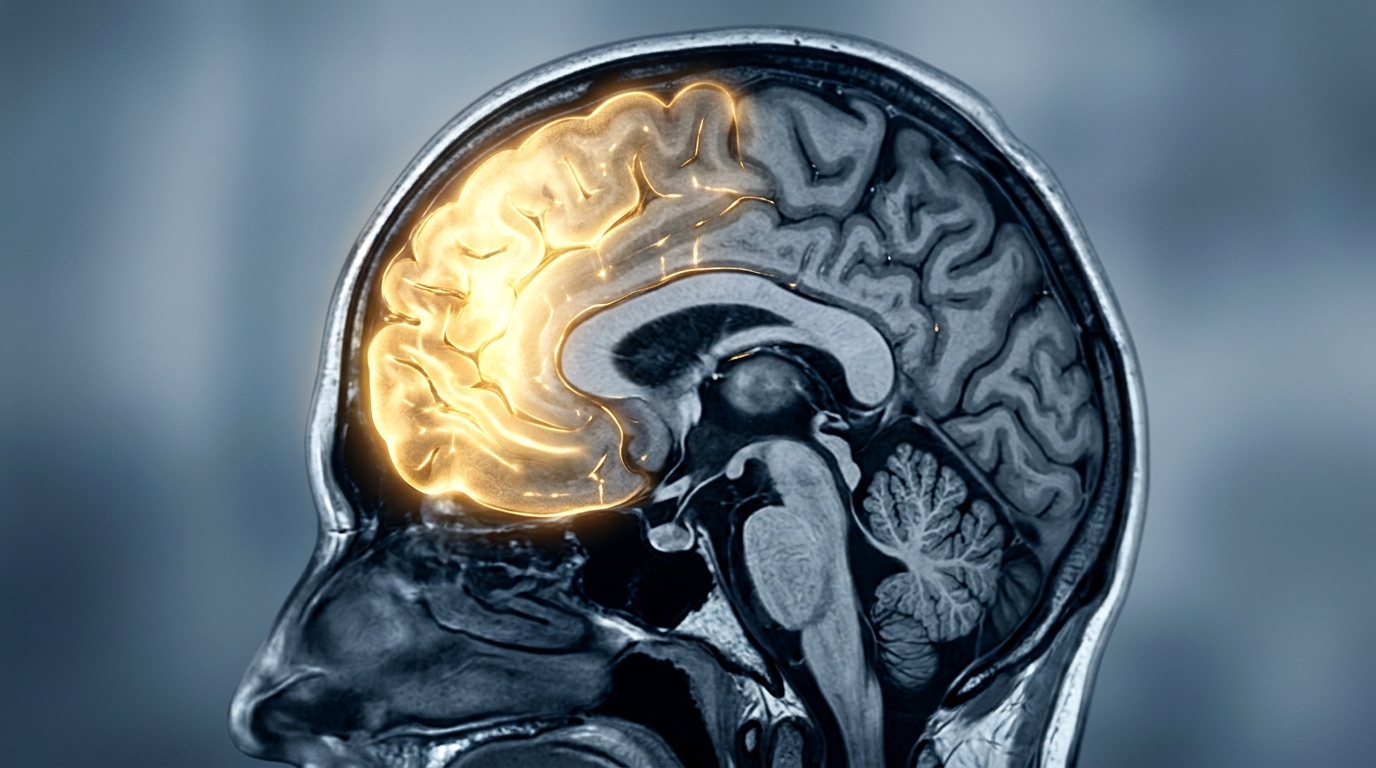
That's not just a catchy line—it's a neurological reality. Practicing gratitude actually changes the molecular structure of your brain. It releases dopamine and serotonin (your feel-good neurotransmitters) and activates your prefrontal cortex (your decision-making center). This isn't soft self-help. This is brain science!
Kwik breaks it down into three major benefit buckets: brain performance, mental health, and physical health. Let's walk through each one.
🟢 Rule 1: Gratitude Improves Brain Function
When you express gratitude—not just say you're grateful, but actually express it—your brain releases dopamine and serotonin. These are the neurotransmitters responsible for motivation, satisfaction, and mood.
But it goes deeper: gratitude activates your prefrontal cortex, the part of your brain responsible for critical thinking, rational thought, and decision-making. And since quality of life comes down to quality of decisions, this matters. Kwik also notes that gratitude activates your brain's reward pathways and the hypothalamus, which is associated with gray matter volume.
Translation: gratitude literally lights up your brain in ways that improve performance.
Key Takeaways:
Gratitude triggers dopamine and serotonin release—immediate mood boost
Activates the prefrontal cortex for better decision-making
Lights up reward pathways for long-term brain health
🟡 Rule 2: Gratitude Improves Sleep and Reduces Anxiety
If you've ever stared at the ceiling at 2 AM with your mind racing, this one's for you. A study published in Psychological Science found that writing down grateful sentiments before bed reduces worry and rumination—the anxious thinking that keeps you up at night. By shifting your brain's focus from threats to gifts, you quiet the limbic system (your brain's emotional center).
Kwik also points to the Mayo Clinic Health System: gratitude is linked to better sleep, improved mood, and enhanced immunity. And in the field of psychoneuroimmunology, research shows that stress and fear suppress your immune system—while gratitude does the opposite.
Key Takeaways:
Gratitude before bed reduces rumination and anxiety
Linked to better sleep quality and duration
Lowers stress, which directly boosts immune function
🔵 Rule 3: Gratitude Changes Relationships (and Self-Esteem)
Here's where it gets personal. Kwik points out that gratitude reduces social comparison—the digital depression that comes from scrolling through everyone else's highlight reel.
"On social media, it's often greener because of the filter," he says.
Grateful people are better able to appreciate other people's accomplishments, because they aren't stuck in resentment or jealousy. And here's the kicker: "If we get upset when people are succeeding, then we unconsciously are telling ourselves that when we succeed, people are going to be upset at us." Gratitude rewires that. It also strengthens relationships—expressing thanks to friends, family, colleagues, and clients deepens connection and increases your own sense of appreciation.
Kwik also connects gratitude to self-love. He references Mel Robbins, who gives herself a high-five in the mirror every morning after brushing her teeth. It takes one second, but it's an act of acknowledging how far you've come.
"You're expressing appreciation for that person in the mirror that's been through so much but is still standing." That's gratitude turned inward—and it matters.
Key Takeaways:
Reduces social comparison and digital depression
Helps you celebrate others' success without resentment
Strengthens relationships when you express gratitude directly
A daily mirror high-five is a one-second act of self-gratitude
🔴 Rule 4: The "THANKS" Framework for Daily Practice
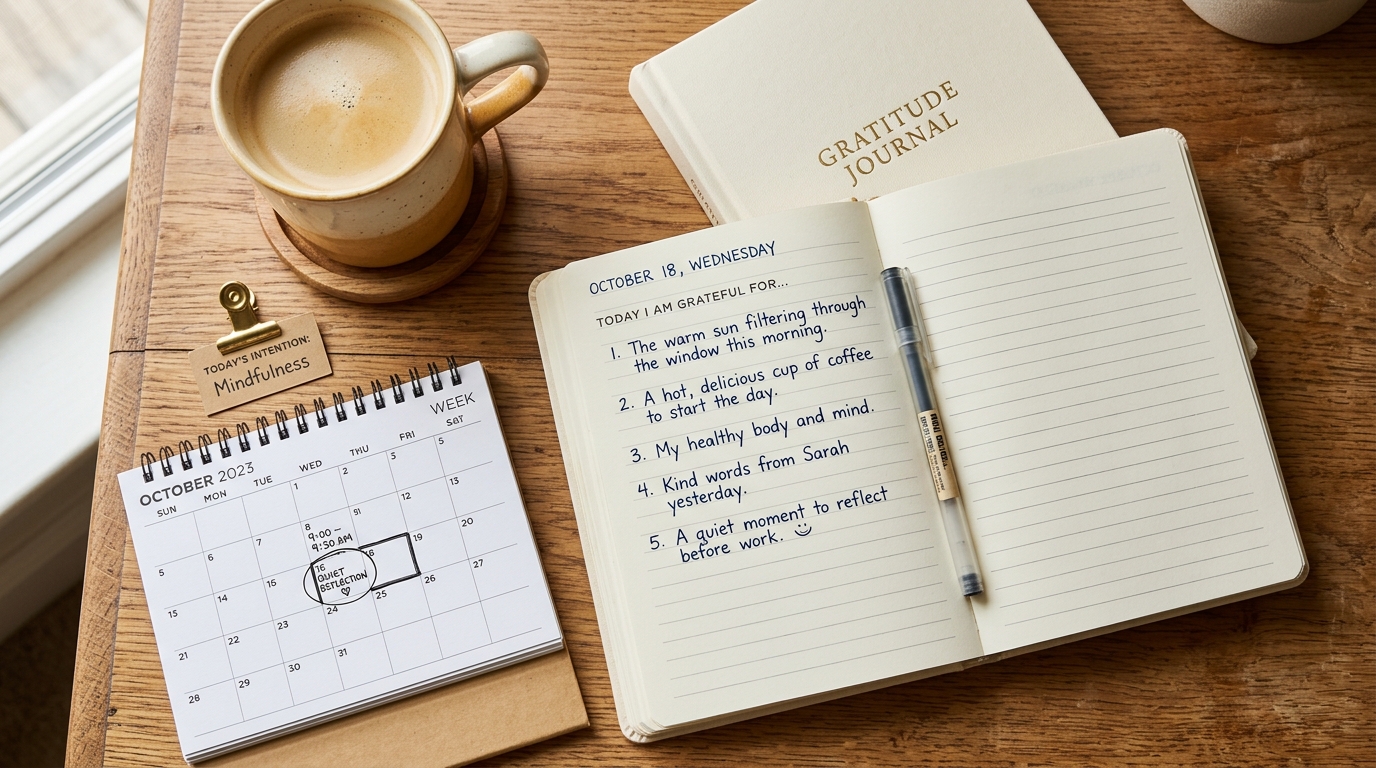
Kwik gives us an acronym: THANKS. It's six simple practices that take almost no time and cost nothing.
T – Time: Schedule it. If it's not on your calendar, it won't happen. Morning, evening, or both.
H – Highlight: Pick 3-5 positive moments from your day to focus on.
A – Acknowledge: Express gratitude to others. Unexpressed gratitude doesn't exist.
N – Nature: Spend time outside. Nature inspires profound appreciation.
K – Kindness: Perform an act of kindness. Kindness and gratitude go hand in hand.
S – Savor: Savor the small joys. What you appreciate, appreciates.
Kwik gets specific about the journal: not a scrap piece of paper—a dedicated journal. He writes in his every day and goes back to read it when he's feeling dark. "You could go back and read for months or even years, all the things that I'm grateful for." That's the compound effect of gratitude in physical form.
And then there's the question that stops you cold: "What if the only things you had in your life tomorrow were the things you expressed gratitude for today?" That's not a rhetorical question. That's a mirror. It forces you to confront what you're taking for granted—and what you'd fight to keep if you knew it might disappear.
Key Takeaways:
Use THANKS as a daily checklist for gratitude practice
Schedule it or it won't happen
Keep a dedicated gratitude journal—not scrap paper
Ask yourself: "What if the only things I had tomorrow were the things I'm grateful for today?"
⚪ Rule 5: The $10 Million Question (A Reframe That Changes Everything)
Kwik offers a thought experiment that rewires how you see your morning. Imagine someone walks up to you on the street and offers you $10 million. Would you take it? Of course you would.
But then they ask: "Would you trade your ability to wake up tomorrow for that $10 million?" No one would say yes.
Which means: waking up is worth more than $10 million. That's the comparison that actually serves you.
Most of us walk through our mornings grumbling about traffic, coffee, emails—completely blind to the fact that we just received a gift worth more than most people will see in a lifetime.
Gratitude isn't about pretending everything is perfect. It's about remembering that the baseline—breathing, waking up, being here—is already more than you'd ever trade.
Key Takeaways:
Waking up is worth more than $10 million—treat it that way
Use comparisons that serve you, not ones that steal your joy
Gratitude starts with the baseline: you're here, and that's not nothing

❓ Quick Reality Check (Before We Begin)
🔸 You might be thinking: "But I've tried gratitude journals before. I wrote down three things for a week, and nothing changed. Isn't this just another self-help cliché?"
The Truth: No one is denying that a shallow gratitude list won't move the needle. The shift isn't about doing gratitude—it's about feeling it. Kwik emphasizes: "Don't just see it, feel it." The science shows that the benefits come from genuine expression, not rote repetition. If you've tried gratitude before and it didn't stick, the fix isn't to stop—it's to go deeper. Specificity, emotion, and consistency are what rewire the brain.
🔸 "Does this mean I have to spend 30 minutes a day journaling to see results?"
The Truth: No. Kwik is clear: it only takes a few minutes. Three things you're grateful for. A thank-you note to a colleague. A brief walk outside. The practice is small—but the compound effect is massive. "Little by little, a little becomes a lot," Kwik says. Five minutes a day is enough to start rewiring your brain.
🚀 The REAP 5-Minute Accountability Reset
This is how we think. This is how we move. This is how we show up! Don't just read this—run one full round right now:
R — Recognize & Run Out (Minutes 1 & 2)
Name one area of your life where you've been treating gratitude like a checkbox—something you know you should do but haven't actually felt in weeks. Fact-check it honestly: has going through the motions actually changed your mood, your sleep, or your relationships? Or has it just checked a box? Pause the old "I'm too busy" story.
E — Exchange + Envision + Emotion (Minutes 3 & 4)
Exchange your input. Visualize your next gratitude practice. Instead of rushing through three generic things, picture yourself slowing down. Feel the warmth of your morning coffee. Hear the laugh of someone you love. See the face of the person you're writing a thank-you note to. Feel the shift from "going through the motions" to "actually experiencing gratitude."
A — Activate with Action (Minute 5)
Write down the one specific gratitude practice you will do tonight before bed. Not three. One. Commit to it before the day ends.
P — Program & Prosper (The Theta Window)
Celebrate tiny wins and lock this in during your neurological goldmine: the first 5–10 minutes after waking, or the last 5–10 before sleep. Stack the reps. Presence becomes identity. Identity becomes reality!
(Note on the science: This is the foundation of Hebbian learning—often summarized as "neurons that fire together, wire together." Repeated mental patterns physically strengthen neural pathways, a principle first established by Donald Hebb in 1949 and continuously validated in modern neuroplasticity research).

🧠 Lock It In Before Your Head Hits the Pillow
If this reset shifted something for you, don't let it fade by noon!
Get tomorrow's Mindset Monday Upgrade — Act As If Everything Works Out For You: The Mindset Shift That Changes Everything — dropping free at 4:44 AM.
Subscribe Free → and get instant access to the 2-Page REAP & Theta Mornings PDF
🎖️ Strategic Sunday Upgrade: Tonight before bed, write down three specific things you're grateful for from today. Not vague—specific. "The way my coffee smelled this morning." "My kid's laugh at dinner." Then read them out loud.
Five minutes. One shift. One upgrade. Stay focused. Keep building!
P.S. — This is how we reach the perfect day. Not all at once. One deposit at a time. One honest pattern at a time. One upgraded morning at a time. See you tomorrow at 4:44 AM.
🌱 Start Here: The Foundation
🔸 Your Genes Are the Blueprint, Your Beliefs Are the Builder: Rewiring Reality Through Epigenetics
The foundation of our biology teaching: how beliefs, environment, and repeated inputs shape the way we live. CLICK HERE →
🔸 The Illusion of Reality: Where Consciousness Research Meets Direct Experience
The beginning of our consciousness and awakening series—an invitation to question the reality you have been handed. CLICK HERE →
💖 This post exists because I believe the best thing I can do for you is bring you the truth — Scientific, Soulful, and Actionable. YOU are why I'm here — so my mistakes and research become your shortcuts!
Pay It Forward! 🚀
~Brett
TheMorningMotivator.com
We're Upgrading 1%+ Every Day! (+34% Monthly, +38% Annually!)
Medical & Training Disclaimer: Hey, I'm just your science-backed, soul-led, unapologetically human mindset & performance trainer. The content provided in this blog post is for educational and informational purposes only. I am not a licensed physician, physical therapist, or medical professional, and this blog is NOT intended as a substitute for qualified medical advice. Always consult your healthcare provider or certified coach before making major life decisions or life changes. Got it? Good. I'll catch you tomorrow. Peace out!


