Stop Wasting Money on Supplements: A Neuroscientist's 5-Pill Truth
Stop Wasting Money On Supplements — A Neuroscientist's Brutal 5-Pill Truth
A neuroscientist's no-nonsense protocol for the 5 essential supplements and the simple movement that transforms your focus and metabolism.
Wellness Wednesday
By Brett G Waddell ~ TheMorningMotivator.com
Don't miss tomorrow's Thirsty (for Change) Thursday: Oprah Winfrey reveals the voice you've been ignoring — and why it's trying to save your life. — free at 4:44 AM. Subscribe Free→
WAKE UP! Awareness Brings Answers!
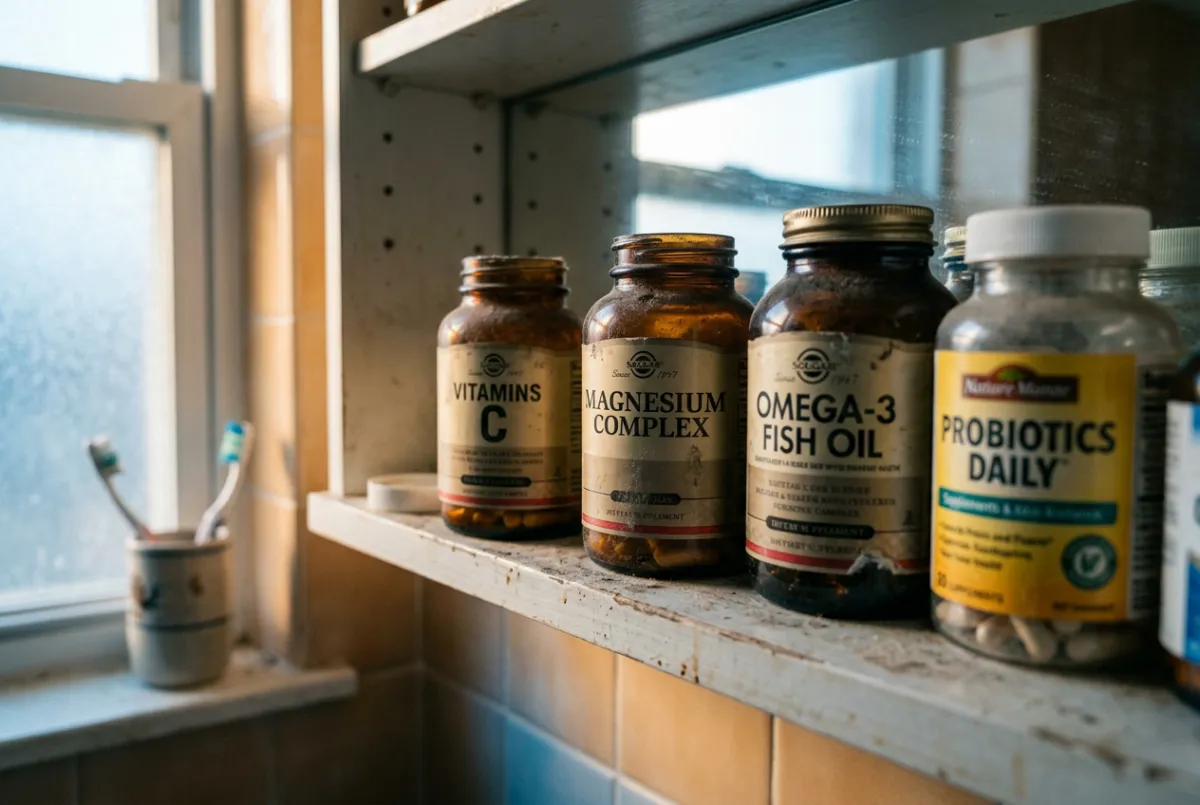
I used to have dead bottles of supplements in my cabinet. The "revolutionary" nootropics. The "fat-burning" miracle pills. The powders that tasted like chalk. I'd buy them with a burst of hope, take them for a week, and then they'd just sit there.
Then I started The Morning Motivator and got deadly serious about taking the right supplements — the ones that actually make a difference. That's why I'm here digging into what really works and sharing it with my crew, so we don't waste our money on supplements that don't even freaking work.
But here's what those dead bottles were really hiding. When you're running on empty, you're not just tired. You're losing your edge. You're not the sharp, present person you know you can be for your family, your work, your life. You're just trying to make it to the end of the day. It's a slow leak in the tire of your ambition.
So I went to an expert — a real one, a neuroscientist — to cut through the noise. What I found wasn't a magic bullet, but something far more powerful: a simple, non-negotiable protocol. A system that doesn't just manage your energy, but builds a foundation for a better, longer, and more focused life.
And it starts with one surprisingly brutal truth that will change how you think about your daily routine.
🏆 Wellness Wednesday UPGRADE
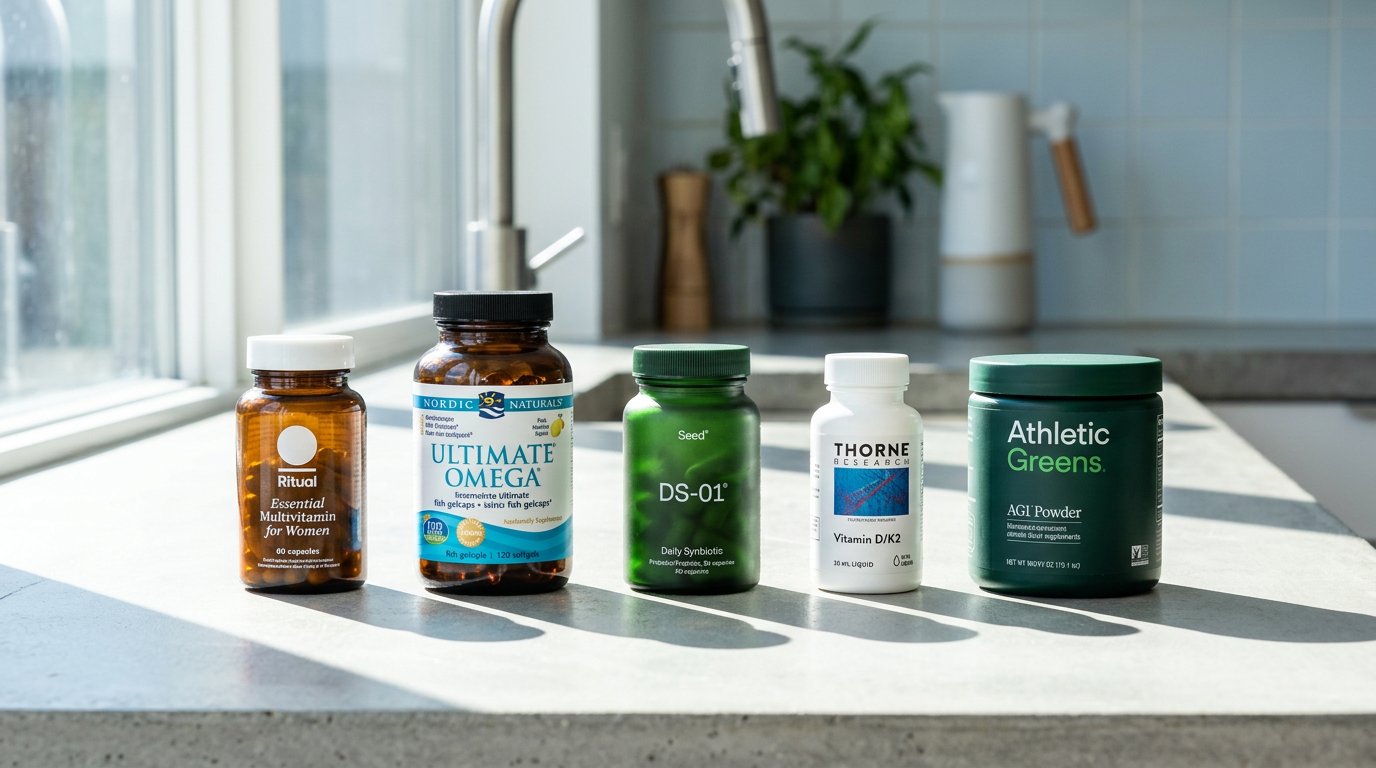
Most people buy supplements based on hype, not hierarchy. Dr. Huberman did the opposite — he built a non-negotiable short list and ignored the noise. Here's the real problem: you don't have a supplement problem, you have a prioritization problem.
🎖️ The Upgrade: Pick one supplement you're currently taking and ask: is this in my top 5, or is it just noise? Cut one thing that isn't pulling its weight this week.
(Full REAP breakdown and theta application below 👇)
That's not just a cabinet cleanse. That's how you stop bleeding money and start building a foundation. Awareness, as always, brings answers. Here's the breakdown.
"Few things can increase focus and energy that don't damage your sleep. But even better, alpha GPC gives you more REM sleep. Nobody wants to hear this, but it's absolutely true."
Don't have time for the full podcast? I already pulled the exact moments that matter below. Hit play if you want to see it live, or keep scrolling for the breakdown.
Seeing it done makes it real. Now, let's extract the exact mechanics so you can apply this to your life today. Keep reading for the core concepts, the 5-minute audit, and the REAP framework to wire this in for good.
🌞 The Core Concept: The Non-Negotiable Five
Dr. Andrew Huberman was asked a simple question: if you could only take five supplements for the rest of your life, what would they be? His answer wasn't a list of exotic compounds or expensive stacks. It was a prioritized, evidence-based protocol designed to fill specific gaps that diet and lifestyle often miss.
Here's the thing that makes this different from every supplement listicle you've ever read: he didn't start with "what's popular." He started with "what's foundational."
Sleep first. Then the essentials. Then performance. The order matters.
🟢 1. Magnesium — The Sleep Foundation
If you're sleeping terrifically well, Huberman says take nothing for sleep. But if you're not — and most of us aren't — magnesium is the first tool in the kit. Specifically, Magnesium Threonate or Magnesium Bisglycinate. They're interchangeable for sleep support. This isn't a sedative. It's a mineral that most people are deficient in, and it plays a direct role in calming the nervous system and preparing the body for deep, restorative rest.
Key Takeaways:
Magnesium Threonate or Bisglycinate are the preferred forms for sleep
Only needed if sleep quality is compromised
Foundational before anything else
🟡 2. Omega-3s — The Brain Builder
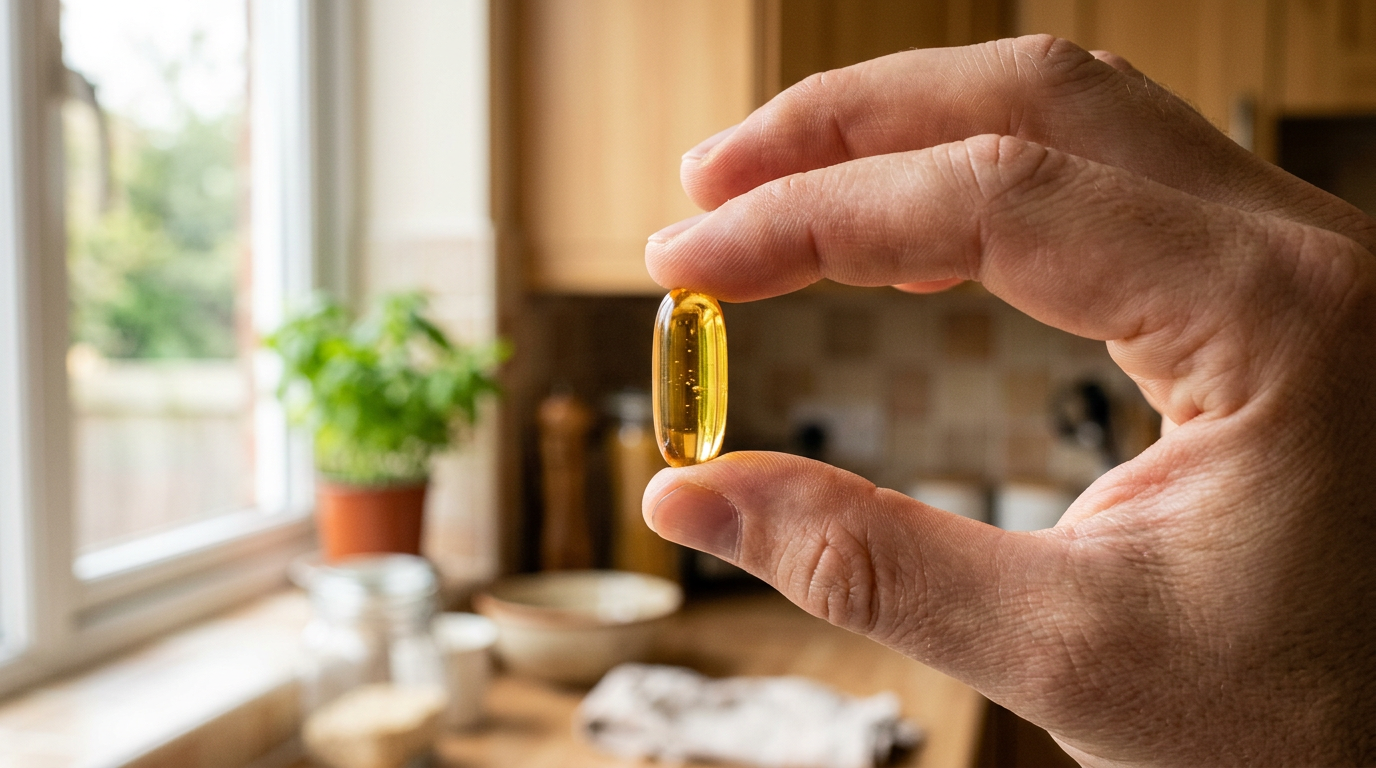
Huberman is a big believer in getting at least one gram per day of EPA omega-3. His preferred source? Prescription Lovaza — because it's highly concentrated, cleared of heavy metals, and surprisingly inexpensive. The challenge is getting a doctor to prescribe it. His advice: tell them you want Lovaza, or you'll take a bunch of over-the-counter stuff and risk mercury poisoning. (Don't actually threaten your doctor. You get the idea.)
EPA is the form of omega-3 you want for brain health, cardiovascular health, and reduced inflammation. And if you're like Huberman — someone who doesn't eat fatty fish and doesn't like salmon unless it's sushi — supplementation isn't optional. It's essential.
Key Takeaways:
Target 1 gram of EPA daily
Prescription Lovaza is concentrated and heavy-metal-free
Critical for brain, heart, and inflammation control
🟢 3. Vitamin D — The Hormone Regulator
Huberman takes 5,000 to 10,000 IUs per day. He's not trying to hit the RDA — he's trying to derive additional benefits beyond the conventional. When he bumped from 3,000 to 5,000 IUs, he saw his bloods improve without changing anything else. That's the difference between "avoiding deficiency" and "optimizing function."
He's also not trying to blow a gasket. 25,000 IUs is too much. But most people are underdosing. And vitamin D isn't just about bones — it's about hormone health, immune function, and mood.
Key Takeaways:
5,000–10,000 IUs per day is the target range
The RDA is a floor, not a ceiling
Impacts hormone health, not just bone density
🟡 4. Alpha GPC — The Focus Enhancer
This is the one nobody talks about. Alpha GPC increases choline, which increases acetylcholine — the neurotransmitter tied to focus and learning. Huberman takes 600–900 mg. His reasoning: there are very few things that increase focus and energy without damaging your sleep. Alpha GPC is one of them. In fact, it gives you more REM sleep. That's almost unheard of.
But there's a caveat. Alpha GPC can increase TMAO, a marker linked to cardiovascular risk. The fix? Take 600 mg of garlic with it. Same day, anytime. The garlic doesn't smell, and it mitigates the risk. This is the kind of nuance that separates real protocols from internet noise.
Key Takeaways:
600–900 mg increases acetylcholine for focus
Unique benefit: increases REM sleep instead of damaging it
Pair with 600 mg garlic to offset TMAO risk
🟢 5. Creatine — The Cognitive Insurance
Huberman has been taking creatine since he was 17 or 18. 5–10 grams per day. Most people know it for muscle — it pulls water into the muscles, makes you stronger, and feels good.
But the cognitive angle is what's underappreciated. Creatine seems to work best for cognitive enhancement when you're sleep-deprived or stressed. It's not a stimulant. It's a buffer.
Key Takeaways:
5–10 grams per day
Builds strength and muscle hydration
Cognitive benefits most pronounced under stress or sleep deprivation
⚡ Bonus: Caffeine Is a Given
90% of the world consumes caffeine every day. Huberman includes himself — yerba mate and coffee. And the data supports it. 200–400 mg of caffeine per day has been shown to offset dementia in meaningful ways. It's not causal, but the correlation is strong.
Key Takeaways:
200–400 mg per day is the sweet spot
Associated with reduced dementia risk
It's a tool, not a replacement for the foundational five

🚶 The Movement Secret: Your Calf Is a Glucose Furnace
This might be the most actionable piece of the entire conversation!!
Huberman shared a study on the soleus muscle — the one under your calf that gives it width. It's about 1% of your total musculature. But it has an outsized role in glucose utilization.
In the study, participants did "soleus push-ups" — basically non-weighted seated calf raises — repeatedly while sitting. The result? Powerful regulation of blood glucose. It buffered the peaks and flattened the spikes.
This is why walking after a meal matters. Those low-level, repeated muscle contractions — slow-twitch activation — act as an unsuspected furnace for glucose. You don't need 10,000 steps. Huberman says 7,000–8,000 should be the goal. Pace while you're on calls. Take the stairs. Walk after you eat.
Why does this matter? Because you don't want big glucose peaks. You want fewer energy crashes. Over time, your metabolic health improves — or at least doesn't get worse.
Key Takeaways:
The soleus muscle is a glucose-regulating powerhouse
5–10 minutes of walking after a meal flattens glucose spikes
7,000–8,000 steps per day is the target, not 10,000
🧬 The Myth of the Slowing Metabolism
Here's where it gets personal.
Huberman pointed to a paper published in Science that challenged everything we assume about aging. The decline in metabolism we all associate with getting older? It's not inevitable. It doesn't happen if people maintain muscle mass.
And it's not even about muscle mass — it's about movement!!
People in their 80s who are mentally sharp, physically lean, and vibrant? They're moving all the time. Spontaneous movement. Pacing. Taking stairs. Not sitting stagnant. One study found some people burn up to 1,800 calories a day just from non-exercise movement. Others burn 1,000. That's a massive difference.
And there's a deeper mechanism. Dr. Jared Rutter, a mitochondria expert, explained it on Huberman's podcast: when you overload a cell with calories, the mitochondria — the energy management system of the cell — gets sick.
Caloric excess is a form of toxicity. Movement isn't just about burning calories. It's about keeping the system clean.
Key Takeaways:
Metabolic slowdown is largely a result of moving less, not aging
Spontaneous movement burns significant calories
Caloric excess sickens mitochondria — movement helps clear the system
🌬️ The Environmental Factor
One more thing Huberman flagged: CO2 levels.
In the studio, he keeps a CO2 monitor. It started at 600 parts per million and climbed to 1,700 during the conversation. Studies show that above 1,000 ppm, cognitive performance starts to decline.
Poor ventilation isn't just uncomfortable — it's cognitively expensive!
His fix? Get outside. Full-spectrum sunlight. Fresh air. Before the podcast, he and the host stepped outside for a blast of natural light. That's not a luxury. It's a performance tool.
Key Takeaways:
CO2 above 1,000 ppm impairs cognitive performance
Ventilation matters for focus
Sunlight and fresh air are non-negotiable for cognitive work

❓ Quick Reality Check (Before We Begin)
🔸 You might be thinking: "But I've heard you need to blood test everything and personalize. Isn't this just generic advice?"
The Truth: Blood testing is ideal, but it's not a prerequisite for action. Huberman's protocol is a starting framework — a foundation. Magnesium, omega-3s, vitamin D, alpha GPC, and creatine are safe, well-researched, and beneficial for most people.
You can start here and refine with testing later. The perfect plan you never start is worse than the good plan you begin today.
🔸 "Does this mean I have to spend hundreds of dollars a month on supplements?"
The Truth: No. Huberman specifically pointed out that prescription Lovaza is "very, very inexpensive" and generic. Magnesium, vitamin D, and creatine are among the cheapest supplements on the market. Alpha GPC is the outlier, but it's still accessible.
This isn't a stack designed for biohackers with unlimited budgets. It's a protocol designed for real life.
🚀 The REAP 5-Minute Accountability Reset
This is how we think. This is how we move. This is how we show up! Don't just read this—run one full round right now:
R — Recognize & Run Out (Minutes 1 & 2)
Name one supplement in your cabinet right now that you bought on hype, not hierarchy. Fact-check it honestly: is it in your top five, or is it just noise? Pause the story that "more is better." More isn't better. Better is better.
E — Exchange + Envision + Emotion (Minutes 3 & 4)
Exchange your input. Visualize your new protocol. See yourself taking magnesium before bed and waking up rested. Feel the shift from "hoping something works" to "knowing this is foundational." Envision the version of you that doesn't waste money on bottles that sit there.
A — Activate with Action (Minute 5)
Write down the one supplement you will either add or cut this week. Commit to it before the day ends. One change. One upgrade.
P — Program & Prosper (The Theta Window)
Celebrate tiny wins and lock this in during your neurological goldmine: the first 5–10 minutes after waking, or the last 5–10 before sleep. Stack the reps. Presence becomes identity. Identity becomes reality!
(Note on the science: This is the foundation of Hebbian learning—often summarized as "neurons that fire together, wire together." Repeated mental patterns physically strengthen neural pathways, a principle first established by Donald Hebb in 1949 and continuously validated in modern neuroplasticity research).

🧠 LOCK IN Your Top 5 Before You Buy Another Bottle
If this reset shifted something for you, don't let it fade by noon!
Get tomorrow's Thirsty (for Change) Thursday — Oprah Winfrey reveals the voice you've been ignoring — and why it's trying to save your life. One question she asks herself every morning. — dropping free at 4:44 AM.
Subscribe Free and get instant access to the 2-Page REAP & Theta Mornings PDF →
🎖️ Wellness Wednesday Upgrade: Pick one supplement you're currently taking and ask: is this in my top 5, or is it just noise? Cut one thing that isn't pulling its weight this week.
Five minutes. One shift. One upgrade. Stay focused. Keep building!
P.S. — This is how we reach the perfect day. Not all at once. One deposit at a time. One honest pattern at a time. One upgraded morning at a time. See you tomorrow at 4:44 AM.
🌱 Start Here: The Foundation
🔸 Your Genes Are the Blueprint, Your Beliefs Are the Builder: Rewiring Reality Through Epigenetics
The foundation of our biology teaching: how beliefs, environment, and repeated inputs shape the way we live. CLICK HERE →
🔸 The Illusion of Reality: Where Consciousness Research Meets Direct Experience
The beginning of our consciousness and awakening series—an invitation to question the reality you have been handed. CLICK HERE →
💖 This post exists because I believe the best thing I can do for you is bring you the truth — Scientific, Soulful, and Actionable. YOU are why I'm here—so my mistakes and research become your shortcuts!
Pay It Forward! 🚀
~Brett
TheMorningMotivator.com
We're Upgrading 1%+ Every Day! (+34% Monthly, +38% Annually!)
Medical & Training Disclaimer: Hey, I'm just your science-backed, soul-led, unapologetically human mindset & performance trainer. The content provided in this blog post is for educational and informational purposes only. I am not a licensed physician, physical therapist, or medical professional, and this blog is NOT intended as a substitute for qualified medical advice. Always consult your healthcare provider or certified coach before making major life decisions or life changes. Got it? Good. I'll catch you tomorrow. Peace out!


