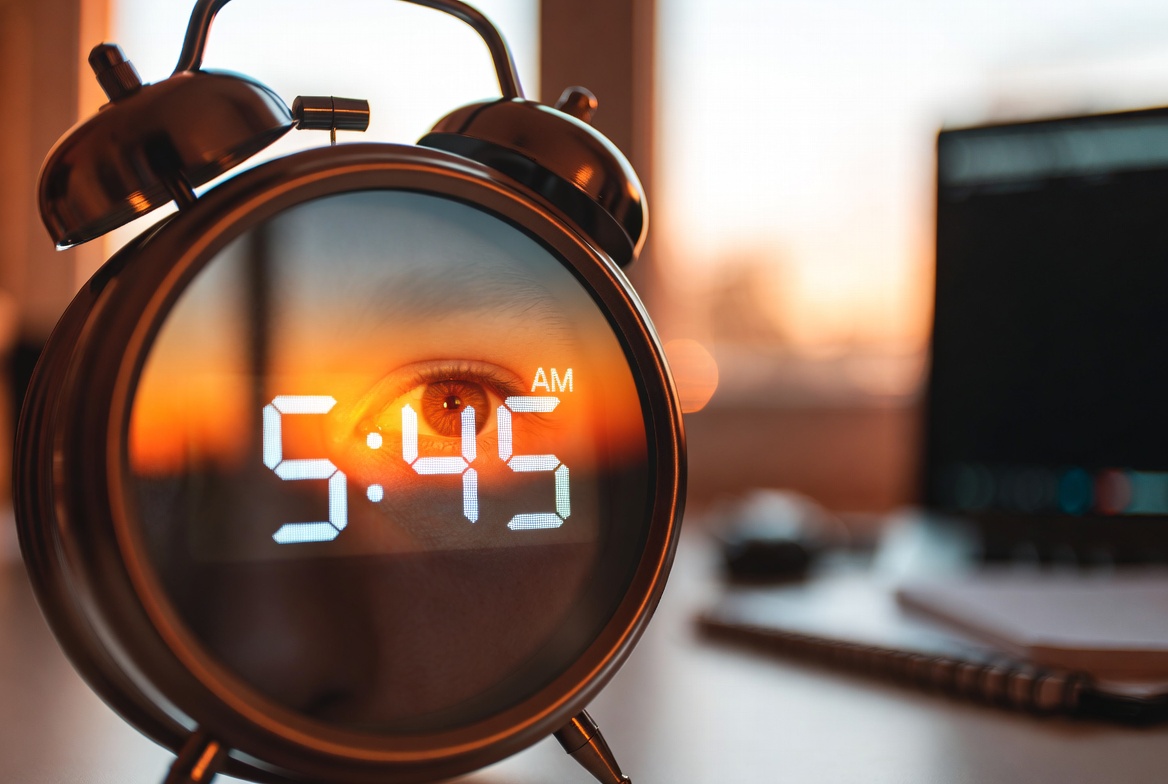
Tactical Tuesday: Sleep Like a Boss - The 1 Habit High Performers Never Skip | The Morning Motivator

Burnout Isn’t a Mood — It’s a Wake-Up Call!
What if the secret weapon of every high performer wasn’t a productivity hack, but a simple, biological reset available to you every single night?
For years, I chased success on the fumes of caffeine and sheer willpower. I spent 13 years building a business cleaning restaurant grease hood systems, a job that had me working all hours of the day and night.
On top of that, I was raising two young kids. My sleep wasn't just poor; it was nonexistent. I survived on naps—two a day—that were less about rest and more about brief, frustrating bouts of unconsciousness.
The stress was so profound that I would literally wear holes in the fitted sheet at the bottom of my bed from restless movement. I was running on empty, and my health, mood, and business were paying the price.
I was treating burnout as a temporary mood, a bad week to power through.
⛔I was dead wrong. Burnout isn't a mood; it's your body's final, screaming wake-up call. It's the bill coming due for every night of stolen sleep, every morning you skipped sunlight, and every evening you bathed in blue light.
Looking back, I’m certain that if I had structured my life to protect 6-8 hours of quality sleep, that grease hood business wouldn't just have been successful—it could have been a franchise. I was trying to build an empire with a brain operating at half-capacity.
Fixing my sleep didn't solve every problem, but it gave me the one thing I desperately needed: a solid foundation. It gave me a brain that was finally working at full capacity, capable of making clear, intelligent decisions instead of panicked, reactive ones. I was just Surviving.
It was then, after getting enough sleep, I moved on from cleaning grease hoods, to my real purpose in life! That's when the daily Morning Motivator was manifested. I am very grateful!
The lesson was painfully simple: You cannot outperform your sleep.
> “Sleep is the single most effective thing we can do to reset our brain and body health each day.” — Dr. Matthew Walker, Neuroscientist and Author of Why We Sleep
This profound truth is echoed and expanded upon by neuroscientist Dr. Andrew Huberman. In his essential guide, Master Your Sleep & Be More Alert When Awake, he breaks down the non-negotiable science behind peak performance.
It’s not just about more sleep; it’s about mastering the physics of sleep and wakefulness.
As Huberman explains, you have direct leverage over these systems. Your sleep quality isn't luck—it's a protocol.
The Non-Negotiable Science: Your Brain's Daily Rhythm
You can't hack a system you don't understand. Your sleep and wakefulness are governed by two powerful, intersecting biological forces: your Sleep Drive (Adenosine) and your Internal Clock (Circadian Rhythm).
1. Adenosine - The Sleep Pressure Gauge: Imagine a chemical called adenosine building up in your brain from the moment you wake up. This is "sleep pressure." The longer you're awake, the more it accumulates, making you feel progressively sleepier. Caffeine works by temporarily blocking adenosine receptors—it doesn't eliminate the pressure, it just hides the gauge. True, deep sleep is what clears the adenosine, resetting your gauge to zero for the next day.
2. Circadian Rhythm - The Master Conductor: Running on a roughly 24-hour cycle, this internal clock dictates when you feel alert and when you feel sleepy. It does this primarily by timing the release of two key hormones:
* Cortisol: Your "get up and go" hormone. A healthy, sharp spike in cortisol should happen first thing in the morning, making you alert.
* Melatonin: The "sleepiness" hormone. It should rise in the evening, helping you wind down and fall asleep.
The critical link? Light. Light, especially natural morning sunlight, is the primary lever that sets your circadian rhythm. It triggers the morning cortisol release and, crucially, starts a timer for the evening release of melatonin.
No morning light means a weak, mis-timed rhythm. This was a core part of my failure—I was waking up in the dark, working in dark kitchens, and ruining my body's fundamental schedule.

Get 5-10 minutes of sunlight on a clear day, or 15-20 on a cloudy one. This light signals your brain to stop melatonin production!
The High-Performer's Sleep Protocol: How to Engineer Your Day
This science isn't just academic; it's an operating manual. Here’s how to apply it, transforming you from a victim of your schedule to the architect of your energy.
Phase 1: Master Your Morning (Set the Clock)
* View Morning Sunlight Within 30-60 Minutes of Waking: This is the most impactful habit. Get 5-10 minutes of sunlight on a clear day, or 15-20 on a cloudy one. This light signals your brain to stop melatonin production, spike cortisol appropriately, and set the countdown for melatonin release ~16 hours later. Don't wear sunglasses for this; your eyes need to see the light.
* Delay Caffeine by 90 Minutes: When you wake up, adenosine levels are already low. Drinking caffeine immediately blocks the receptors that help you naturally clear the remaining adenosine. By waiting 90 minutes, you allow your body's natural process to complete, preventing the afternoon crash. I swapped my immediate coffee for a large glass of water and the sunlight view—a game-changer.
Phase 2: Optimize Your Day (Sustain Energy)
* Leverage Your Afternoon Alertness: Your circadian rhythm creates a natural dip in energy in the early afternoon (the post-lunch slump). This is the ideal time for a short nap (10-20 min) or NSDR (Non-Sleep Deep Rest). A short nap can significantly boost afternoon learning and focus without making you groggy or hurting nighttime sleep.
* Get Light Exposure Throughout the Day: Bright light during the day, especially from being outside, reinforces your circadian rhythm and increases nighttime sleep depth.
Phase 3: Perfect Your Evening (Enable Sleep)
* Dim the Lights & Sunset View: In the last 1-2 hours before bed, dim overhead lights. If possible, catch the sunset. The low solar angle light signals the coming of darkness to your brain.
* Get Darkness for Sleep: Your bedroom must be pitch black. Even small amounts of light from chargers or streetlights can disrupt melatonin production and sleep architecture. Use blackout shades and consider a sleep mask. This single change stopped my sheet-shredding restlessness.
* Keep a Consistent Sleep & Wake Time: Go to bed and wake up at roughly the same time every day, even on weekends. This consistency is the bedrock of a strong circadian rhythm.

Prep your room for a great nights sleep. Dim the lights, hide your phone, keep it cool.
Your 5-Minute Action Plan for Tonight & Tomorrow Morning
You don't need to overhaul your life tonight. Start with these three concrete actions:
1. Tonight (2 Minutes): After reading this, go into your bedroom. Identify every source of light—LED chargers, crack under the door, digital clocks. Tape them, block them, or remove them. Set a reminder on your phone for 1 hour before bed that says "DIM LIGHTS."
2. Tomorrow Morning (3 Minutes):
* Minute 1-2: The moment you get out of bed, drink a large glass of water.
* Minute 2-5: Go outside (in your pajamas if you have to!). Stand or walk for 5 minutes. Look toward the sky (not directly at the sun). Breathe. That’s it. You've just set your biological clock for the day.
3. Tomorrow Afternoon (Mental Note): When you feel the 2-3 PM slump, don't reach for coffee. Set a timer for 10 minutes, close your eyes, and just breathe slowly. That's an NSDR protocol.

Start the night before!
Sleep Mastery FAQ: Quick Answers to Common Hurdles
Q: I have to be at work before the sun comes up. How do I get morning light?
A: This is a common challenge. Do your best: get outside as soon as the sun is up, even if it's on a coffee break. On your days off, make it a non-negotiable priority.
For pre-sunrise days, use a bright artificial light (10,000 lux minimum) for 10-15 minutes upon waking, and then get real sunlight as soon as you can.
Q: I've tried everything and still can't fall asleep. My mind races.
A: This is where NSDR (Non-Sleep Deep Rest) protocols like Yoga Nidra or guided relaxation are critical. They are not sleep, but they allow your brain and body to enter a deep, restorative state that significantly reduces stress hormones.
Doing a 10-20 minute NSDR session instead of tossing and turning can be more restorative and often leads to sleep. The Huberman Lab podcast has excellent free guides.
Q: Are naps really okay? Won't they ruin my nighttime sleep?
A: As Huberman explains, naps are a powerful tool if used correctly. The key is timing and duration. Nap in the early afternoon (1-4 PM) when your circadian rhythm dips.
Keep it short: 10-20 minutes max. This is a "power nap" that refreshes without entering deep sleep, preventing sleep inertia (grogginess) and protecting your nighttime sleep drive.
✅The path from burned-out to high-performance isn't paved with more hours of work. It's paved with more quality hours of rest.
You have a biological toolkit at your disposal every single day. You can choose to ignore it and pay the tax in burnout, fog, and frustration. Or, you can start pulling the levers.
Master your sleep, and you master the foundation of everything else. Your brain is your most important asset. Isn't it time you let it run at full capacity?

Summary of Key Huberman Lab Sleep Tools:
* Morning Sunlight: Sets circadian rhythm, boosts cortisol, times melatonin.
* Delay Caffeine: Avoid the adenosine trap and prevent afternoon crashes.
* Afternoon Nap/NSDR: Leverage the circadian dip for restoration.
* Evening Darkness: Critical for triggering and sustaining melatonin release.
* Consistency: The anchor for your entire sleep-wake system.
🚀 Ready to Stop Reading and Start Doing?
Knowledge is power, but implementation is everything. Don't let this momentum fade.
Get my free "Morning Momentum Toolkit" – the exact resources I used to transform my sleep, double my daily focus, and transform my life.
👉 Click Here to Get Instant Access to the Toolkit
Pay It Forward! 🚀
~Brett
TheMorningMotivator.com · CompleteBusinessFitness.com
You’re Upgrading 1%+ Every Day! Keep Going!
Start Here (best next step):
Morning Toolkit: Kickstart your day with my core tools and prompts – your best “Day One” starting point.
Daily Support & Focus:
Daily Upgrades (Free): Get short daily emails + a 5-minute Theta Routine to rewire your mindset and momentum.
Simplify Your Business Workflow:
Two-Tool Business Blueprint (Free Download): See exactly how I use AI + automation to streamline content and tasks.
Quick Clarity in 30 Seconds:
Freedom Blocker Quiz: Find the #1 mindset block keeping you stuck.
Success Blocker Quiz: Reveal your biggest business bottleneck and where to focus next.
This post contains affiliate links. If you buy through these links, I may earn a commission at no extra cost to you. Thanks for reading and supporting the work!


