You're Eating Too Much Protein—Stanford 30-Year Study

You're Eating Too Much Protein—And It's Turning Into Carbs. Stanford Just Proved the Diet Wars Are a Lie
After 30 years and an $8M Stanford study, the diet you choose matters far less than eating real food—more vegetables, less sugar, less junk.
Wellness Wednesday
By Brett G Waddell ~ TheMorningMotivator.com
Don't miss tomorrow's Thirsty Thursday Upgrade — 42 Days to Change Everything: How to Reclaim Your Best Self Before the Year Ends — free at 4:44 AM. Subscribe →
WAKE UP! Awareness Brings Answers!
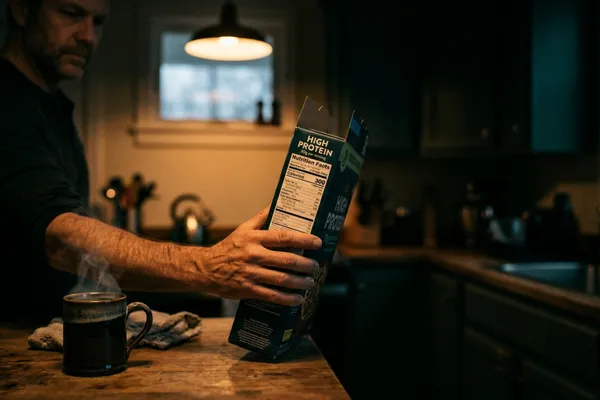
You start your morning right. You're feeling great—you did your 5-minute Theta, and you know exactly where your life and your day is headed. How exciting! You finally got some major things figured out, and you make your way out into the kitchen. It's still dark out. As your coffee's brewing, you start planning your meals for the day—and you're staring at a label that says "high protein," "keto-friendly," "plant-based," and you have no idea if any of it means anything anymore.
I get it. I've been there. For years, I bounced between low-carb, low-fat, and whatever the internet told me was "clean" that week. I felt confused, frustrated, and honestly? A little stupid for not being able to figure out something as basic as what to eat.
So I called in someone who's spent 30 years at Stanford running the largest diet studies ever done—Dr. Christopher Gardner. He compared keto to vegan, low-carb to low-fat, on hundreds of people at a time. And what he found will probably make you angry at how much time you've wasted arguing about the wrong thing.
Because here's what nobody's telling you: the diet you pick barely matters. What matters is something so simple it's almost insulting.
But here's the real question: If you found out the "rules" you've been following were never the point... what would you actually eat tomorrow?
🏆 Wellness Wednesday UPGRADE
Most people trust the label claim on the front of the package—"high protein," "keto-friendly," "plant-based"—without ever flipping it over. Dr. Gardner did the opposite—he read the actual food, not the marketing, and found the "diet wars" were never the point. Here's the real issue: you're letting a package make a decision your body should be making for you.
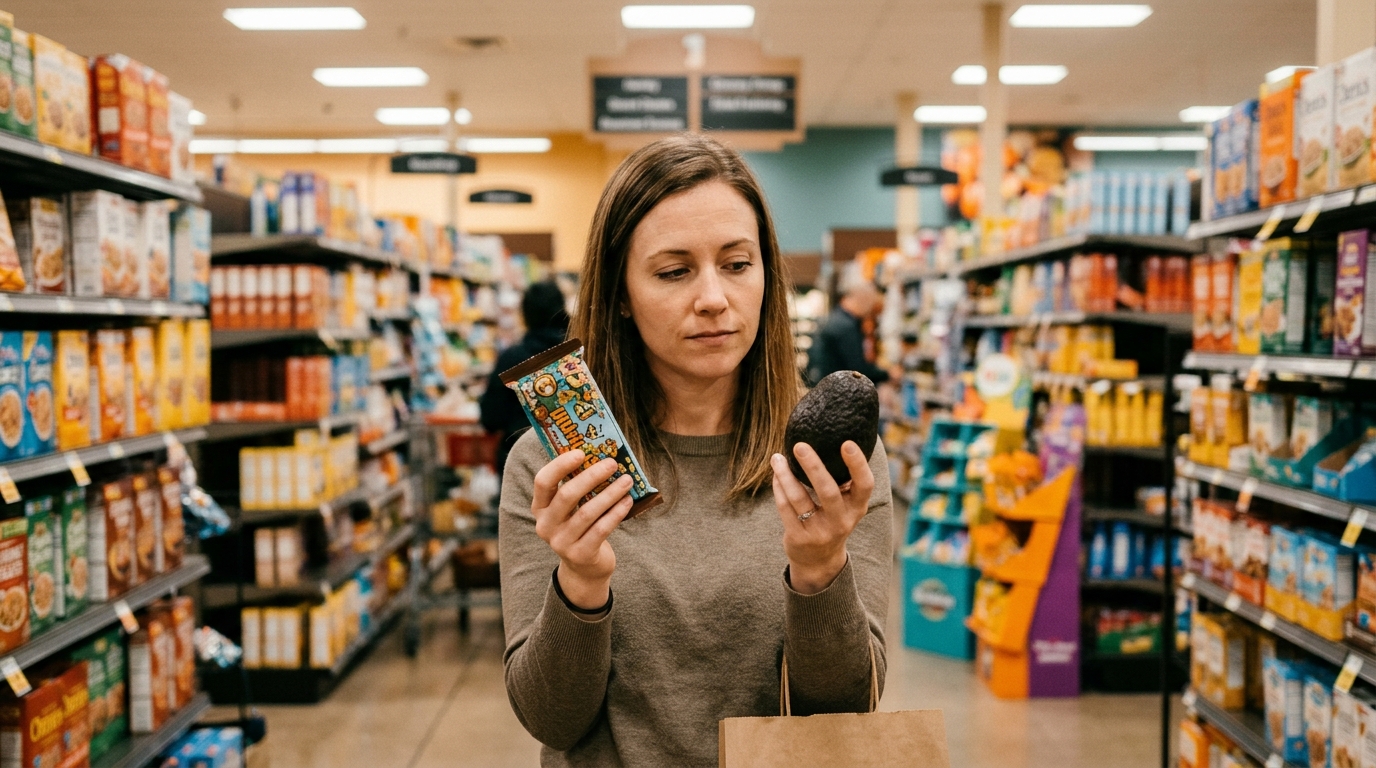
🎖️ The Upgrade: On your next grocery run, flip one "high protein" or "keto-friendly" package over and read the ingredient list—if it's ultra-processed, put it back and buy a whole-food alternative instead.
(Full REAP breakdown and theta application below 👇) That's not just a label-reading tip. That's how you stop letting marketing decide what fuels you and start eating food that actually feeds you. Awareness, as always, brings answers. Here's the breakdown.
"Eat food, not too much, mostly plants. Damn it. The simplest message. It resonates with everything that works."
Don't have time for the full podcast? I already pulled the exact moments that matter below. Hit play if you want to see it live, or keep scrolling for the breakdown.
Seeing it makes it real. Now, let's extract the exact mechanics so you can apply this to your life today. Keep reading for the core concepts, the 5-minute audit, and the REAP framework to wire this in for good.
🌞 The Core Concept: The Diet Wars Are a Lie—Food Quality Is the Only War Worth Winning
Dr. Christopher Gardner has spent three decades at Stanford running some of the largest diet studies ever conducted—comparing keto to vegan, low-carb to low-fat, on hundreds of people at a time.
What he found doesn't just settle the diet wars. It dissolves them.
🟢 The Diet You Pick Barely Matters—But the Way You Do It Decides Everything
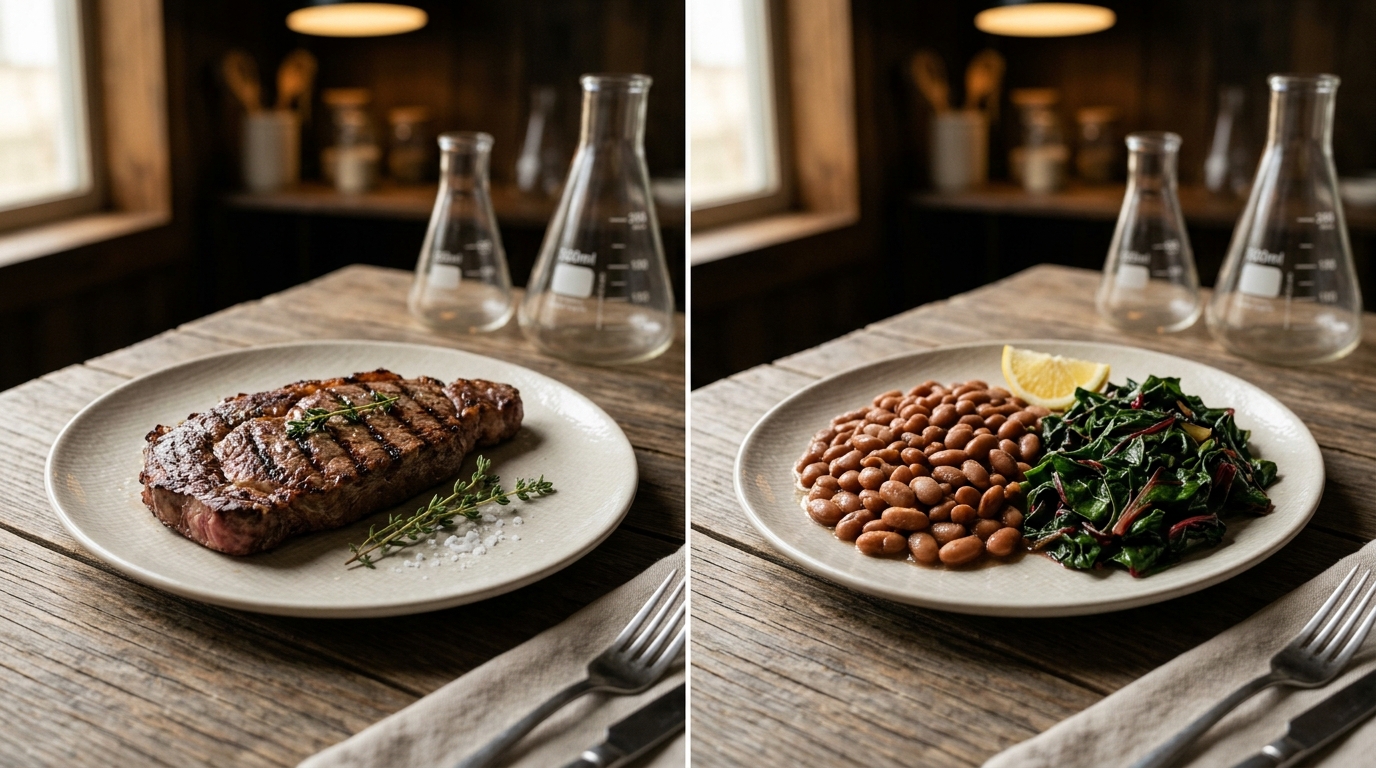
Gardner's team ran a landmark study with 609 men and women, randomly assigned to a healthy low-fat or a healthy low-carb diet for a year. The average weight loss? About 11–12 pounds in both groups.
When they overlaid the results, the two groups were virtually indistinguishable. But here's the twist that matters: within each group, results ranged from 60 pounds lost to 20 pounds gained—an 80-pound spread on the exact same diet.
The diet wasn't the variable. The food quality was!
The people who ate the healthiest version of their assigned diet—whole foods, vegetables, no added sugar, no refined grains—did best, regardless of whether they went low-fat or low-carb. "It's not low carb or low fat," Gardner says. "It's healthy."
Key Takeaways:
Low-fat and low-carb, done healthily, produce nearly identical average weight loss.
The real spread happens within a diet—food quality separates the winners from the losers.
Stop asking "which diet?" Start asking "is this food real?"
🔵 Why Some People Get Different Results
Two people eat the same plate. One stays lean. One gains. Why?
That's the mystery Gardner spent ten years and $8 million trying to solve.
His first suspect: insulin resistance. When simple carbs hit your bloodstream, your pancreas releases insulin to clear the sugar. Some people handle that flood effortlessly—"Bring it on, I'll put it away." Others become hyperinsulinemic, their pancreas cranking out more and more insulin to keep up.
The theory was elegant: insulin-resistant people would do worse on a low-fat, high-carb diet and better on low-carb. It would have explained everything.
It didn't pan out. Neither did the genetic-predisposition theory.
But the failure was freeing. "It's not low carb or low fat. It's healthy."
Key Takeaways:
Insulin resistance is real—it explains why you and your neighbor can eat the same plate and get different results.
But it did not predict who should pick which diet.
The variable you can actually control is food quality, not your metabolic type.
🟡 Your Extra Protein Is Turning Into the Carbs You Were Trying to Avoid
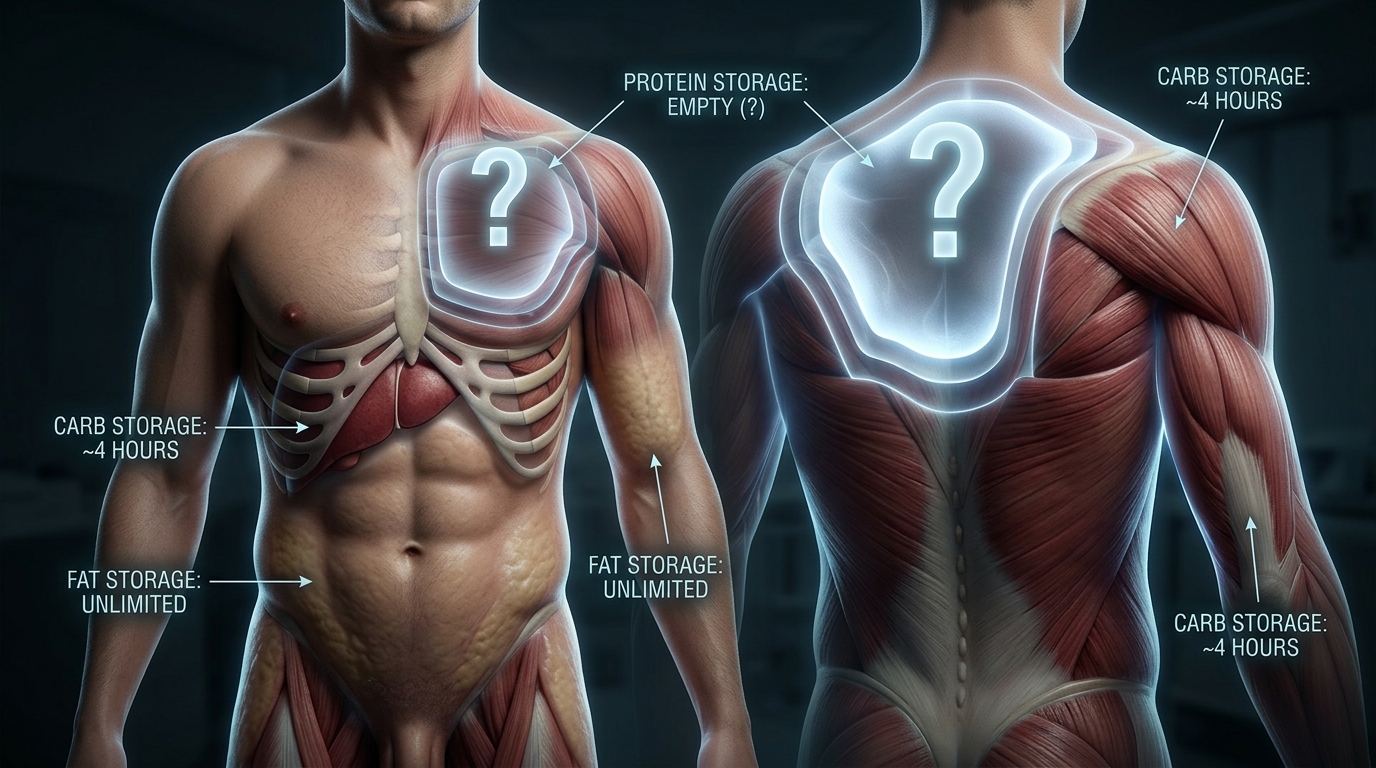
Here's the irony that should stop you cold. Your body has no place to store excess protein—not your liver, not your spleen, not your big toe. Once you've made the enzymes, hormones, and cells you need, the leftover amino acids get stripped of their nitrogen (your liver turns it into ammonia, your kidneys excrete it), and the carbon skeleton that remains gets converted into—wait for it—carbohydrate or fat.
So if you're powering down eggs for breakfast, steak for lunch, and fish for dinner to "avoid carbs," you just made carbs.
Meanwhile, you can store fat in effectively unlimited capacity (butt, belly, under your arms), and you can only store about four hours' worth of carbohydrate in your liver and muscles—which is exactly why marathoners carb-load before the infamous 20-mile bonk. The system is not on your side the way the label claims.
Key Takeaways:
There is no protein storage depot in your body—excess protein becomes carbs or fat.
"High protein" marketing ignores the conversion math your liver runs every day.
Eat enough protein for your needs; the surplus is not an investment, it's a conversion.
🟢 Oreos Are Vegan. French Fries Are Keto. The Names Are the Scam.
Part of why the diet wars rage is that the labels get abused. Oreos, French fries, and Coke are all vegan—that is not what vegan proponents proposed.
The real ketogenic diet was designed in the 1950s to control epileptic seizures in children: roughly 70–80% fat, moderate protein, super-low carb. It was never a health food diet, and it was never a steak-and-carnivore diet. Yet most people "doing keto" are pounding meat and calling it keto.
On the flip side, most people "doing low-fat" are eating added sugar and refined carbs—the exact things a healthy low-fat diet forbids. Gardner's study deliberately built the healthiest versions of both diets, and that's when the magic happened: both worked.
The war isn't between low-fat and low-carb. It's between real food and packaged crap with a label claim.
Key Takeaways:
"Vegan," "keto," and "low-fat" are marketing labels, not health guarantees.
Real keto is high-fat and moderate-protein—not an all-meat buffet.
Most people do both diets wrong, then blame the diet instead of the food.
🟡 The One Thing Every Diet Expert Actually Agrees On
When Gardner chaired the American Heart Association's nutrition committee, his team aligned 10 popular diet patterns—from Ornish to Atkins—against the newest AHA guidelines.
🏆 The winners were Mediterranean, DASH, pescatarian, vegetarian, and higher-fat vegan.
The losers were keto and paleo. But the fascinating part? Every single one of the 10 patterns agreed on four things: more whole foods, more vegetables, less added sugar, less refined grain.
And Americans do none of those in the right direction. "If we did that," Gardner says, "like half the nutritional problems would go away." He goes further in his forthcoming book Food Sense: six more foods enjoy near-universal expert agreement—beans, fruits, nuts and seeds, eggs, fish, and plain yogurt. That's a consensus hiding in plain sight behind all the clickbait.
Key Takeaways:
Across 10 popular diets, four rules are universal: whole foods, vegetables, less added sugar, less refined grain.
Six more consensus foods: beans, fruits, nuts/seeds, eggs, fish, and plain yogurt.
The controversy is louder than the consensus—but the consensus is where the results live.
🔵 The One Question That Ends Every Food Argument
With what, instead of what?
That's Gardner's grocery-store filter—and it's the single most useful tool from this entire conversation.
Is the oil in a vegetable stir-fry, or in a deep-fried stick of butter? Is the protein on a whole-food plate, or in a candy bar with a label?
Give any food its context and most "wars" evaporate. Beef tallow in a veggie sauté is fine. Seed oil on a crappy salad isn't the point.
"I don't really care what you sauté it in," Gardner says. "I'd rather you were sautéing vegetables than pulled pork."
Key Takeaways:
Stop asking "is this food bad?" Start asking "what am I eating it with, and instead of what?"
Context dissolves 90% of nutrition arguments before they start.
This is the one filter you can use at the grocery store tonight.
🟢 Organic, Seed Oils, and Inflammation: What the Panic Gets Wrong
On organic: the biggest beneficiary isn't your body—it's the farm workers and the soil.
Pesticide residue on your produce is low-risk (wash it); chronic pesticide exposure to farm workers is a massive, documented labor issue. If you can afford organic, buy it for them. If you can't, don't shame yourself—eat your vegetables anyway. (Check the EWG's Dirty Dozen and Clean 15.)
On seed oils: the American Heart Association says they're fine—even beneficial—compared to butter, beef tallow, and lard for LDL cholesterol. The confusion is that seed oils live inside ultra-processed foods.
If you're eating seed oils because you're eating junk, stop eating junk. If you're sautéing vegetables in canola or sunflower oil, that's not the problem.
And on inflammation: there are 1,500+ inflammatory markers and no clinical consensus on what "normal" is—which means "seed oils cause inflammation" can't be tested the way cholesterol can.
Gardner's verdict: "Stop eating so much crap. Eat food. Not too much. Mostly plants."
Key Takeaways:
Organic is a farm-worker and soil issue first—buy it if you can, don't shame yourself if you can't.
Seed oils in cooking are fine; seed oils inside ultra-processed junk are a symptom, not the cause.
"Inflammation" is real but not standardized—so the seed-oil-inflammation argument falls apart.
🔵 Protein Maxing? Meet Fiber Maxing
If you're chasing protein, you're probably ignoring the thing that makes it work: fiber.
Americans don't get enough of it. And the fix is almost embarrassingly simple.
Beans. Peas. Lentils.
They let you protein-max and fiber-max at the same time—a rare double win. That's exactly why almost every diet expert agrees on them, from vegans to keto folks.
Gardner's question: "If your listeners are into protein maxing, haven't they heard about fiber maxing lately?"
Key Takeaways:
Fiber is the missing half of the protein conversation.
Beans, peas, and lentils deliver both protein and fiber in one food.
Almost every diet pattern—even polar opposites—agrees on legumes.

❓ Quick Reality Check (Before We Begin)
🔸 You might be thinking: "But I've always been told high protein is the key to staying lean and building muscle. Isn't this just another nutrition fad?"
The Truth: No one is denying protein matters—you need it to build enzymes, hormones, and new cells. The shift isn't about throwing out protein; it's about expanding your understanding. You can hold both truths: protein is essential, and excess protein converts to carbs or fat because your body has no place to store it. The science supports eating enough—not maxing out.
🔸 "Does this mean I have to give up my diet and just eat whatever?"
The Truth: No. The mechanism is about food quality, not diet identity. Gardner's study found the healthiest low-fat and healthiest low-carb diets both worked equally well. The fix isn't picking a new diet—it's eating real food within whichever diet fits your culture and preferences.
More whole foods, more vegetables, less added sugar, less refined grain. That's the whole game.
🚀 The REAP 5-Minute Accountability Reset
This is how we think. This is how we move. This is how we show up! Don't just read this—run one full round right now:
R — Recognize & Run Out (Minutes 1 & 2)
Name one food in your kitchen right now that has a label claim on the front—"high protein," "keto-friendly," "plant-based"—that you've been trusting without reading the ingredients. Fact-check it honestly: is that label actually feeding you, or just feeding a marketing department? Pause the old "the label knows best" story.
E — Exchange + Envision + Emotion (Minutes 3 & 4)
Exchange your input. Visualize your next meal. Instead of reaching for the box with the claim, envision building a plate from the consensus list—beans, vegetables, an egg, some plain yogurt, fruit, nuts. Feel the shift from "trusting the package" to "trusting the food."
A — Activate with Action (Minute 5)
Write down the one label-claimed food you will replace this week with a whole-food alternative. Commit to it before the day ends.
P — Program & Prosper (The Theta Window)
Celebrate tiny wins and lock this in during your neurological goldmine: the first 5–10 minutes after waking, or the last 5–10 before sleep. Stack the reps. Presence becomes identity. Identity becomes reality!
(Note on the science: This is the foundation of Hebbian learning—often summarized as "neurons that fire together, wire together." Repeated mental patterns physically strengthen neural pathways, a principle first established by Donald Hebb in 1949 and continuously validated in modern neuroplasticity research.)
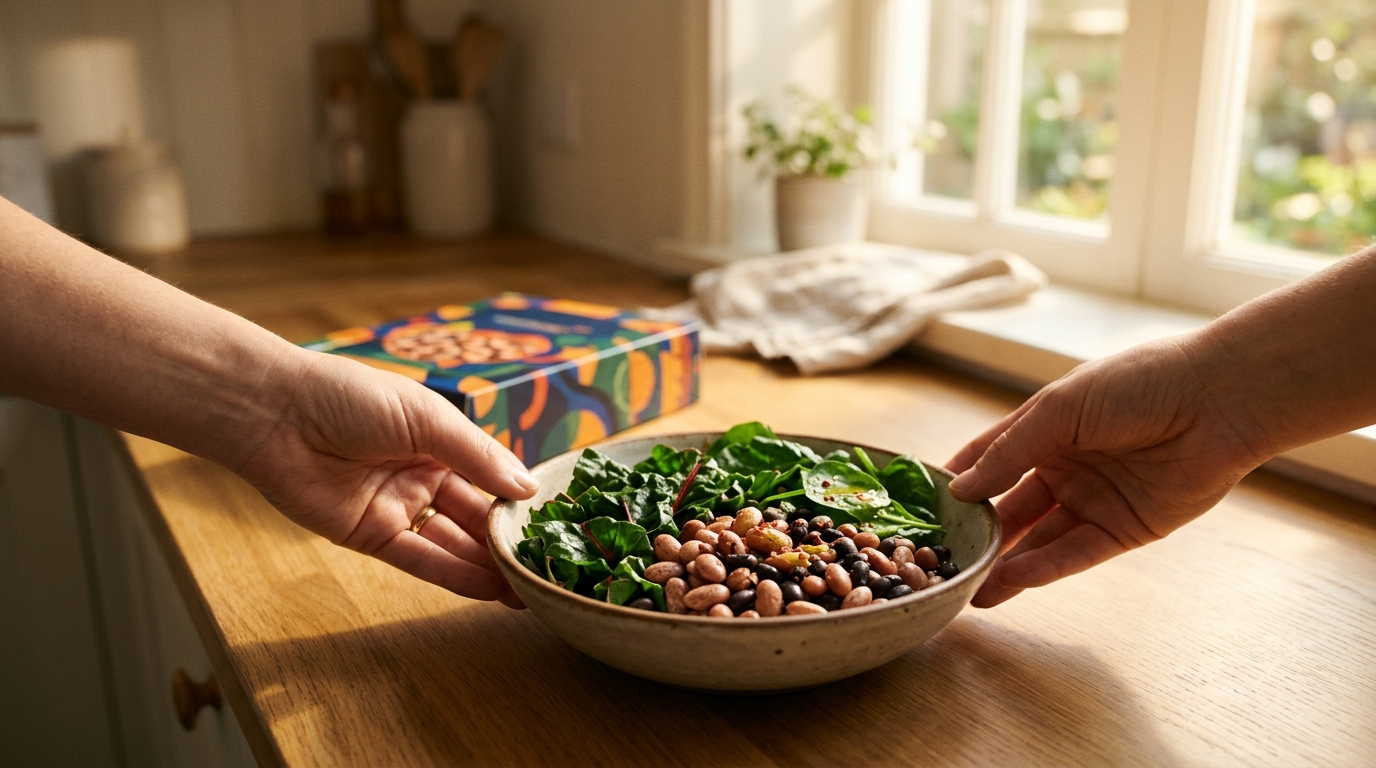
🧠 Read the Label Before You Trust the Claim!
If this reset shifted something for you, don't let it fade by noon!
Get tomorrow's Strategic Sunday Upgrade — 42 Days to Change Everything: How to Reclaim Your Best Self Before the Year Ends — dropping free at 4:44 AM.
Subscribe Free → and get instant access to the 2-Page REAP & Theta Mornings PDF
🎖️ Wellness Wednesday Upgrade: On your next grocery run, flip one "high protein" or "keto-friendly" package over and read the ingredient list—if it's ultra-processed, put it back and buy a whole-food alternative instead. (The label is not the food!) ✨
Five minutes. One shift. One upgrade. Stay focused. Keep building!
P.S. — This is how we reach the perfect day. Not all at once. One deposit at a time. One honest pattern at a time. One upgraded morning at a time. See you tomorrow at 4:44 AM.
🌱 Start Here: The Foundation
🔸 Your Genes Are the Blueprint, Your Beliefs Are the Builder: Rewiring Reality Through Epigenetics
The foundation of our biology teaching: how beliefs, environment, and repeated inputs shape the way we live. CLICK HERE →
🔸 The Illusion of Reality: Where Consciousness Research Meets Direct Experience
The beginning of our consciousness and awakening series—an invitation to question the reality you have been handed. CLICK HERE →
💖 This post exists because I believe the best thing I can do for you is bring you the truth — Scientific, Soulful, and Actionable. YOU are why I'm here — so my mistakes and research become your shortcuts!
Pay It Forward! 🚀
~Brett
TheMorningMotivator.com
We're Upgrading 1%+ Every Day! (+34% Monthly, +38% Annually!)
Medical & Training Disclaimer: Hey, I'm just your science-backed, soul-led, unapologetically human mindset & performance trainer. The content provided in this blog post is for educational and informational purposes only. I am not a licensed physician, physical therapist, or medical professional, and this blog is NOT intended as a substitute for qualified medical advice. Always consult your healthcare provider or certified coach before making major life decisions or life changes. Got it? Good. I'll catch you tomorrow. Peace out!


