
What If Change Isn't About Willpower? 7 Science-Backed Strategies
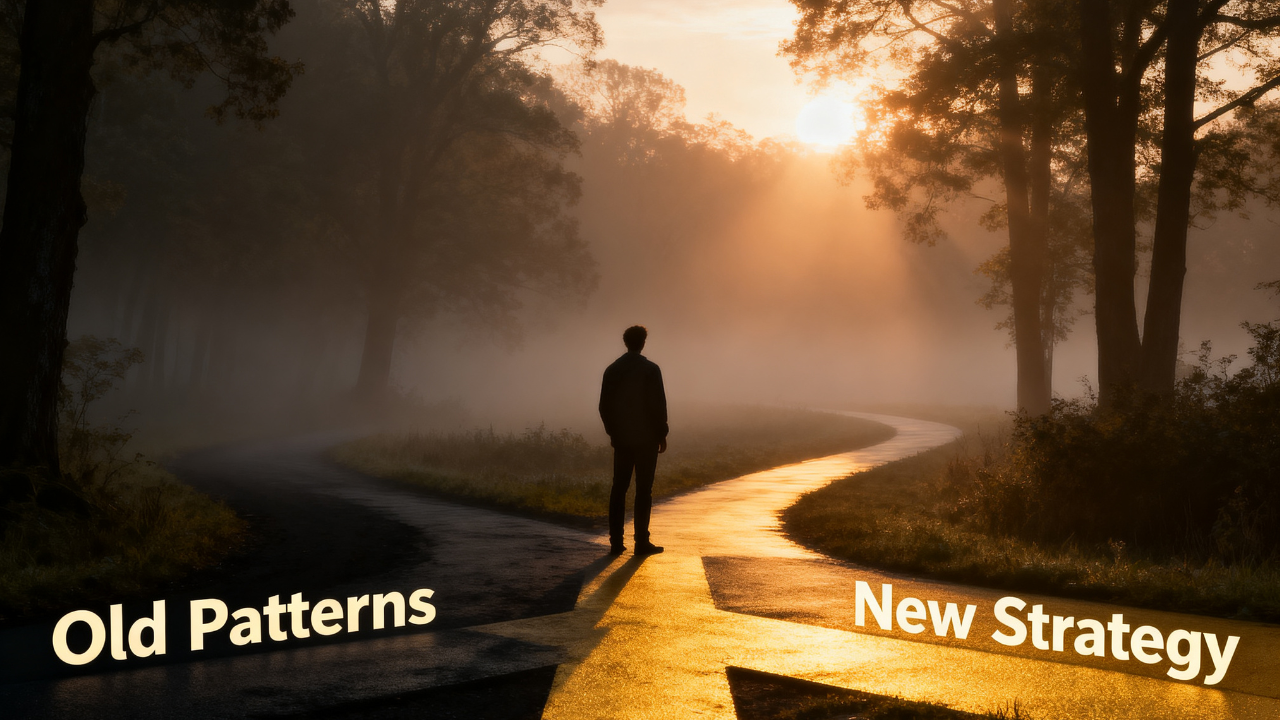
What If Change Isn't About Willpower? The 7 Hidden Barriers to Change (And How Science Says to Beat Them)
Thirsty Thursday
By Brett G Waddell ~TheMorningMotivator.com
WAKE UP!
Awareness Brings Answers!
We've all been there. You desperately want to change something in your life—get in shape, save money, spend more time with family—but despite your best intentions, nothing sticks.
Most of us believe the problem is us. We think we lack willpower, discipline, or that mysterious quality called "grit."
But according to Professor Katy Milkman, an award-winning behavioral scientist at the Wharton School of Business, that's the biggest lie we've been told about change.
"The truth is, it's not that you lack something inside you," Professor Milkman explains. "It's actually that you haven't set up the right strategies. You don't have the right support systems."
Here's the revolutionary insight: Learning how to change is a skill—just like using an Excel spreadsheet or riding a bike. And once you master this skill, you can apply it to every goal you have while helping everyone you care about do the same.
👇 Quick Check-In: What's ONE change you've been trying to make that keeps slipping away? Drop it below. I read every comment—and your honesty might give someone else permission to be real too.
💥 The Moment Everything Falls Apart
Picture this:
It's 11:47 PM on December 31st. You're lying in bed, heart pounding with possibility. This is the year, you tell yourself. This is when I finally get in shape. This is when I save money. This is when I become the person I know I can be.
You write it down. You mean it. You're ready.
Then January 15th rolls around. The gym bag is still by the door, untouched. The budget spreadsheet is closed. That book you were going to write? Still blank.
And the voice in your head whispers: "See? You knew it. You're just not disciplined enough."
But here's what that voice doesn't know: You're not broken. Your strategy is.

Hey, it's been SIX MONTHS!
🔎 The Science Behind Why We Quit (And What Actually Works)
Research from the University of Pennsylvania's Behavior Change for Good Initiative—synthesizing work from 180+ behavioral scientists—reveals a startling truth: Willpower-based approaches fail 80-90% of the time within 6 months.
Why? Because they ignore how the human brain is actually wired.
🔬 Science Spotlight: A landmark 2023 meta-analysis in Nature Human Behaviour reviewed 217 randomized controlled trials on behavior change. The finding? Interventions that focused on making actions enjoyable, frictionless, and socially reinforced achieved 3.4x higher adherence rates than those relying on motivation or self-discipline alone.
Translation: Your brain isn't designed to sustain effort that feels like punishment. It's designed to seek reward, conserve energy, and follow social cues. (Source: Milkman et al., 2023)
As Professor Milkman's two decades of research confirms:
"If it's painful to pursue your goal, you will quit. That is simply how we are wired. If you dread it, you're not going to keep doing it."
This isn't philosophy. It's neurobiology. The basal ganglia—the brain's habit center—responds to cues, rewards, and repetition. Not to guilt. Not to shame. Not to "should."
In this powerful conversation, Professor Milkman breaks down the seven hidden barriers that derail every single one of us—and the exact science-backed strategies to overcome them. Watch this before you set another goal.
Did you catch it? The problem was never your capacity. It was your approach. Now let's build your new approach.
🧱 The 7 Hidden Barriers (And How to Hack Each One)
Professor Milkman's framework, refined through thousands of experiments and real-world implementations, reveals that we all face the same seven internal barriers. The difference between those who succeed and those who don't? They work around them strategically.
1. Getting Started → The Fresh Start Effect
The Barrier: You know what to do, but you can't take the first step.
The Deep Science: Autobiographical memory research shows we don't experience time linearly. We segment our lives into "chapters" separated by psychological landmarks—Mondays, birthdays, job transitions, seasonal shifts. At these breakpoints, we feel psychologically distanced from our "past self," creating optimism for a "new self."
The Hack: Don't wait for January 1st. Identify your personal fresh starts. Is it the first of the month? After a vacation? When the kids go back to school? Schedule your launch there.
Real-World Example: A 2021 study with 12,000 employees found that framing a wellness program around "Fresh Start Fridays" (vs. generic enrollment) increased participation by 47%.
Your Move: This week, mark one psychological fresh start on your calendar. Not as a deadline—but as an invitation.
🌟 Synchronicity Check: Did a specific date or moment jump into your mind while reading that? That's not random. Your intuition is pointing you toward your optimal launch point. Honor that nudge. Mark it on your calendar TODAY.
2. Impulsivity → Temptation Bundling
The Barrier: You want instant gratification, so you avoid what's good long-term.
The Deep Science: Present bias is hardwired. The brain's limbic system prioritizes immediate rewards over delayed benefits. But research by Woolley & Fishbach (Cornell/Chicago) shows we can "hack" this by pairing long-term goals with short-term pleasures.
The Hack: Only allow yourself a coveted indulgence while doing the target behavior. Professor Milkman only listened to Harry Potter audiobooks while at the gym. Result? Participants in her study exercised 56% more.
Real-World Example: A corporate wellness program used temptation bundling (favorite podcast + treadmill) and saw a 3.2x increase in consistent gym attendance over 8 weeks.
Your Move: What's one "guilty pleasure" you could bundle with a goal? Audiobook + folding laundry? Favorite show + meal prep?
3. Procrastination → Commitment Devices
The Barrier: You delay because there's no immediate consequence.
The Deep Science: Procrastination isn't laziness—it's a failure of temporal discounting. We undervalue future rewards. Commitment devices work by making the cost of inaction immediate and tangible.
The Hack: Create stakes. Put money on the line (StickK.com). Tell someone you'll report to them. Use "if-then" penalties: "If I don't meditate by 8 AM, I donate $20 to a cause I dislike."
Real-World Example: In a smoking cessation study (Gine & Karlan, 2021), participants who could deposit money they'd forfeit if they failed a nicotine test were 30% more likely to quit—even those who never actually used the deposit option. The mere presence of accountability changed behavior.
Your Move: Choose one goal. Add one consequence for skipping it. Make it small but real.
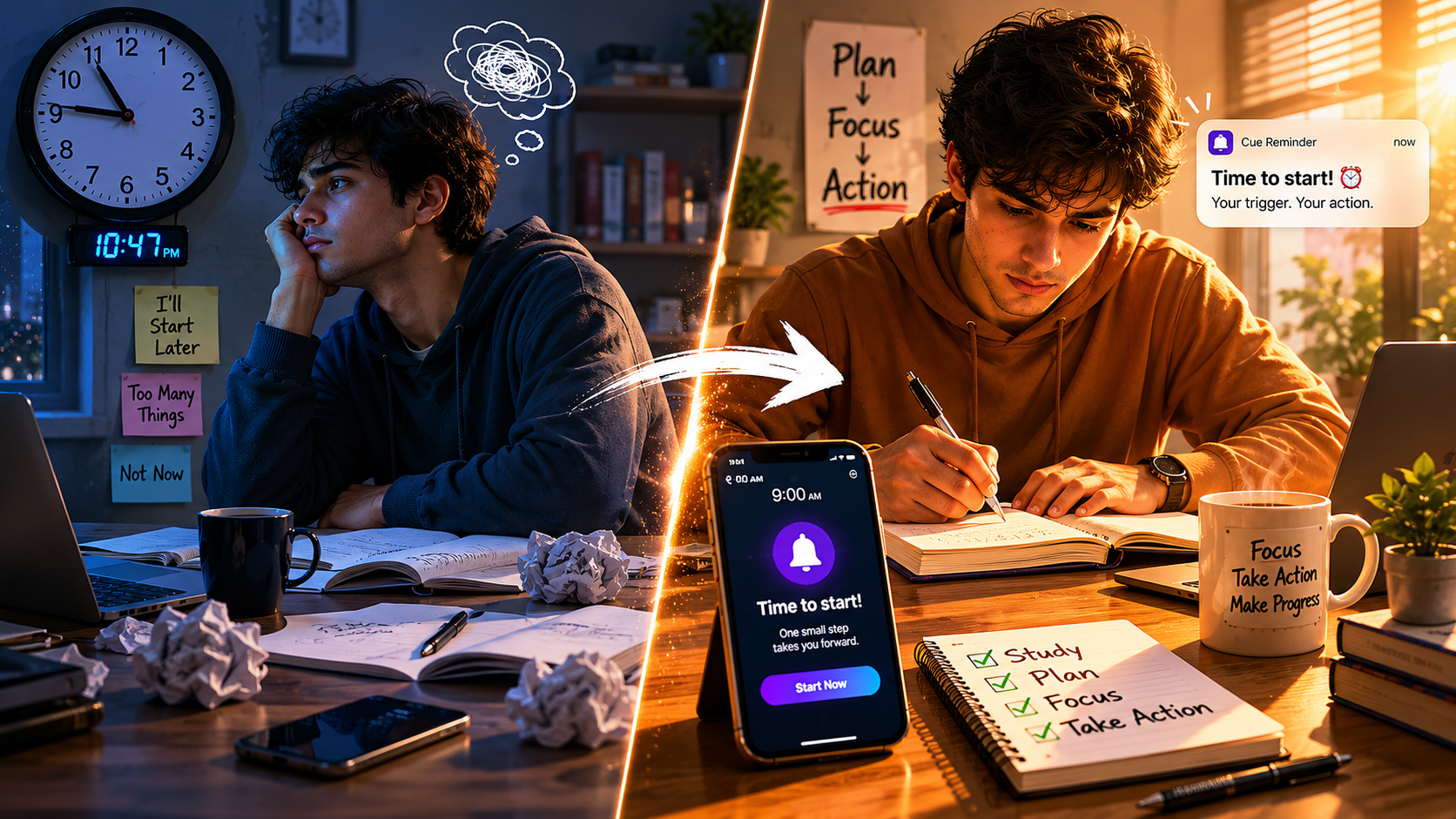
4. Forgetfulness → Cue-Based Planning
The Barrier: You genuinely forget because life gets busy.
The Deep Science: Ebbinghaus's forgetting curve (1885) still holds: we lose ~70% of new information within 24 hours without reinforcement. But implementation intentions (Gollwitzer, 1999) show that "if-then" planning increases follow-through by 200-300%.
The Hack: Replace vague intentions with specific "When/Where/How" plans. "When I finish my morning coffee, I will review my top three priorities for 10 minutes." Memory needs triggers.
Real-World Example: A study with nurses handwashing compliance jumped from 38% to 89% when simple visual cues (footprints leading to sanitizer) were added—no training, no reminders, just environmental design.
Your Move: Pick one forgotten intention. Attach it to an existing habit. Write the "if-then" statement now.
🔬 Science Spotlight: fMRI research shows that cue-based planning activates the prefrontal cortex (planning center) before the trigger occurs, priming the brain for action. It's not willpower—it's neural preparation. (Source: Journal of Cognitive Neuroscience, 2022)
5. Laziness → Default Design
The Barrier: You take the path of least resistance (which is human and smart).
The Deep Science: The brain is an energy-conserving organ. It defaults to the option requiring the least cognitive load. This isn't a flaw—it's efficiency.
The Hack: Make the right choice the easy choice. Automate savings. Prep workouts the night before. Keep healthy snacks at eye level. Engineer your environment so the lazy choice is the good choice.
Real-World Example: In a cafeteria study, simply moving fruit to eye level and desserts to a less accessible location increased fruit selection by 31%—no education, no persuasion, just friction design.
Your Move: Audit one area of your life. Where can you reduce friction for the behavior you want? Add friction for the one you don't?
6. Confidence → The "Saying Is Believing" Effect
The Barrier: You don't believe you can do it.
The Deep Science: Confidence isn't a fixed trait—it's malleable. Research by Eskreis-Winkler (Northwestern) shows that teaching others activates self-efficacy pathways. When we articulate advice, we internalize it more deeply (the "saying-is-believing" effect).
The Hack: Mentor someone slightly behind you. Even 8 minutes of advice-giving improved students' grades in the subject they wanted to improve.
Real-World Example: In a corporate sales team, low performers who were asked to coach newer hires saw a 22% increase in their own performance within 4 weeks—without additional training.
Your Move: Who's one step behind you on a journey you're on? Offer one piece of advice. Watch how it shifts your own belief.
🌟 Synchronicity Check: Who came to mind just now as someone you could help? That's your next step. The universe is asking you to serve—and in doing so, you'll heal yourself.
7. Conformity → Strategic Social Engineering
The Barrier: You unconsciously adopt the limits of your social circle.
The Deep Science: Social proof is a primal driver. Carrell's Air Force Academy study (2019) showed that random assignment to high-performing freshman squadrons improved GPA by 0.3 points—equivalent to moving from a B to a B+.
The Hack: Surround yourself with people modeling what you want. Pursue goals in tandem. Research shows tandem goal pursuit increases adherence by 35% due to accountability + enjoyment.
Real-World Example: A weight-loss program that paired participants with "accountability buddies" saw 2.8x higher completion rates than solo participants—even when buddies never met in person, just texted weekly.
Your Move: Identify one person whose habits you admire. Reach out. Ask one question about their system.

🏗️ The Solution: Stop Relying on Willpower, Start Engineering Success
Here's the bottom line from 20 years of behavioral science:
If your strategy relies on you being a different person tomorrow than you are today, it will fail.
The most successful people aren't more disciplined. They've just built better systems. They've made the right choice:
Enjoyable (temptation bundling, social connection)
Easy (default design, friction reduction)
Automatic (habit loops, cue-based planning)
Accountable (commitment devices, social support)
🔬 Science Spotlight: Neuroplasticity research (Lipton, Dispenza) confirms: habits form through repetition in consistent contexts. Simple habits wire in ~21 days; complex ones take 66 days on average (Lally et al., 2010). But once wired, they require zero willpower.
You're not lazy—you're efficiently designed. The key is intentional repetition, not heroic effort.
✨ REAP PRACTICAL APPLICATION ✨
Your 4-Step Rewire for Sustainable Change
R — Recognize & Run Out
Notice the thought: "I should just push through this."
See it. Don't judge. Ask: "Who's aware of this belief?"
Science tie-in: This activates meta-awareness, reducing amygdala reactivity (Source: Tang et al., 2015).
E — Exchange & Envision
Replace with: "Change is a skill. I can learn better strategies."
Envision yourself using one specific hack this week.
Consciousness tie-in: This isn't positive thinking—it's neural repatterning. Every thought is a vote for your future identity.
A — Activate with Action
Right now: Pick ONE barrier from above. Write down your workaround.
Example: "Barrier: Forgetfulness. Solution: I'll set a phone reminder for 8 AM that says 'Review my top 3 priorities.'"
10 seconds. That's it.
REAP principle: Small actions, repeated, rewire identity.
P — Program & Prosper
Repeat tomorrow. Awareness takes care of the wiring.
Stack the reps. Identity follows action.
Your perfect day is built one REAP at a time.
📥 Grab Your Free REAP Your Future: 5-Minute On-Demand Rewire PDF
A done-for-you protocol that walks you through quick problem-solving and decision-making for all seven barriers.
🚨 CRITICAL WINDOW: FIRST 5 MINUTES
The REAP reps work best before the world gets its vote.
When you wake up, your brain is in theta state — highly programmable. During this window, your critical faculty is offline, cortisol is rising to wake the body, and your subconscious is wide open to suggestion.
That's why what you think, say, and feel in these first 300 seconds sets the neurological tone for the entire day.
That is your window. That's why I created:
The 5-Minute Theta Mornings Routine
No decisions. No willpower. Just open, read, rewire.
👉 DOWNLOAD YOUR FREE THETA MORNINGS PDF HERE
Stack the reps, baby!

⚖️ Today's Lesson in One Sentence
You don't need more willpower—you need better strategy. Make it fun, make it easy, make it social, and watch what happens!
❓ FAQ (QUICK ANSWERS)
Q: What if I've tried everything and still can't stick to it?
A: You haven't tried strategically. Most people use one-size-fits-all solutions. Diagnose which of the 7 barriers is YOUR primary blocker, then apply the matching workaround. Precision beats effort.
Q: Isn't this just making excuses for not pushing through discomfort?
A: No. Discomfort is inevitable. Unnecessary suffering is optional. The goal isn't to avoid hard work—it's to engineer the process so the hard work feels meaningful and sustainable. Pain with purpose persists. Pain without strategy quits.
Q: How long before I see real change?
A: Simple habits wire in weeks. Complex ones take months. But here's the key: You'll feel different immediately when you stop blaming yourself and start using strategy. That identity shift is the first win.
🌟 Synchronicity Spotlight: What if the question that called to you while reading is exactly what your consciousness is ready to investigate today? Trust that pull. Start there.
⚡ 5-MINUTE MICRO-ACTION (START NOW)
Breathe: 3 deep breaths. Exhale longer than inhale.
Identify: Which of the 7 barriers is your biggest blocker right now? (Getting started? Impulsivity? Forgetfulness?)
Choose: Pick ONE workaround from above. Write it down.
Anchor: Attach it to a cue. "When [X happens], I will [Y workaround]."
Commit: Say out loud: "I don't need more willpower. I need better strategy. I'm ready."
Done. One REAP rep. One step closer to your perfect day.
🏖️ The Bigger Vision: Your Perfect Day, Engineered by Strategy
Perfect days are not accidents.
They are engineered.
One strategy.
One repetition.
One nervous system upgrade at a time.
This is why The Morning Motivator exists.
Awareness Brings Answers.
REAP gives you the 5-minute on-demand rewire.
Repetition wires identity.
Identity changes reality.
💖 Love in Action:
The best definition of love may be this:
"To choose the best interests of another person and act on their behalf."
That is what this mission is about.
This blog.
The REAP system.
The community.
The teachings.
Scientific. Soulful. Actionable.
Helping people become healthier, calmer, stronger, and more conscious is an act of love.
And when you share this with someone else…
that becomes your act of love too.

🏃🏼➡️ YOUR NEXT STEP: Activate Your REAP & Join the Movement
✅ Get your FREE REAP Your Future blueprint + daily masterclass link at 5:00 AM —start rewiring in 5 minutes
✅ Join the Consciousness Community! If you felt a resonance reading this — you're invited.
✅ Pay It Forward
Send this to one person who needs this reminder today.
Change starts with shared momentum—and your perfect day is built one post, one conversation, and one REAP at a time.
Five minutes. One REAP. One recognition. One move forward. 🚀
💖 This post exists because I believe the best thing I can do for you is bring you the truth— Scientific, Soulful, and Actionable. That's the only reason I'm here.
Stay Focused. Keep Asking Better Questions!
P.S. — This is how we reach the perfect day.
Not all at once.
One deposit at a time.
One pillar at a time.
One morning at a time.
See you tomorrow at 4:44 AM.
Hey, I'm just your science-backed, soul-led, unapologetically human, mindset & motivation trainer. The content provided in this blog post is for educational and informational purposes only. I am not a licensed therapist, and this blog is NOT intended as a substitute for the advice of a physician, psychotherapist, or other qualified professional. Got it? Good. I'll catch you tomorrow.
Pay It Forward! 🚀
~Brett
TheMorningMotivator.com
You're Upgrading 1%+ Every Day! Keep Going! = +34% Monthly, +38% Better Annually!
🌱 Continue Your Journey
🔸 Your Genes Are the Blueprint, Your Beliefs Are the Builder: Rewiring Reality Through Epigenetics — "Give me a child until it's seven and I will show you the man."— Jesuit Proverb (Validated by Modern Neuroscience) (May 2, 2026) →
🔸 What If the Answer Isn't Ahead of You… But Is the One Asking the Question? Where Consciousness Research Meets Direct Experience— The Illusion of Reality. (April 11, 2026) →
💬 Your Turn: Which of the 7 barriers is YOUR biggest blocker right now? Drop it below. I read every comment—and your insight might be the nudge someone else needs today. 👇


