What Is Consciousness? The Answer Isn't in Your Brain
What Is Consciousness? The Answer Isn't In Your Brain.
Consciousness isn't a thing in your brain, but a process. It's a controlled hallucination, deeply linked to memory, and its existence in AI is a dangerous, unresolved debate.
Strategic Sunday DEEP DIVE
By Brett G Waddell ~ TheMorningMotivator.com
Don't miss tomorrow's Mindset Monday Upgrade: You're Not Lazy—You're Wired to Underperform. Here's the Way Out. — free at 4:44 AM. Subscribe →
WAKE UP! Awareness Brings Answers!
You wake up, and before your feet even hit the floor, the mental checklist starts.
A chaotic swirl of tasks, worries, and obligations. In that quiet, frantic moment, have you ever stopped to ask the most fundamental question of all: what is actually doing the thinking? What is this "I" that feels the weight of the day before it even begins?
I've been there, lost in the noise, treating my own consciousness like a given, a simple fact of life, never once questioning the machinery behind it. It's the one thing we all have, yet we rarely stop to inspect it.
Today, we're bringing in the ultimate expert to solve this problem—Professor Brian Cox and a panel of the world's leading consciousness researchers. They're here to help us upgrade our understanding of ourselves, and to finally pull back the curtain on the most profound mystery in the universe.
Release - Align - Become.
🏆 Strategic Sunday UPGRADE
Most people live their entire lives inside a mind they've never once examined. The great thinkers did the opposite—they treated consciousness itself as the frontier.
Here's the real problem: you can't optimize what you don't understand. You're tuning the radio without knowing how it works.
🎖️ The Upgrade: Set a timer for 60 seconds right now. Close your eyes and ask: "What is aware of my thoughts right now?" Don't answer. Just notice the awareness itself. That's the thing you've been ignoring your whole life.
(Full REAP breakdown and theta application below 👇)
That's not just a philosophical exercise. That's how you meet the one constant in every experience you've ever had. Awareness, as always, brings answers. Here's the breakdown.
"What is it like to be a particular thing? And that's not something you can see in the brain. You can take someone who's hearing those voices, and you can study their brain to the maximal capacity that in principle it would be possible to do with any scientific instrument. And you might know all there is to know about what their brain is doing, but you won't know what it's like to hear that voice."
Don't have time for the full podcast? I already pulled the exact moments that matter below. Hit play if you want to see it live, or keep scrolling for the breakdown.
Seeing it makes it real. Now, let's extract the exact mechanics so you can apply this to your life today. Keep reading for the core concepts, the 5-minute audit, and the REAP framework to wire this in for good.
🌞 The Core Concept: Consciousness Is a Process, Not a Place
Professor Brian Cox opens this episode with a confession that should stop you cold: despite great advances in neuroscience, psychology, and computational modeling, we are nowhere near having a theory that explains how our experience emerges from physical processes in the brain.
That's not a failure of science—it's an invitation.
What follows is one of the most honest, accessible, and mind-expanding conversations on consciousness you'll find anywhere.
Here's what the panel of experts—Anil Seth, Katharina Schmack, Steve Fleming, and philosopher Alex O'Connor—actually said, distilled for you.
🟢 Consciousness Is Subjective Experience (And That's the Problem)
The panel agrees on a beautifully minimal definition from philosopher Thomas Nagel, offered 50 years ago: "For a conscious organism, there is something it is like to be that organism." It feels like something to be you. It doesn't feel like anything to be a table or chair.
This definition creates the central tension. Science deals in objectivity—what can be measured, observed, and replicated. Consciousness is inherently subjective.
Alex O'Connor put it bluntly: "You can study someone's brain to the maximal capacity possible, and you might know all there is to know about what their brain is doing, but you won't know what it's like to hear that voice."
Key Takeaways:
Consciousness is defined by subjective experience—"what it is like" to be something
Science can measure brain activity but cannot directly access the experience itself
This subject/object gap is why consciousness remains "the hard problem"
🟡 We See Fingerprints, Not the Thing Itself
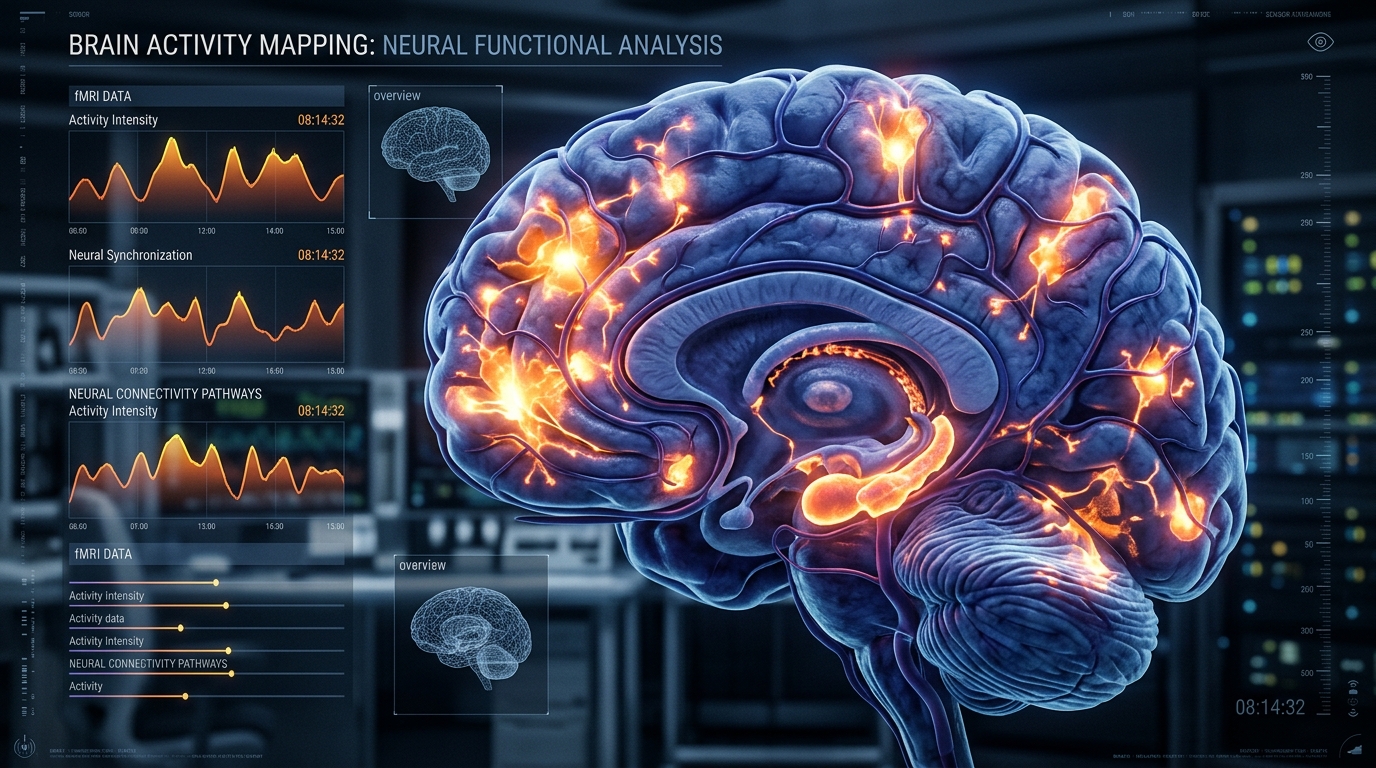
Anil Seth offered the metaphor that anchors the entire conversation: neuroscience can see the "fingerprints" or "footprints" of consciousness in the brain, but not consciousness itself.
What can we actually see? Brain regions, energy consumption, neuron activity. "None of these things are consciousness itself," Seth explains, "but they're intimately related to consciousness." This is the domain of "neural correlates of consciousness"—the correlations between brain activity and subjective experience.
Steve Fleming added a crucial insight: consciousness isn't localized to one brain area. "It's a process rather than a thing. It's something that the whole system does." Research on imagination and reality monitoring shows that prefrontal cortex areas evaluate whether sensory activity reflects reality or is internally generated.
Key Takeaways:
Brain imaging reveals correlates, not consciousness itself
Consciousness is a whole-system process, not a single location
Reality monitoring—distinguishing real from imagined—is a key function
🔵 Your Brain Is Running a Controlled Hallucination
This might be the most practically useful insight in the entire episode! Katharina Schmack, who studies psychosis through the lens of hallucinations, explained that perception isn't a passive receiving of external stimuli. It's an active construction.
She gave a universally relatable example: you're waiting for a message, your phone is in your pocket, and you feel it vibrate. You check—nothing. "Our expectations influence what we experience in the same way as do external stimuli," she said. "Just having a very strong expectation of getting a phone call will give us the perception of really feeling the phone vibrate."
Steve Fleming's research extends this. His team asked people to imagine simple patterns, then sometimes faded in the real thing. People often confused imagination with reality—and vice versa. The prefrontal cortex monitors the "strength or reliability" of sensory activity to determine what's real.
Key Takeaways:
Perception is constructed, not received—expectation shapes experience
Hallucinations occur when internal signals are mistaken for external reality
"Reality monitoring" is the brain's process for tagging what's real
🟠 Memory Shapes Consciousness But Isn't Required
The panel explored the deep link between consciousness and memory. Steve Fleming noted that consciousness integrates over roughly half a second—we're always "pulling along the recent past." William James called this the "specious present"; Gerald Edelman called it the "remembered present."
But here's where it gets fascinating. Anil Seth introduced Clive Wearing, a man who lost the ability to form new memories in the 1980s. Clive lives in a "perpetual present"—every few seconds he says, "These are the first human beings I've ever seen." Yet he's clearly conscious. He remembers his wife's face. He can still play piano beautifully, even though he won't remember playing five minutes later.
Alex O'Connor took it further with a thought experiment: imagine falling through air with no memory at all—not even a moment-to-moment record. "Would you even know that you were falling? You wouldn't have a moment before to compare it to."
His conclusion: consciousness might be far simpler than we think. Memory, identity, and emotional processing are things consciousness does, not what it is.
Key Takeaways:
Consciousness integrates recent past—it's extended in time
Amnesia patients like Clive Wearing remain conscious without new memories
Memory shapes experience but isn't the definition of consciousness
🔴 Consciousness Is Likely a Continuum Across Species
Do animals and plants have consciousness? The panel's answer reveals more about the nature of consciousness itself.
Katharina Schmack studies perception in mice—playing tones, training them to report confidence, and identifying "hallucination-like perceptions" when mice report hearing tones that weren't played. Using tools like optogenetics, researchers can manipulate neural circuits and identify dopamine's role in these false perceptions. This research translates directly to human therapies.
Steve Fleming pointed to octopuses—creatures with remarkable abilities for deception and theory of mind. "That makes us think, well, it has the kind of cognitive capacities that we associate with consciousness in humans."
Anil Seth was more cautious about plants: "They share very little in terms of the kinds of behaviors and functions that are associated with consciousness in animals." He noted that consciousness is "surprisingly easy to lose" in humans, so we should be careful about attributing it too broadly.
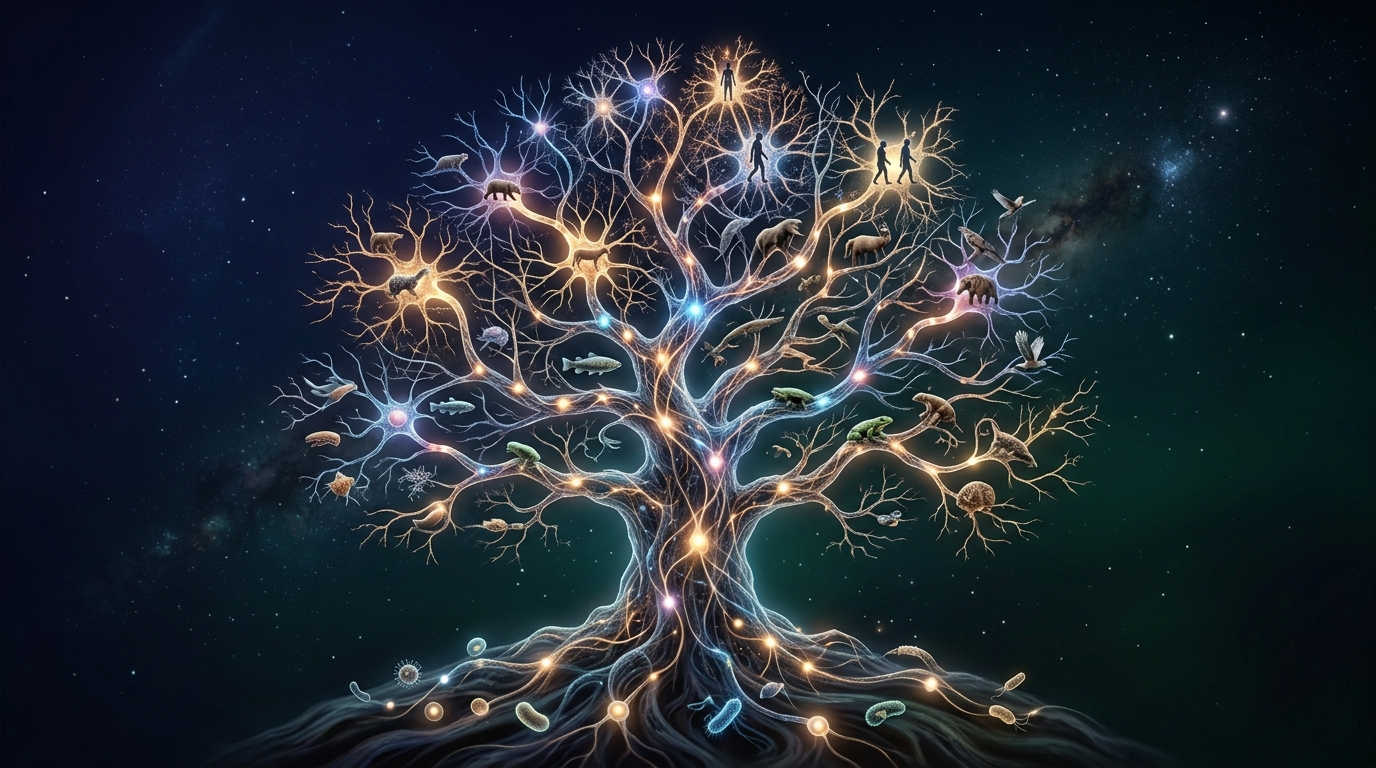
Alex O'Connor framed it as a continuum: "You can have less complex agents that we like to think are conscious in some sense, and yet lack many of the functions that give us our complexity."
Key Takeaways:
Consciousness likely exists on a spectrum, not as all-or-nothing
Animal research reveals components of conscious processing
Plants lack the functions associated with consciousness in animals
🟣 AI and Consciousness: A Dangerous Debate
The final question—can AI be conscious?—produced the sharpest disagreement of the episode.
Steve Fleming argued that if consciousness is a process or set of functions, it could eventually be implemented in silicon. "When these patterns coalesce, and these systems become more multimodal, embedded in time, have their own agency... then we will attribute consciousness to these systems, and we will be right in doing so."
Anil Seth strongly disagreed. "I think it's a terrible idea. We should not be trying to build conscious AI." His deeper argument: the assumption that consciousness is substrate-independent—that it can run on silicon as easily as carbon—treats the brain as a computer. "But that's a metaphor. It's been a very powerful, very productive metaphor, but it's a metaphor nonetheless. The closer you look at a brain, the less like a computer it looks."
Seth's warning carries urgency: "If we attribute these systems with capacities for feeling, understanding that they don't actually have, we open ourselves to massive new psychological vulnerabilities, and we distort our circle of moral priority. We may end up caring more about a hunk of silicon and code than about non-human animals, or other humans that really do deserve our care and attention."
Key Takeaways:
Some experts believe AI consciousness is possible; others strongly doubt it
Attributing consciousness to AI (even falsely) poses real psychological and ethical risks
The "brain as computer" metaphor may be misleading us
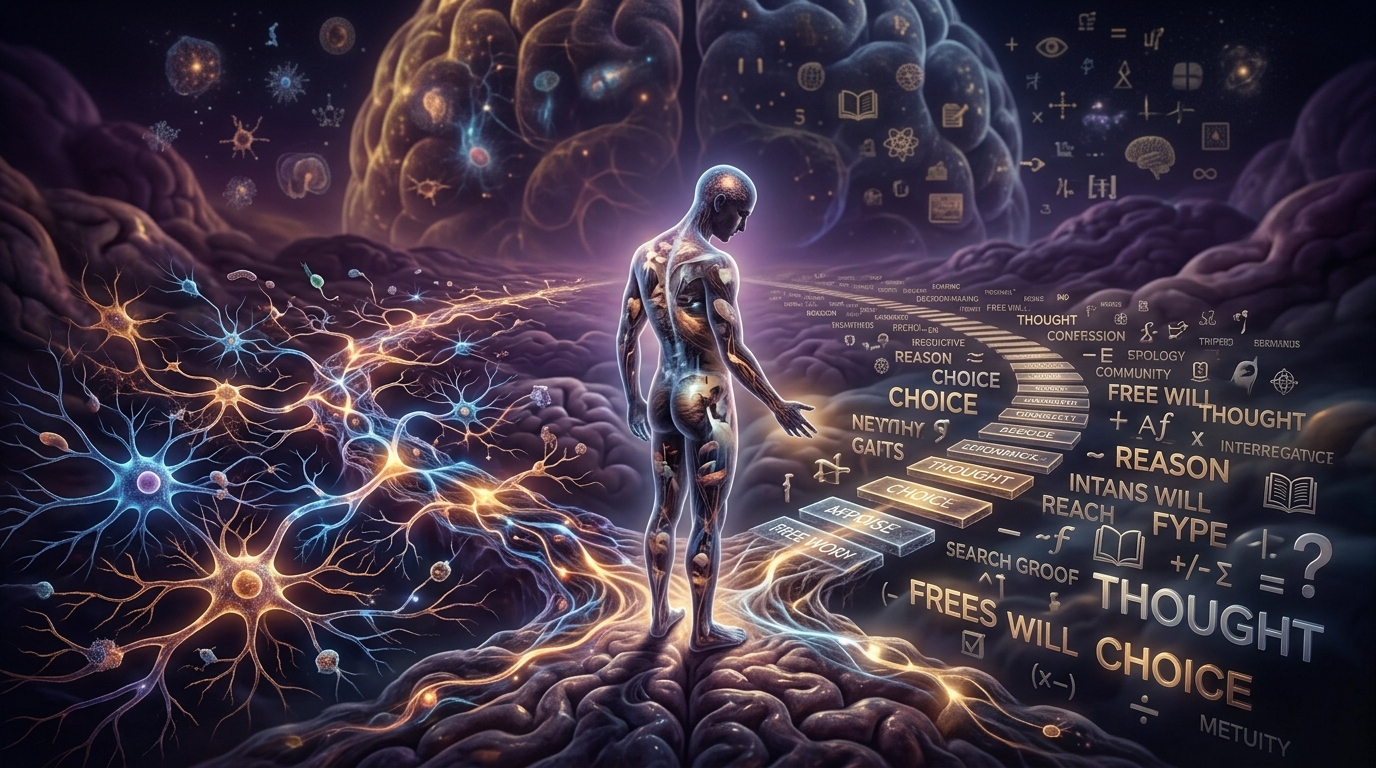
⚫ Free Will: Are You the Author or the Narrator?
The Libet experiments of the 1980s suggested brain activity predicts choices before we're consciously aware of making them. But Steve Fleming noted that recent computational models suggest we misinterpreted those data—the "ramp-like signal" may be an artifact of how the data was analyzed.
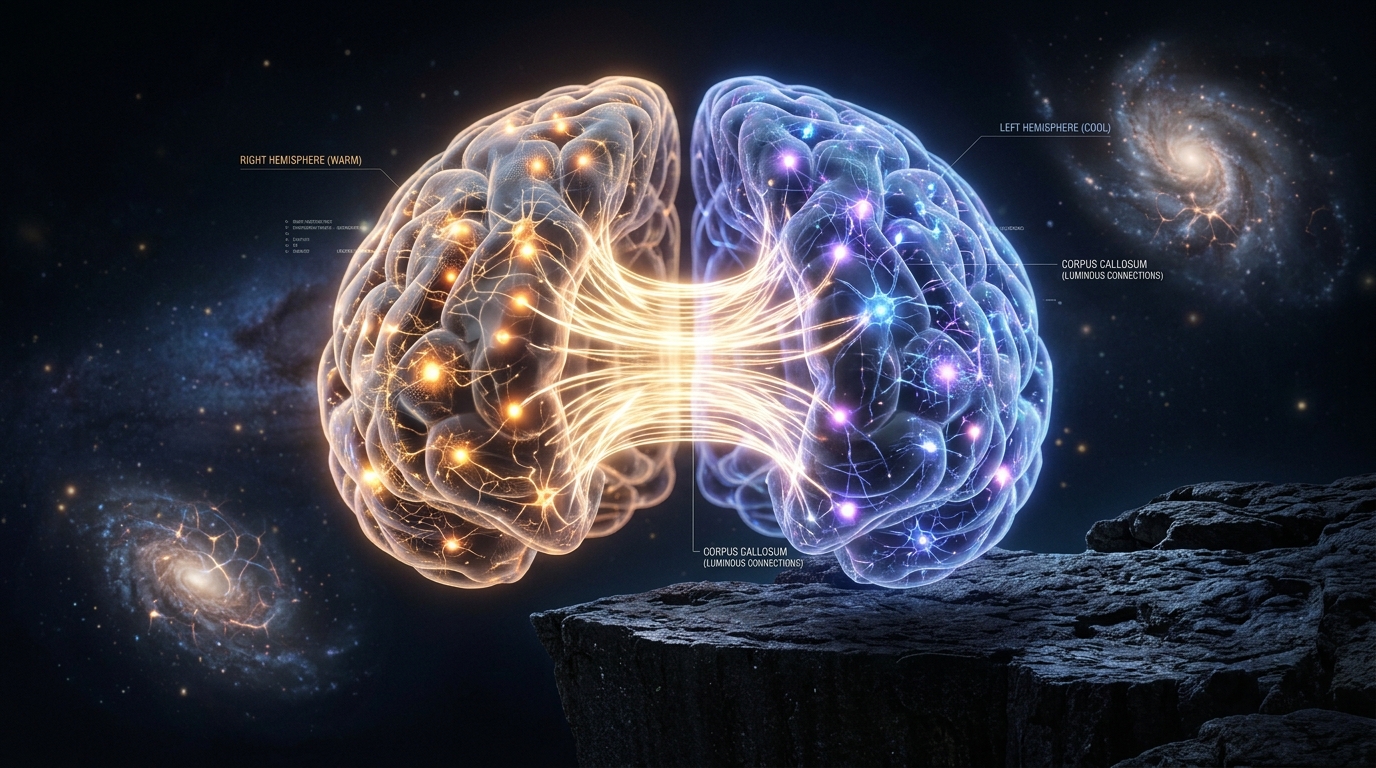
The most striking evidence came from Alex O'Connor's discussion of split-brain patients. When a split-brain patient's right hemisphere received the instruction "walk to the door," the patient stood and walked. When asked why, the left hemisphere—the language center—made up a reason. "Oh, I was getting warm and I just went to get some air." They weren't lying. They believed it.
"It implies that there's this idea of the left brain as the interpreter," O'Connor explained. "The right brain does stuff, and then the left brain comes up with why it was done." This might be happening in all of us—just less dramatically.
Key Takeaways:
Libet's free will experiments may have been misinterpreted
Split-brain research reveals the brain's "interpreter" function
We may be less aware of our true motivations than we think
🟤 The Theories: Panpsychism and Integrated Information
The panel addressed popular theories like panpsychism (consciousness is fundamental to the universe, like mass or charge) and Integrated Information Theory (consciousness is a property of systems with certain information-processing features).
Anil Seth was skeptical of panpsychism: "It doesn't actually get us anywhere at all because it basically solves a problem of consciousness just by assuming that it's already there at the beginning, and you generate a whole bunch of other problems which are just equally difficult."
Integrated Information Theory, he said, is "more controversial" but "has the right to be wrong. It poses interesting questions for us, and it can lead us to do useful experiments."
Alex O'Connor offered a nuanced take: "It may be that it is not scientifically useful, but it might still be scientifically interesting." He framed panpsychism as a third option beyond dualism (mind and body are separate) and materialism (consciousness emerges from matter): "What if consciousness is there from the base?"
Key Takeaways:
🟢 There are ~200 theories of consciousness; most are philosophical, some are testable
Panpsychism assumes consciousness is fundamental—useful to some, circular to others
Integrated Information Theory generates testable hypotheses but remains controversial
❓ Quick Reality Check (Before We Begin)
🔸 You might be thinking: "This is fascinating, but how does understanding consciousness actually help me in my daily life?"
The Truth: Understanding that perception is a controlled hallucination—shaped by expectation and memory—means you can start to notice when your brain is filling in gaps. That anxiety you feel about tomorrow? It's a simulation, not reality. That assumption about what someone thinks of you? Internally generated. When you understand the machinery, you stop being run by it.
🔸 "If consciousness is such a mystery, why should I trust anything I think or perceive?"
The Truth: You shouldn't—not blindly. The panel's consensus is that consciousness is a process, not a perfect recorder of reality. Reality monitoring can fail. Expectations can create false perceptions. This isn't cause for despair; it's cause for curiosity. The first step to clearer thinking is recognizing that your default settings aren't neutral.
🚀 The REAP 5-Minute Accountability Reset
This is how we think. This is how we move. This is how we show up! Don't just read this—run one full round right now:
R — Recognize & Run Out (Minutes 1 & 2)
Name one belief you hold about yourself that you've never actually examined. "I'm not a morning person." "I'm bad at math." "I can't meditate." Fact-check it honestly: is this observed reality, or is it a story your brain has been running on repeat? Pause the old narrative.
E — Exchange + Envision + Emotion (Minutes 3 & 4)
Exchange your input. Instead of accepting the default program, visualize yourself questioning it. What would change if that belief weren't true? Feel the shift from "this is just who I am" to "this is just what I've been telling myself."
A — Activate with Action (Minute 5)
Write down the one belief you will test this week. Not eliminate—just test. Look for one piece of evidence that contradicts it. Commit to it before the day ends.
P — Program & Prosper (The Theta Window)
Celebrate tiny wins and lock this in during your neurological goldmine: the first 5–10 minutes after waking, or the last 5–10 before sleep. Stack the reps. Presence becomes identity. Identity becomes reality!
(Note on the science: This is the foundation of Hebbian learning—often summarized as "neurons that fire together, wire together." Repeated mental patterns physically strengthen neural pathways, a principle first established by Donald Hebb in 1949 and continuously validated in modern neuroplasticity research).
🧠 QUESTION THE PROGRAM Before It Runs Again!
If this reset shifted something for you, don't let it fade by noon!
Get tomorrow's Mindset Monday Upgrade: You're Not Lazy—You're Wired to Underperform. Here's the Way Out. — dropping free at 4:44 AM.
Subscribe Free → and get instant access to the 2-Page REAP & Theta Mornings PDF
🎖️ Strategic Sunday Upgrade: Set a timer for 60 seconds. Close your eyes and ask: "What is aware of my thoughts right now?" Don't answer. Just notice the awareness itself. That's the thing you've been ignoring your whole life.
Five minutes. One shift. One upgrade. Stay focused. Keep building!
P.S. — This is how we reach the perfect day. Not all at once. One deposit at a time. One honest pattern at a time. One upgraded morning at a time. See you tomorrow at 4:44 AM.
🌱 Start Here: The Foundation
🔸 Your Genes Are the Blueprint, Your Beliefs Are the Builder: Rewiring Reality Through Epigenetics
The foundation of our biology teaching: how beliefs, environment, and repeated inputs shape the way we live. CLICK HERE →
🔸 The Illusion of Reality: Where Consciousness Research Meets Direct Experience
The beginning of our consciousness and awakening series—an invitation to question the reality you have been handed. CLICK HERE →
💖 This post exists because I believe the best thing I can do for you is bring you the truth — Scientific, Soulful, and Actionable. YOU are why I'm here—so my mistakes and research become your shortcuts!
Pay It Forward! 🚀
~Brett
TheMorningMotivator.com
We're Upgrading 1%+ Every Day! (+34% Monthly, +38% Annually!)
Medical & Training Disclaimer: Hey, I'm just your science-backed, soul-led, unapologetically human mindset & performance trainer. The content provided in this blog post is for educational and informational purposes only. I am not a licensed physician, physical therapist, or medical professional, and this blog is NOT intended as a substitute for qualified medical advice. Always consult your healthcare provider or certified coach before making major life decisions or life changes. Got it? Good. I'll catch you tomorrow. Peace out!


